Loading...
Loading...
Discover the 15 most common mistakes that cost NEET aspirants their dream rank. Learn what NOT to do and how to avoid these preparation pitfalls for NEET 2026.
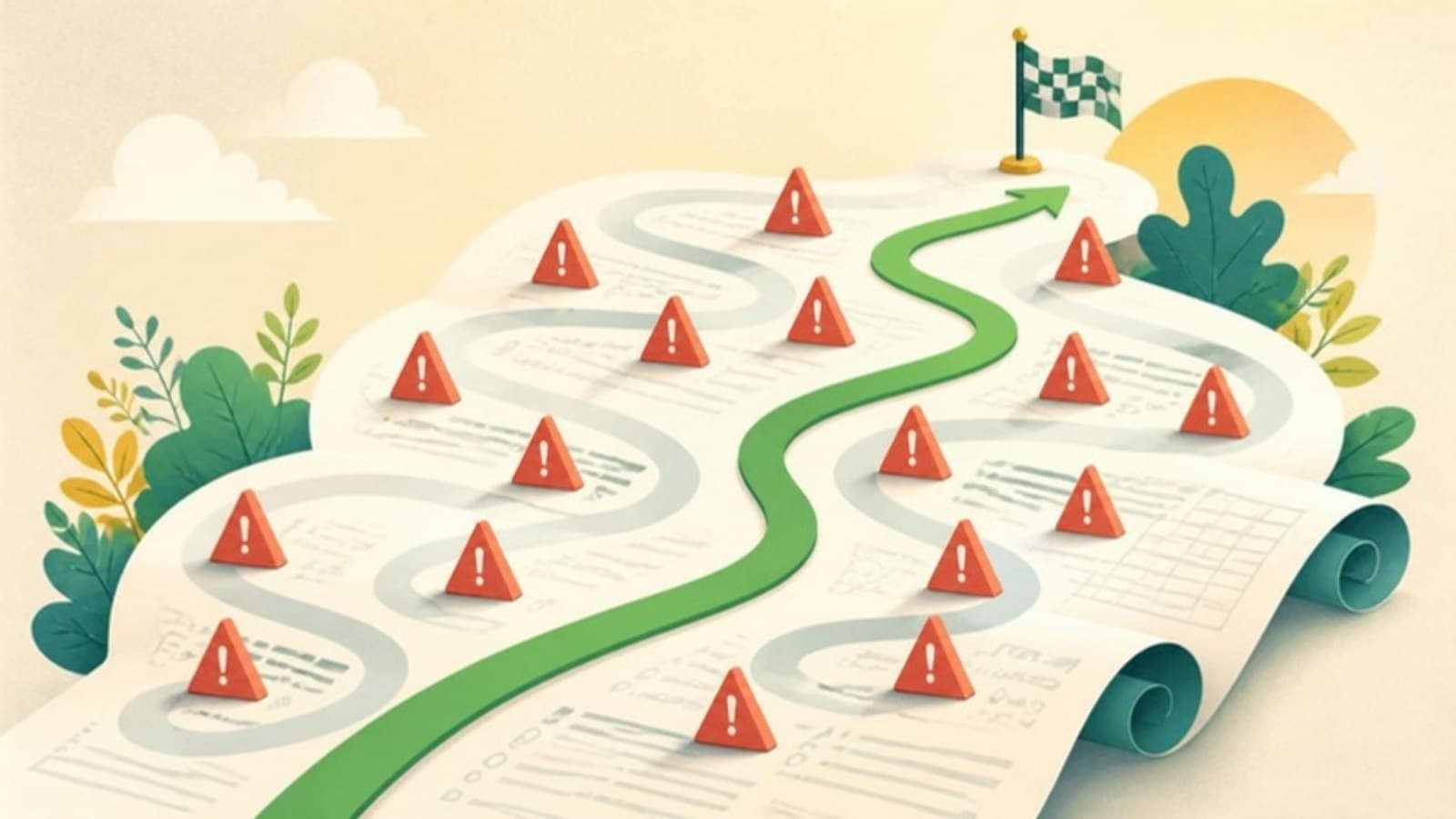

5 points to remember for NEET
Every year, lakhs of students prepare for NEET with dreams of becoming doctors. Yet, many don't achieve their potential—not because they lack intelligence, but because they make avoidable mistakes. After mentoring thousands of students, we've identified the 15 most common mistakes that cost aspirants their dream rank.
Many students rush through NCERT thinking it's "too basic" and jump to heavy reference books. They believe more complex books will give them an edge.
Reality Check:
"I wasted 6 months on heavy books. When I finally focused on NCERT, my Biology score jumped from 280 to 340." - NEET 2024 Aspirant
Students collect 5-6 books per subject, thinking more resources = better preparation. They end up with:
Ideal Book Count:
| Subject | Maximum Books |
|---|---|
| Biology | NCERT + 1 reference (MTG/Trueman's) |
| Physics | NCERT + 1 reference (HC Verma) |
| Chemistry | NCERT + 1 reference per section |
Golden Rule: Complete one book 5 times rather than 5 books once.
Students spend equal time on all subjects or worse, spend more time on Physics because it's "tough." Biology gets sidelined.
Ideal Time Distribution:
| Subject | Time Allocation | Reason |
|---|---|---|
| Biology | 40-45% | Highest marks, most scoring |
| Physics | 25-30% | Needs practice, not just time |
| Chemistry | 25-30% | Balance between theory and numerical |
Target Score Strategy:
Students keep saying "I'll start mocks after finishing syllabus" or "I'll take mocks in the last month." They never get comfortable with the exam format.
Mock Test Schedule:
| Phase | Mock Frequency | Purpose |
|---|---|---|
| Learning Phase | 1/month | Get familiar with format |
| Revision Phase | 1/week | Identify weak areas |
| Final 2 months | 2/week | Build exam stamina |
| Last month | Daily | Peak performance |
Minimum Target: 50+ full-length mocks before NEET
Students take mock → check score → feel happy/sad → move on. They don't analyze WHY they got questions wrong.
The 5-Step Mock Analysis:
Categorize Errors:
Create Error Log:
Revise Errors:
Track Patterns:
Set Improvement Goals:
Students attempt every question, even when they have no clue. They forget that wrong answers cost -1 mark.
When to Attempt:
The Smart Guessing Formula: If you can eliminate 2 options confidently, your probability increases to 50% - worth attempting.
Math Behind It:
The Sustainable Schedule:
| Aspect | Recommended |
|---|---|
| Daily hours | 8-10 hours (consistent) |
| Wake time | Same every day (5-6 AM) |
| Sleep time | Same every day (10-11 PM) |
| Breaks | Every 90 minutes |
| Weekly off | Half-day on Sunday |
Remember: 8 consistent hours > 14 inconsistent hours
Students focus on new questions from random sources while ignoring the goldmine of previous year questions.
PYQ Strategy:
Chapter-wise Practice:
Year-wise Practice:
Repeat Important Topics:
Target: Solve 2015-2025 PYQs minimum 3 times
Time Allocation Strategy:
| Section | Questions | Time | Per Question |
|---|---|---|---|
| Biology | 90 | 75-80 min | 45-50 sec |
| Chemistry | 45 | 50-55 min | 65-75 sec |
| Physics | 45 | 50-55 min | 65-75 sec |
| Buffer | - | 15-20 min | Review |
Golden Rules:
Students read NCERT multiple times but don't make notes. When revision time comes, they have to read entire chapters again.
Notes Strategy:
| Type | Purpose | When to Make |
|---|---|---|
| Detailed Notes | First learning | During first reading |
| Short Notes | Quick revision | After chapter completion |
| Formula Sheet | Exam day | Ongoing compilation |
| Diagram Book | Visual memory | Daily practice |
What Good Notes Include:
Practice break
Reading is prep. Practising is progress.
Free to try · replies within a few hours on WhatsApp
Health Checklist:
| Aspect | Daily Requirement |
|---|---|
| Sleep | 7-8 hours (non-negotiable) |
| Exercise | 30-45 minutes |
| Water | 3-4 liters |
| Meals | 3 proper meals + healthy snacks |
| Screen break | Every 90 minutes |
| Fresh air | 15-20 minutes |
Remember: A tired brain cannot learn. Sleep is when your brain processes and stores information.
The Self-Competition Model:
Track Your Progress:
Stay in Your Lane:
Remember:
The Completion Timeline:
| Phase | What to Complete |
|---|---|
| 6 months before | 100% syllabus completed |
| 4 months before | First revision done |
| 2 months before | Second revision + mocks |
| 1 month before | Only revision, no new topics |
Rule: After February, don't start any new topic. Only revise.
Build Your Support System:
| Person | Role |
|---|---|
| Mentor/Teacher | Academic guidance, strategy |
| Study Partner | Motivation, doubt discussion |
| Family | Emotional support, logistics |
| Yourself | Self-discipline, belief |
What a Good Mentor Provides:
The Recovery Protocol:
Remember:
Rate yourself honestly (1-5):
| Mistake | Your Score |
|---|---|
| Ignoring NCERT | ___ |
| Too many books | ___ |
| Neglecting Biology | ___ |
| Skipping mocks | ___ |
| Not analyzing mocks | ___ |
| Random guessing | ___ |
| Inconsistent schedule | ___ |
| Ignoring PYQs | ___ |
| Poor time management | ___ |
| No notes | ___ |
| Ignoring health | ___ |
| Comparing with others | ___ |
| Late syllabus completion | ___ |
| No mentor | ___ |
| Losing hope | ___ |
Score Interpretation:
If you're making many of these mistakes, here's your 7-day reset:
Day 1-2: Accept and Assess
Day 3-4: Create New Strategy
Day 5-7: Implement with Support
Week 2 onwards: Build Habits
The difference between a 550 scorer and a 650 scorer is often not intelligence—it's avoiding these common mistakes. Every mistake you avoid is marks you save.
Start today. Pick your top 3 mistakes from this list and commit to fixing them this week. Small changes lead to big results.
Want personalized guidance to identify and fix your preparation mistakes? Book a free consultation with our AIIMS faculty for an honest assessment of your preparation!
The 15 mistakes above are common, but the two or three actually costing you marks are specific to your own mock papers. message us on WhatsApp at +91 88264 44334 with a recent mock test score sheet and we'll point out which of these mistakes show up in your pattern.
Related reading: 10 Critical Mistakes to Avoid · How to Avoid Silly Mistakes in NEET · NEET coaching
Related resources

About the author
Dr. Shekhar C. Singh
AIIMS New Delhi alumnus who has taught biology since 2014, from NCERT foundations to the International Biology Olympiad.
Read his full profile →Get personalized guidance from AIIMS experts and achieve your medical college dreams
More from the blog
NEET preparation is a marathon, not a sprint — and the wrong approach can cost you a year. This guide for both students and parents reveals 10 critical mistakes and exactly how to avoid them.
5 Feb 2026
Comprehensive NEET Biology preparation guide with chapter-wise weightage analysis, high-yield topics, month-by-month timeline, best resources, and expert strategies to score 340+ from AIIMS faculty Dr. Shekhar C. Singh.
9 Feb 2026
Comprehensive analysis of NEET 2026 results including category-wise cutoffs, state-wise seat distribution, score vs rank analysis, and admission predictions for MBBS 2026.
12 Jun 2026
Share your thoughts, ask a question, or help another student
Type it below and send it to us on WhatsApp — no sign-up needed.
For NEET Biology, aim for 3-4 hours of focused study daily. Quality matters more than quantity!
Yes! NCERT covers 95% of NEET Biology questions. Master it completely before any reference book.
Human Physiology (20%), Genetics (18%), and Ecology (12%) are the highest-scoring areas.
Need personalized guidance?