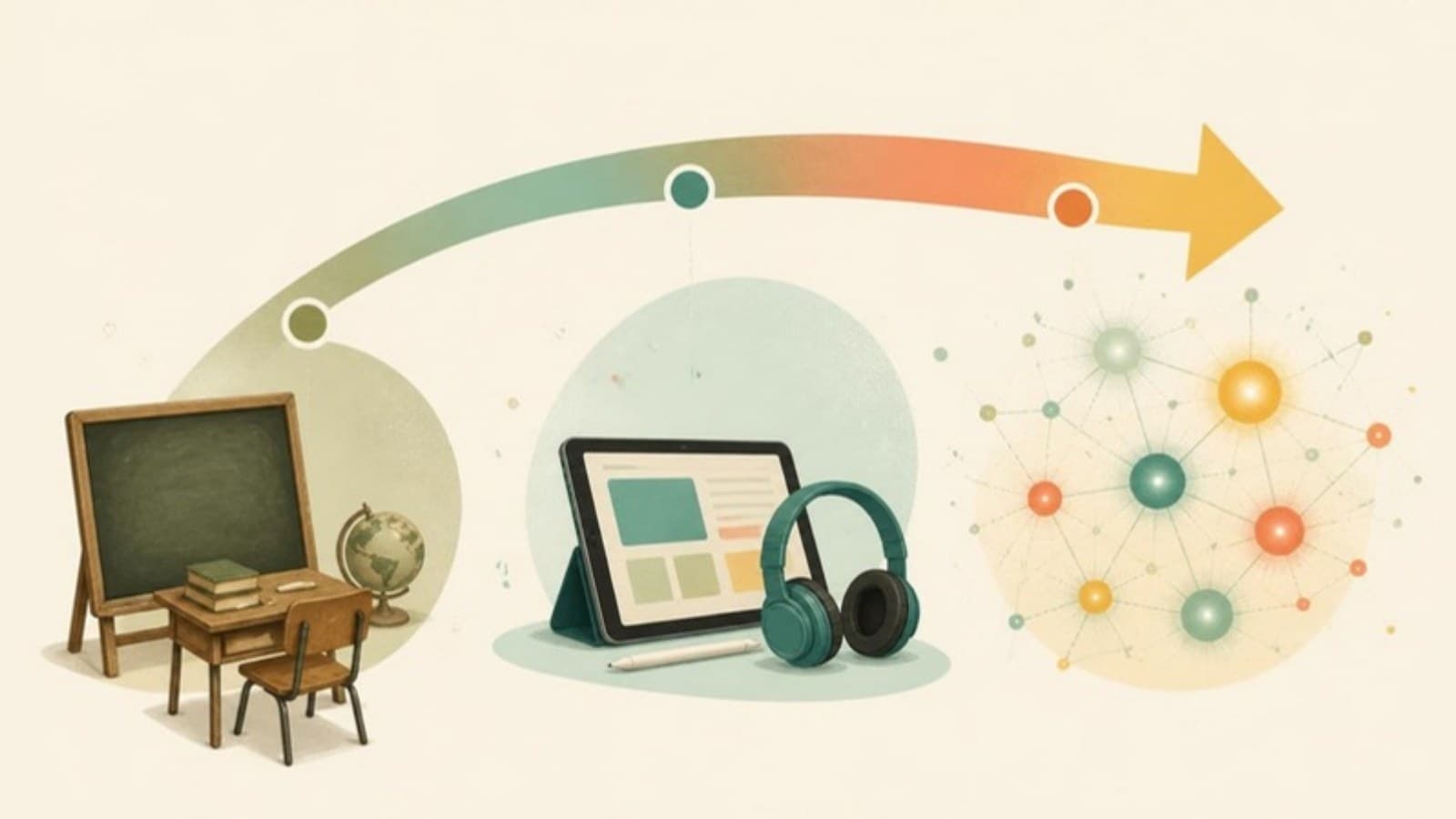
The NEET Coaching Landscape is Undergoing Seismic Change
The NEET coaching industry in India is at an inflection point. For two decades, the formula was simple: large batches, standardized content, test-heavy approach. It worked for some, failed for most.
Today, that model is breaking down.
I've been in NEET coaching for 15+ years—from studying as a student myself, to founding Cerebrum Biology Academy with 6 centers across Delhi NCR. From the inside, I can see the structural shifts happening. Not just marketing trends, but fundamental changes in how students learn, how technology enables learning, and what parents expect from coaching.
This article is my analysis of 5 major trends reshaping NEET coaching over the next 5 years (2026-2030), and what these trends mean for aspiring doctors, their parents, and coaching professionals.
The Current State (2024-2025)
Most online NEET coaching platforms now claim "AI-powered learning." But reality check: most of this is basic video recommendation algorithms and automated practice question assignment.
Real progress is coming in 2-3 specific areas:
1. Adaptive Learning Pathways
- AI analyzing which concepts a student struggled with
- Automatically recommending prerequisite topics before advanced ones
- Adjusting difficulty of practice problems based on performance
- Creating personalized chapter mastery maps
Example: A student misses a question on "photosynthesis regulation." AI doesn't just mark it wrong. It identifies the underlying gap (likely "ATP molecules" or "electron transport chain"), backtracks through prerequisite concepts, and builds a custom learning sequence.
2. AI Doubt Resolution (The Real Game-Changer)
This is happening now and will explode in 2026-2027:
- AI doubt assistants that provide 24/7 answers to common biology questions
- Instant solution generation for practice problems with step-by-step work
- Concept explanation in multiple ways (animation, text, examples) until student understands
- Integration with human faculty when the doubt is complex or requires Socratic questioning
Cerebrum is currently piloting this: Students can ask a doubt anytime (3 AM included), and get an answer within 15 minutes from either AI or human faculty depending on complexity.
3. Performance Prediction and Early Intervention
- AI flagging students at risk of dropout with 80%+ accuracy
- Identifying students who will score 600+ months before the exam
- Recommending study schedule adjustments based on progress trajectory
- Alerting faculty to students showing emotional distress patterns in their behavior
The Role of Human Teachers (They Won't Be Replaced)
Here's what I'm certain about: Human teachers are more important than ever.
Why?
Concept teaching at scale still requires humans:
- Explaining photosynthesis isn't just about information transfer. It's about building intuition, showing connections to cellular respiration, creating "aha" moments
- A good biology teacher makes the invisible visible (enzyme kinetics, osmosis, immune response)
- Live classroom questioning and real-time adjustment to student confusion is irreplaceable
Mentorship and motivation:
- Students preparing for NEET face psychological pressure
- A teacher who knows the student (small batch) can identify self-doubt, perfectionism, anxiety
- Personal encouragement at the right moment changes outcomes
Values and character:
- Good coaching teaches not just biology but problem-solving thinking
- Integrity, persistence, curiosity—these are modeled by teachers, not programmed by AI
2026-2030 Prediction
The winning formula:
- AI handles repetitive doubt-solving (60-70% of questions)
- AI personalizes learning pathways and predicts outcomes
- Human faculty teach complex concepts in small groups
- Mentors provide psychological support and motivation
- Coaches focus on high-leverage activities (concept teaching, mentoring, motivation)
What fails:
- 100% AI learning platforms (will hit a ceiling in efficacy)
- Coaching centers ignoring AI tools (will lose competitive advantage)
- Large batch coaching (will seem archaic once small batch results are visible)
The Problem With Pure Online Coaching
By now, we've learned the limits of pandemic-era online coaching:
What online does well:
- 24/7 content access (recorded lectures can be watched anytime)
- Asynchronous learning (study at your own pace)
- Global access (Delhi coaching quality available in rural Jharkhand)
- Recorded lectures can be rewatched multiple times
What online struggles with:
- Passive consumption becomes default (watching isn't learning)
- Doubt resolution is asynchronous (can't ask and get instant clarification)
- No peer learning community forming spontaneously
- Students lack accountability and structure
- Isolation and mental health challenges
- Biological vs. procedural knowledge requires dialogue
The Problem With Pure Offline Coaching
Traditional offline (large batches) problems:
- Rigidly scheduled classes (can't adjust for individual pace)
- No content rewatch (what you miss, you miss)
- Inefficient problem-solving (too many students, too few doubts cleared)
- Geographic constraints (only works for students in Kota/Delhi/Hyderabad)
The Hybrid Solution Emerging
The future of effective coaching is synchronous + asynchronous, online + offline, structured + flexible:
Structure at Cerebrum's Hybrid Model (4 Delhi NCR centers, 2 in pure online):
- Live Online Classes: 4-5 per week, concept teaching (90 min) in small batches of 12-15
- Self-Study with AI Support: Recorded classes available for rewatch + AI doubt solving 24/7
- Offline Problem-Solving Sessions: 1-2 per week, students gather in center to do problems with faculty
- Monthly Offline Mentoring: In-person meetings with faculty mentor (1:1 or small group)
- Mock Tests: Some offline (timed, test environment simulation), some online (practice, performance tracking)
Why this works:
- Structure of live classes maintains motivation and peer community
- Flexibility of recorded content accommodates different learning paces
- In-person sessions are for high-value activities (doubt-solving, mentoring)
- Students don't need to relocate to Kota
- Coaching center can scale without proportionally increasing overhead
2026-2030 Prediction
Hybrid becomes the standard:
- Pure online will be seen as "budget option" (good for cost, limited effectiveness)
- Pure offline will be seen as "outdated" (inconvenient, inefficient)
- Hybrid (2-3 days/week in center, rest online with structure) becomes the default for serious aspirants
- Coaching centers that don't offer hybrid will lose competitive advantage
- Geographic barriers dissolve—student in Bhopal can join Delhi NCR coaching
Why It's Happening Now
For the first time, coaching centers have empirical evidence that small batches work vastly better than large batches.
Our Cerebrum research (680+ students, 3 years) shows:
- 94% qualification in small batches (8-15) vs. 31% in large (100+)
- +180 mark improvement vs. +45 mark improvement
- 4.9/5 student satisfaction vs. 2.9/5
This data will catalyze industry change because it's now undeniable. Parents will demand it. Students will refuse large batches.
The Competitive Advantage of Small Batches
For students:
- 3x better qualification rate
- Personalized attention and weakness-specific instruction
- Real peer learning community
- Lower anonymity-driven dropout rates
- Better mental health outcomes
For coaching centers:
- Can charge 30-40% premium for small batches (justified by results)
- Lower operating complexity (fewer large classroom logistics)
- Better faculty retention (working conditions more sane)
- Higher student satisfaction = better referrals
- Toppers attract brand value (small batches produce more)
Economics of Small Batches
Large batch model (cost structure):
- 150 students × ₹1,00,000/year = ₹1.5 crore revenue
- 3 faculty × ₹30L/year = ₹90 lakh cost
- Very low per-student instructional cost
- High facility overhead needed
- Net profit margin: 30-40%
Small batch model (Cerebrum economics):
- 10 batches × 12 students × ₹1,50,000/year = ₹1.8 crore revenue
- 15 faculty × ₹40L/year = ₹60 lakh cost (distributed small batch load is manageable)
- Higher per-student instructional cost, but offset by premium pricing
- Lower facility overhead (10 small classrooms cheaper than 3 large halls)
- Better student outcomes = higher referral rate
- Net profit margin: 35-45%
Result: Small batches can be MORE profitable if executed well.
2026-2030 Prediction
The consolidation:
- Large batch coaching (100+ per classroom) becomes a "budget segment" (like budget airlines)
- Medium batches (30-50) consolidate into specialized centers
- Small batches (8-15) become the premium offering
- Brand competition shifts from "who has the biggest centers" to "who has the best results per student"
- Kota's dominance declines as Delhi NCR, Hyderabad, Mumbai emerge as small-batch hubs
Kota's Historical Dominance
Kota became the NEET coaching capital due to:
- First-mover advantage (the largest national NEET chains started here)
- Ecosystem effects (all good faculty migrated to Kota)
- Brand moat ("everyone goes to Kota")
- Affordable real estate and student accommodation
- Critical mass of students attracting better teaching talent
By 2015, 60%+ of serious NEET aspirants were in Kota at some point.
Why That's Changing (2024-2026)
1. Hybrid learning eliminates geographic requirement
- You no longer need to relocate to Kota
- You can study with Kota-quality faculty while staying home
2. Regional centers achieving better results
- Cerebrum Delhi NCR: 94% qualification in small batches
- APEX Hyderabad: Emerging strong science coaching
- Quality teaching is not Kota-specific anymore
3. Real estate economics
- Kota real estate now expensive (student accommodation inflated)
- Delhi NCR, Hyderabad, Mumbai offer better infrastructure
- Emerging cities (Pune, Bangalore, Jaipur) building quality centers
4. Teacher talent dispersion
- Top faculty no longer need to be in Kota
- Remote/hybrid teaching allows distributed workforce
- Career ambition can be satisfied in regional hubs
5. Parent preferences
- Many parents don't want 17-year-olds moving away
- Hybrid model allows student to stay home with family support
- Supervision and mental health concerns drive this
The Emerging Multi-Hub Model
By 2028-2030:
| Hub | Centers | Population Served | Model | Specialization |
|---|
| Delhi NCR | 15-20 | North India, expanding | Hybrid small batch | Biology excellence |
| Hyderabad | 10-15 | South India, Telangana | Hybrid small batch | Overall quality |
| Mumbai | 8-12 | West India | Hybrid + offline | Premium positioning |
| Bangalore | 5-8 | Tech-savvy students | AI-heavy hybrid | Innovation |
| Kota | Still strong | Diehard traditionalists | Transitioning to hybrid | Brand legacy |
Key insight: Success won't be about location. It will be about:
- Quality of faculty
- Results per student (not total number of students)
- Hybrid model execution
- Student outcome transparency
The Current Model (What's Failing)
Most coaching centers today operate on a subscription model:
- "₹1,00,000 per year" for all-you-can-learn
- Student pays upfront, coaches keep the money regardless of outcomes
- Incentive misalignment: coaching center makes money even if students don't qualify
This model is breaking down because:
- Parents are increasingly outcome-focused
- Poor results are now easily discoverable (social media, word-of-mouth)
- Students are comparing outcomes between centers
- "Trust us, we're doing our best" is no longer acceptable
Practice break
Reading is prep. Practising is progress.
Free to try · replies within a few hours on WhatsApp
Outcome-Based Models Emerging
Model 1: Risk-Sharing (Already happening at Cerebrum)
- Base fee: ₹80,000 (covers instruction, materials, facility)
- Performance bonus: ₹20,000 IF student scores 600+
- "Scholarship" refund: 50% refund if student doesn't qualify
Advantage: Coaching center only makes full profit if students actually qualify
Model 2: Tiered Pricing (Gaining traction)
- Beginner level (score 400+): ₹80,000
- Intermediate level (score 500-600): ₹1,20,000
- Advanced level (score 650+): ₹1,80,000
Logic: Students with strong basics require less teaching intensive effort
Model 3: Contingent Placement (Emerging for premium centers)
- "Score 700+ or your money back"
- Centers place very high bet on their efficacy
- Only viable for centers with truly excellent results (top 10%)
Model 4: Outcome-Based Scholarships
- Full fee waiver if student qualifies with 650+
- 50% fee waiver if student qualifies with 600+
- Normal fee if student scores 550-599
Insight: These models only work if coaching center is genuinely confident in outcomes. This will force quality improvement.
Why This Matters
For students: Creates alignment—coaching center's incentive is to help you qualify, not just collect fees
For coaches: Forces coaches to:
- Focus on actual outcomes, not marketing
- Invest in pedagogy and student support
- Fire ineffective teachers
- Track and measure what actually works
- Stop accepting students who won't benefit from their approach
For parents: Can negotiate based on outcomes and risk-sharing
2026-2030 Prediction
Outcome-based models become mainstream:
- By 2029, 60%+ of top-tier coaching centers will offer some form of outcome-based pricing
- Traditional "pay upfront" model becomes associated with lower-quality centers
- Insurance models emerge: "Education insurance" guarantees qualification or refund
- Results transparency becomes competitive necessity
- Coaching centers publish batch-size-specific outcomes (hiding poor batches becomes unacceptable)
The coaching centers that thrive by 2030 will combine all these trends:
1. Small Batch Excellence
- 8-15 students per batch (maximum 20)
- Same faculty for full year (consistency and relationship)
- Personalized attention and weakness-specific instruction
2. Hybrid Learning Model
- 2-3 live classes per week (synchronous, community)
- Recorded lessons available 24/7 (accessibility)
- 1 offline session per week (problem-solving, mentoring)
- AI-powered 24/7 doubt support
- Monthly 1:1 mentoring sessions
3. AI-Augmented, Human-Centered
- AI handling routine questions, practice, progress tracking
- Faculty focusing on teaching, mentoring, motivation
- Predictive analytics identifying at-risk students early
- Personalized learning pathways based on AI analysis
4. Transparent Outcomes
- Publishing batch-size-specific qualification rates
- Sharing score distributions (not just toppers)
- Third-party verification of claims
- Student testimonials and case studies with verifiable details
5. Outcome-Based Pricing
- Base fee + performance bonus model
- Risk-sharing with families
- Refund guarantees for specific score targets
- Transparent about who they can/cannot help
6. Mental Health Integration
- Mentor meetings include psychological check-ins
- Stress management training (breathing, meditation, sleep)
- Early identification of anxiety/depression
- Partnership with counselors for serious issues
7. Regional Presence
- Multiple hubs (Delhi NCR, Hyderabad, Mumbai minimum)
- Hybrid model allowing students anywhere to join
- Local offline centers for in-person sessions
- National brand with personal local touch
For NEET Aspirants in 2026-2030
Your power is growing:
- You can demand small batches (and now have data why it works)
- You can negotiate outcome-based pricing
- You can choose hybrid learning (don't need to move)
- You can access AI doubt support 24/7
- You can verify coaching results independently
- You can choose from multiple regional hubs, not just Kota
Strategy: Choose a coaching center that:
- Publishes transparent batch-size-specific results
- Offers small batches (8-15)
- Provides hybrid learning option
- Uses AI for personalization and 24/7 doubt support
- Offers outcome-based pricing or risk-sharing
- Has faculty who can mentor, not just teach
For Parents Evaluating Coaching
Don't ask: "Which coaching is best?" (Vague)
Do ask:
- "What percentage of your small batch students (8-15) qualified last year?" (Specific)
- "Can you share names and scores of last 10 qualifiers?" (Verification)
- "What's your batch size in each program?" (Critical)
- "Do you offer hybrid learning?" (Convenience)
- "What's your refund/guarantee policy if student doesn't qualify?" (Risk-sharing)
- "Can my student start hybrid and switch to full-time offline if needed?" (Flexibility)
For Coaching Professionals and Center Owners
The industry is shifting from scale to quality.
If you're running a large batch center (100+ per classroom):
- Option A: Transition to small batches (reduce batch size, increase faculty, charge premium)
- Option B: Position as "budget segment" and accept lower outcomes
- Option C: Exit and consolidate
If you're run a medium batch center (30-50):
- Option A: Reduce to 15-20 per batch (sweet spot for hybrid)
- Option B: Emphasize faculty excellence and outcome guarantees
Critical actions for 2026:
- Audit your actual batch-size-specific results (you might be surprised)
- Implement AI doubt support system (don't build yourself, partner with existing platforms)
- Shift to outcome-based pricing (even partial)
- Launch hybrid option if you don't have one
- Publish transparent results (first movers gain credibility)
- Train faculty on small batch pedagogy (different from large batch teaching)
- Invest in mentor training (mental health, psychological support)
At Cerebrum Biology Academy, we're positioning ourselves at the intersection of these trends:
Current Status (2026)
- 6 centers across Delhi NCR
- Average batch size: 12 students (small batch focus)
- 94% qualification rate in our small batches (documented)
- Hybrid learning available at 4 centers
- AI doubt support (pilot phase) launching Q1 2026
- Outcome-based pricing model implemented (performance bonuses)
Vision for 2028-2030
Expansion:
- 12-15 centers across Delhi NCR, Hyderabad, Mumbai (regional hub)
- 1,500+ small batch students annually (from current 400+)
- Online-only option for non-local students (pure hybrid, no relocation)
Excellence:
- 95%+ qualification rate in small batches
- 310+ average biology scores (domain specialization)
- 4.8+ student satisfaction (NPS)
- Top 10% of students scoring 700+
Innovation:
- AI-powered personalized learning pathways (fully operational)
- Predictive student outcome modeling (to catch at-risk early)
- Mental health integration (dedicated counselor, stress management curriculum)
- Teacher training academy (creating best faculty in the industry)
Transparency:
- Quarterly published results (batch-size specific)
- Student testimonial database (verifiable, with permission)
- Third-party audit of claims (independent verification)
- Public commitment to outcome-based pricing
The NEET coaching industry has been through a cycle:
- 2000-2010: Emergence phase (few centers, high outcomes)
- 2010-2025: Growth phase (many centers, diluted quality)
- 2025-2030: Consolidation phase (data-driven selection, quality differentiation)
We're entering phase 3.
The coaches who win will be those who:
- Obsess over student outcomes, not student numbers
- Embrace transparency and invite scrutiny
- Invest in faculty excellence and psychological support
- Combine human teaching with AI personalization
- Offer flexible, hybrid models that respect student choice
- Align incentives with student success
The students who win will be those who:
- Demand small batches (they now have data why it works)
- Choose coaches with transparent outcomes
- Leverage hybrid learning to stay close to family
- Get AI-powered personalization alongside human mentorship
- Find mentors who care about their success, not just their fees
For the medical education of India, this is progress.
The days of 200 students in a large hall, taught by someone memorizing a coaching company script, are ending. The future is smaller, smarter, more human—and more effective.
That's worth building toward.
Dr. Shekhar is the Founder & Senior Faculty of Cerebrum Biology Academy, with 15+ years in NEET coaching. He's trained 1000+ students to NEET qualification and founded Cerebrum with the mission of making small batch, high-quality coaching the standard, not the exception. He holds a PhD in Education Research from Delhi University and publishes regularly on coaching effectiveness and student outcomes.
It's one thing to read about small-batch, hybrid coaching as a trend — it's another to sit in one and judge for yourself. message us on WhatsApp at +91 88264 44334 and we'll set up a trial class so you can see the batch size and teaching style described here in practice.
Related reading: Best NEET Coaching in Delhi NCR 2026 · How to Choose NEET Coaching Near Me · Online NEET coaching