Loading...
Loading...
Perfect daily routine and timetable for NEET droppers. Hour-by-hour schedule, subject rotation, breaks, and lifestyle tips to maximize your drop year preparation for 600+ marks.
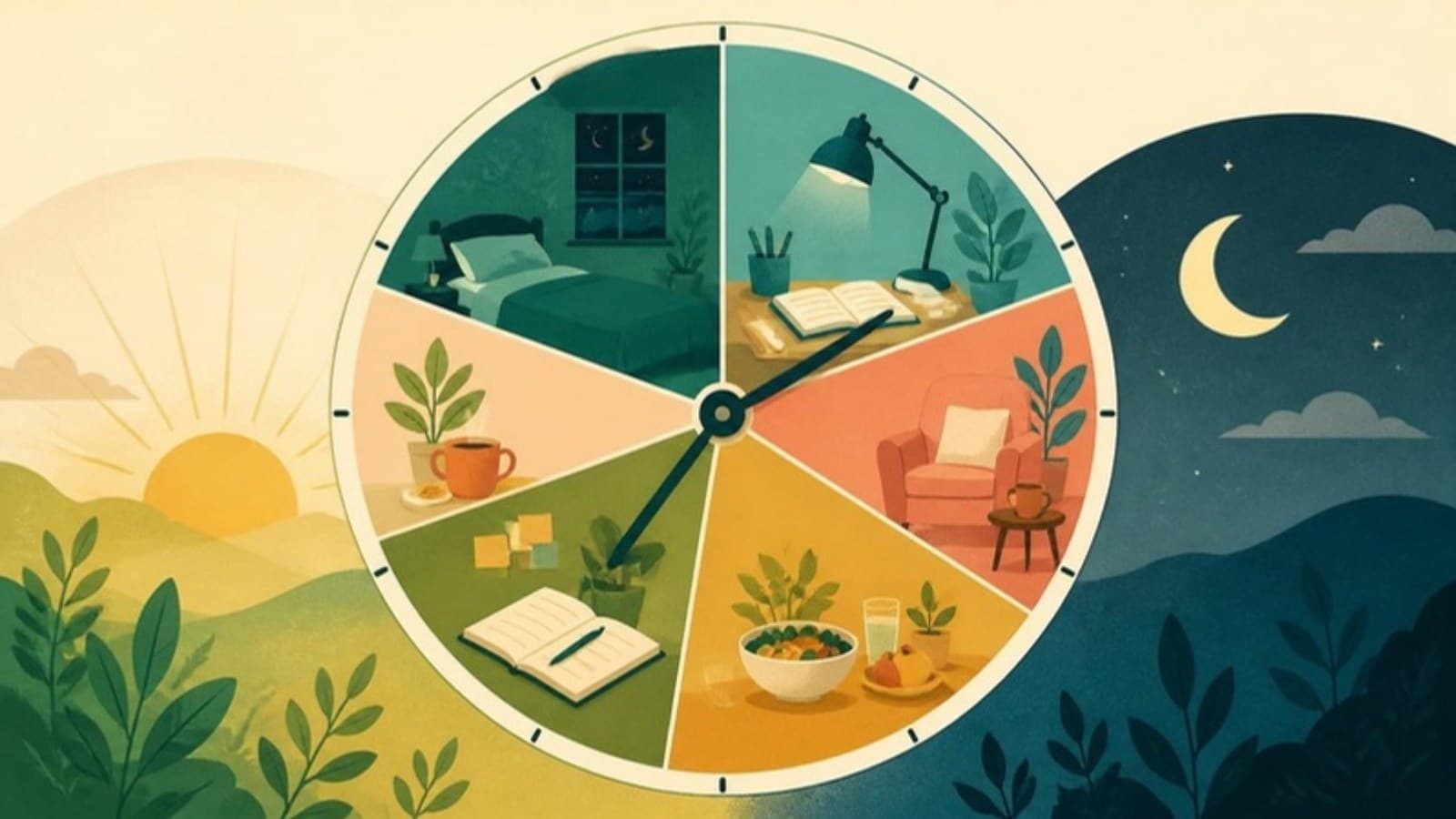

5 points to remember for NEET
A drop year is 365 days of pure preparation time. But without the right routine, this time can slip away unproductively. The key to success isn't studying 12-14 hours—it's studying 8-10 quality hours with the right schedule.
This guide provides the perfect daily routine that has helped our dropper students consistently improve by 150-200 marks.
| Resource | Schoolgoer | Dropper |
|---|---|---|
| Study hours/day | 4-5 hours | 8-10 hours |
| Annual study hours | ~1500 | ~3000 |
| Distractions | School, homework | Minimal |
| Focus level | Divided | 100% NEET |
The Catch: Many droppers waste this advantage with poor routines, inconsistent schedules, and burnout.
| Mistake | Reality |
|---|---|
| Studying 14+ hours | Leads to burnout by month 3 |
| No fixed schedule | Productivity drops 40% |
| Skipping breaks | Mental fatigue reduces retention |
| Irregular sleep | Affects memory consolidation |
| No physical activity | Energy levels crash |
| Time | Activity | Duration |
|---|---|---|
| 6:00 AM | Wake up, freshen up | 30 min |
| 6:30-7:00 AM | Light exercise/walk | 30 min |
| 7:00-7:30 AM | Breakfast | 30 min |
| 7:30-10:00 AM | Biology (High focus) | 2.5 hours |
| 10:00-10:15 AM | Short break | 15 min |
| 10:15-12:15 PM | Physics | 2 hours |
| 12:15-1:15 PM | Lunch + Rest | 1 hour |
| 1:15-3:15 PM | Chemistry | 2 hours |
| 3:15-3:30 PM | Tea break | 15 min |
| 3:30-5:00 PM | Biology PYQs/Revision | 1.5 hours |
| 5:00-6:00 PM | Physical activity/Break | 1 hour |
| 6:00-7:30 PM | Physics/Chemistry practice | 1.5 hours |
| 7:30-8:30 PM | Dinner + Family time | 1 hour |
| 8:30-10:00 PM | Revision + Day recap | 1.5 hours |
| 10:00-10:30 PM | Prepare for next day | 30 min |
| 10:30 PM | Sleep | — |
Total Study: 9-10 hours Total Breaks: 3-4 hours Sleep: 7.5 hours
| Subject | Hours | % of Time | Best Time Slot |
|---|---|---|---|
| Biology | 4-4.5 | 45% | Morning (peak focus) |
| Physics | 2.5-3 | 25-30% | Late morning |
| Chemistry | 2.5-3 | 25-30% | Afternoon |
Why Biology Gets More Time?
To prevent monotony, rotate your focus:
| Day | Primary Focus | Secondary | Light Practice |
|---|---|---|---|
| Monday | Biology (Human Physiology) | Physics | Chemistry |
| Tuesday | Physics (Mechanics) | Biology | Chemistry |
| Wednesday | Chemistry (Organic) | Physics | Biology |
| Thursday | Biology (Genetics) | Chemistry | Physics |
| Friday | Physics (Electro) | Biology | Chemistry |
| Saturday | Chemistry (Inorganic) | Physics | Biology |
| Sunday | Full revision + Mock test | — | — |
Focus: Concept building, completing syllabus
| Time | Activity |
|---|---|
| Morning (4 hrs) | New concepts + NCERT |
| Afternoon (3 hrs) | Practice problems |
| Evening (2 hrs) | Revision + notes |
Special Focus:
Focus: PYQs, multiple NCERT reads, sectional tests
| Time | Activity |
|---|---|
| Morning (3.5 hrs) | NCERT revision + PYQs |
| Afternoon (3 hrs) | Chapter practice |
| Evening (2.5 hrs) | Weak areas + sectional tests |
Special Focus:
Focus: Full mocks, analysis, error fixing
| Time | Activity |
|---|---|
| Morning (3 hrs) | Full mock (alternate days) OR revision |
| Afternoon (2 hrs) | Mock analysis OR practice |
| Evening (3 hrs) | Weak area intensive |
Special Focus:
Each 2-2.5 hour session should follow:
0-10 min: Quick recap of previous session
10-90 min: Active learning (new/revision)
90-110 min: Practice problems
110-120 min: Summary + note next session topic
120-135 min: Break
| Duration | Activity | Purpose |
|---|---|---|
| 10-15 min | Walk, stretch | Physical refresh |
| 15-30 min | Light snack, tea | Energy boost |
| 1 hour | Exercise, sports | Mental reset |
| 30 min | Family time | Emotional balance |
Avoid During Breaks:
| Time | Brain State | Best For |
|---|---|---|
| 6-9 AM | Fresh, alert | New concepts, Biology |
| 9-12 PM | Peak focus | Tough subjects, Physics |
| 12-3 PM | Lower energy | Familiar topics, revision |
| 3-6 PM | Recovery | Practice, light study |
| 6-9 PM | Variable | Revision, memorization |
6:00 AM - Wake Up
6:30-7:00 AM - Exercise
7:00-7:30 AM - Breakfast
7:30 AM - Study Begins
Best Activities:
Avoid:
| Day | Morning (7:30-12:15) | Afternoon (1:15-5:00) | Evening (6:00-10:00) |
|---|---|---|---|
| Mon | Bio: Human Physiology | Physics: Mechanics | Bio revision + Chem PYQ |
| Tue | Physics: Electro | Chem: Organic | Physics numericals |
| Wed | Bio: Genetics | Physics: Optics | Chemistry revision |
| Thu | Chem: Physical | Bio: Ecology | Physics concepts |
| Fri | Bio: Reproduction | Chem: Inorganic | Mixed practice |
| Sat | Weak area focus | Weak area focus | Week revision |
| Sun | Full Mock Test | Mock Analysis | Error notebook |
Practice break
Reading is prep. Practising is progress.
Free to try · replies within a few hours on WhatsApp
| Time | Activity |
|---|---|
| 7:30-11:00 AM | Full mock test (3.5 hrs) |
| 11:00-12:00 PM | Break |
| 12:00-3:00 PM | Mock analysis (detailed) |
| 3:00-5:00 PM | Error fixing + revision |
| 5:00 PM onwards | Relax, light study only |
| Aspect | Recommendation |
|---|---|
| Sleep time | 10:30 PM (fixed) |
| Wake time | 6:00 AM (fixed) |
| Duration | 7-7.5 hours |
| Weekend | Same schedule |
| Naps | Max 20-30 min if needed |
Why Sleep Matters:
Breakfast (7:00 AM):
Lunch (12:30 PM):
Snacks (3:30 PM & 5:30 PM):
Dinner (7:30 PM):
Options:
Benefits:
| Rule | Implementation |
|---|---|
| Phone in different room | During study hours |
| No social media | Delete apps or use blockers |
| Designated check times | 1 PM, 6 PM, 9:30 PM only |
| Study mode | Do not disturb enabled |
Acceptable:
Minimize:
| Item | Target | Actual |
|---|---|---|
| Wake up time | 6:00 AM | _ |
| Biology hours | 4 hrs | _ |
| Physics hours | 2.5 hrs | _ |
| Chemistry hours | 2.5 hrs | _ |
| Exercise | 1 hr | _ |
| Sleep time | 10:30 PM | _ |
Problem: Different wake time daily Solution: Set 3 alarms, sleep early, accountability partner
Problem: Studying continuously Solution: Timer for breaks, pre-planned break activities
Problem: Studying past 11 PM Solution: Morning person routine, strict sleep time
Problem: Relaxed routine on weekends Solution: Same wake time, mock test Sunday
Problem: "5 minutes" becoming hours Solution: Phone in another room, app blockers
6:00 AM: Alarm rings → Get up immediately (no snooze) 6:05 AM: Drink water, freshen up 6:30 AM: Morning walk in fresh air 7:00 AM: Healthy breakfast with family 7:30 AM: Study desk ready, Biology session starts 10:00 AM: Short break, stretch, water 10:15 AM: Physics session begins 12:15 PM: Lunch, short rest (no phone) 1:15 PM: Chemistry session 3:15 PM: Tea break, light snack 3:30 PM: Biology PYQs and revision 5:00 PM: Physical activity (cricket/gym/walk) 6:00 PM: Fresh, shower if needed 6:30 PM: Physics/Chemistry practice 7:30 PM: Dinner with family 8:30 PM: Revision session 10:00 PM: Next day prep, wind down 10:30 PM: Lights off, sleep
The best routine is the one you can follow consistently. Start with this template and adjust based on your:
Remember: 8 consistent hours beats 12 irregular hours every time.
Your drop year is precious. Make every day count with the right routine.
At Cerebrum Biology Academy, we provide:
Book Free Counselling | Join Dropper Batch
A successful drop year isn't about studying more—it's about studying smarter.
An hour-by-hour schedule looks clean on paper but rarely survives contact with a real day. message us on WhatsApp at +91 88264 44334 and tell us where your current routine keeps breaking down, and we'll suggest adjustments instead of asking you to force-fit this one.
Related reading: NEET Dropper Year Complete Guide 2026 · Dropper programme
Related resources

About the author
Dr. Shekhar C. Singh
AIIMS New Delhi alumnus who has taught biology since 2014, from NCERT foundations to the International Biology Olympiad.
Read his full profile →Get personalized guidance from AIIMS experts and achieve your medical college dreams
More from the blog
Complete guide to NEET dropper batches in Delhi NCR for 2026. Compare 1-year and 6-month programs, daily schedules, fees, and find the right repeater batch.
18 Mar 2026
Complete guide to NEET dropper success in 2026. Learn why small batches with personal mentorship outperform mass coaching. Discover Cerebrum's proven dropper program with 98% success rate and 150+ marks average improvement.
5 Feb 2026
Complete drop year strategy for NEET 2026 with month-wise plan, common mistakes to avoid, mental health tips, and proven strategies used by successful repeaters.
12 Jun 2026
Share your thoughts, ask a question, or help another student
Type it below and send it to us on WhatsApp — no sign-up needed.
For NEET Biology, aim for 3-4 hours of focused study daily. Quality matters more than quantity!
Yes! NCERT covers 95% of NEET Biology questions. Master it completely before any reference book.
Human Physiology (20%), Genetics (18%), and Ecology (12%) are the highest-scoring areas.
Need personalized guidance?