Genetics is the highest-scoring unit in NEET Biology, contributing 12-15% of total marks (approximately 26-28 questions). Understanding inheritance patterns, molecular mechanisms, and evolutionary principles is crucial for NEET success. This comprehensive guide covers everything from Mendel's classical experiments to cutting-edge molecular biology concepts.
1.1 Mendel's Laws of Inheritance
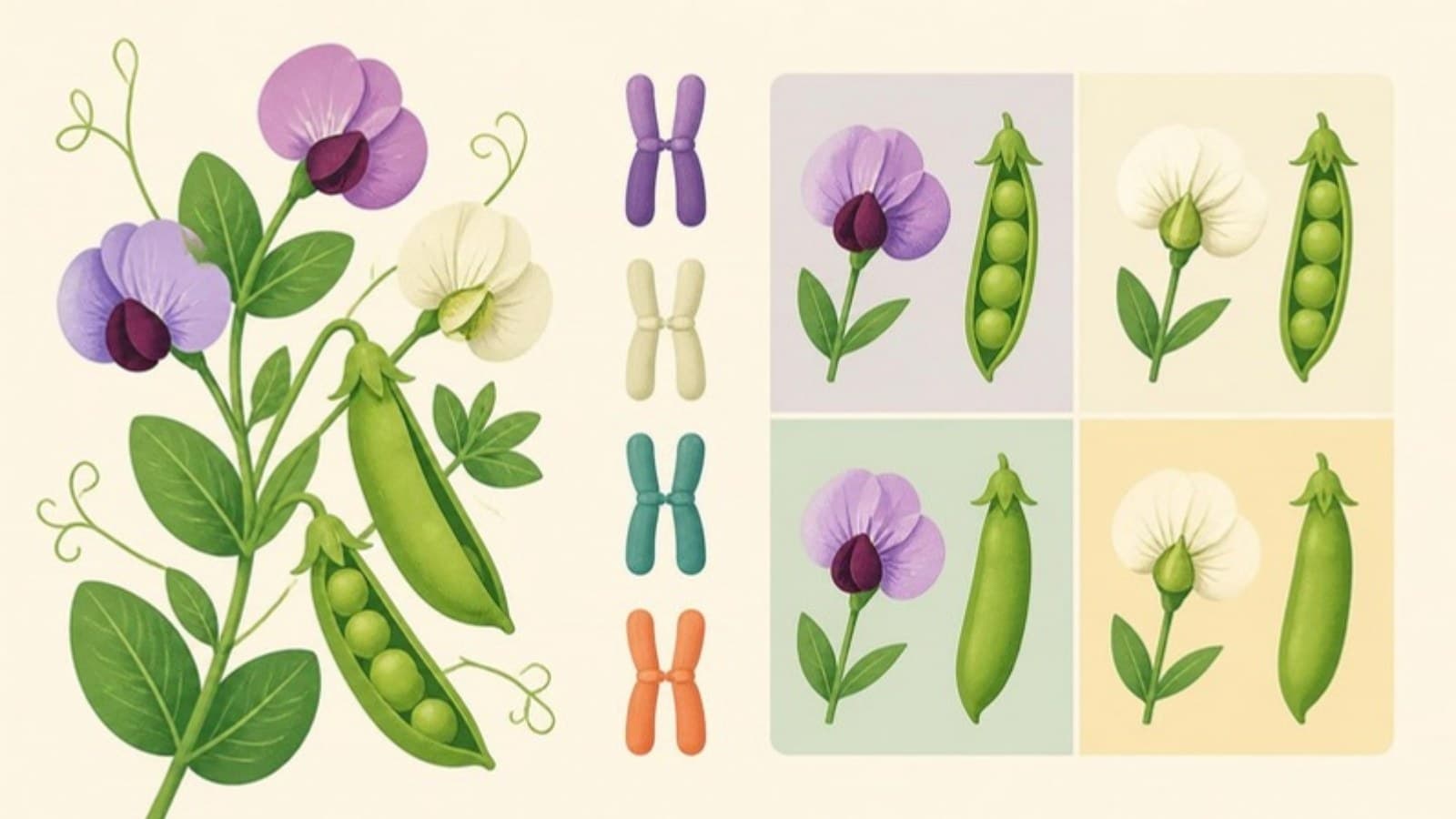
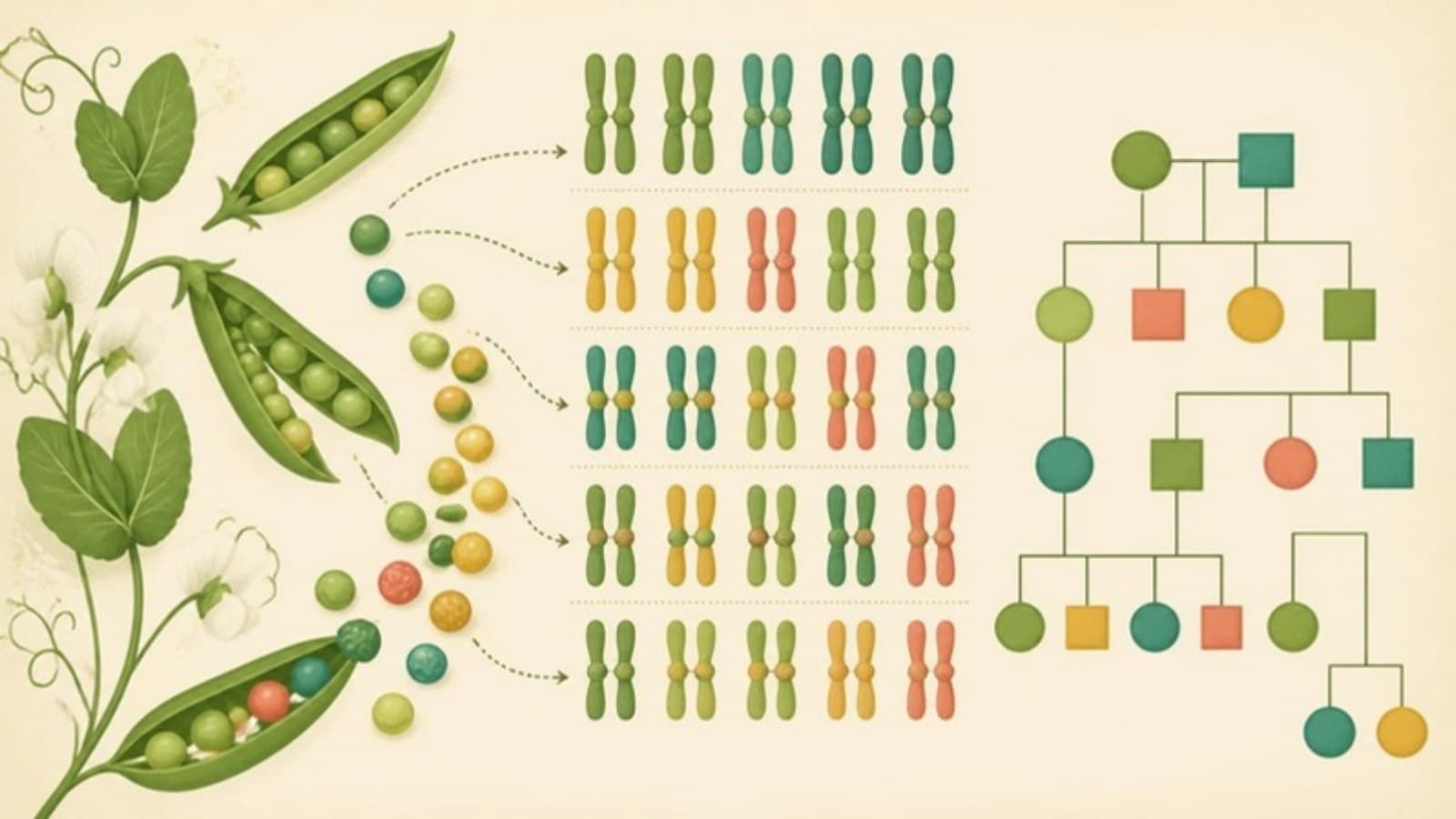
Gregor Mendel's groundbreaking work laid the foundation for modern genetics. His experiments with garden peas (Pisum sativum) revealed three fundamental laws:
Law of Segregation (First Law)
- Traits are controlled by paired factors (alleles) that segregate during gamete formation
- Each gamete receives only one allele from each pair
- During fertilization, allele pairs are restored
Example: In monohybrid cross Tt × Tt:
- Gametes: T or t (50% each)
- Offspring: 25% TT, 50% Tt, 25% tt
- Phenotypic ratio: 3 Dominant : 1 Recessive
Law of Independent Assortment (Second Law)
- Alleles of different genes assort independently during gamete formation
- Applicable when genes are on different chromosomes or far apart on the same chromosome
- Results in predictable ratios in dihybrid crosses
Law of Dominance (Third Law)
- One allele (dominant) masks the effect of another (recessive) in heterozygous individuals
- Dominant trait appears in F₁ generation
- Recessive trait reappears in F₂ generation in 1/4 of offspring
1.2 Monohybrid Cross Analysis
P Generation: TT (tall) × tt (short)
F₁ Generation: 100% Tt (tall)
F₂ Generation (F₁ × F₁):
- 1 TT : 2 Tt : 1 tt (Genotypic ratio 1:2:1)
- 3 Tall : 1 Short (Phenotypic ratio 3:1)
Testcross: Tt × tt
- 1 Tt : 1 tt
- 1:1 phenotypic ratio (reveals hidden recessive in heterozygote)
1.3 Dihybrid Cross Analysis
Tracking two traits simultaneously (e.g., seed color and shape in peas)
P Generation: AABB (yellow, round) × aabb (green, wrinkled)
F₁ Generation: 100% AaBb (yellow, round)
F₂ Generation:
| Phenotype | Ratio | Number out of 16 |
|---|
| Yellow, Round (AB) | 9/16 | 9 |
| Yellow, Wrinkled (A_bb) | 3/16 | 3 |
| Green, Round (aaB_) | 3/16 | 3 |
| Green, Wrinkled (aabb) | 1/16 | 1 |
9:3:3:1 Dihybrid Ratio is the classic expected ratio with complete dominance for both traits.
1.4 Extensions of Mendelian Genetics
Incomplete Dominance
- Neither allele is completely dominant
- Heterozygotes show an intermediate phenotype
Example: Red × White flowers → Pink flowers (RR × WW → RW)
- F₁: All pink (RW)
- F₂ (RW × RW): 1 Red : 2 Pink : 1 White
Codominance
- Both alleles are fully expressed in heterozygotes
- Not an intermediate, but both traits visible simultaneously
Example: Human blood group AB blood type
- Genotype: I^A I^B
- Phenotype: Both A and B antigens present
Multiple Alleles
- More than two alleles present in the population for a single gene
- Each individual still has only 2 alleles (diploid)
Example: ABO Blood Group System
- Three alleles: I^A, I^B, I^o
- 6 possible genotypes: I^A I^A, I^A I^o, I^B I^B, I^B I^o, I^A I^B, I^o I^o
- 4 possible phenotypes: A, B, AB, O
Polygenic Inheritance (Quantitative Inheritance)
- A trait controlled by multiple genes, each contributing small, additive effects
- Produces a continuous range of variation (bell curve distribution)
Example: Human height, skin color, eye color
- Height determined by 700+ genes
- Environmental factors also influence the final phenotype
Pleiotropy
- One gene influences multiple, seemingly unrelated traits
- Mutation in one gene affects multiple phenotypic characteristics
Example: Phenylketonuria (PKU)
- Single gene mutation affects:
- Amino acid metabolism (phenylalanine accumulation)
- Brain development (intellectual disability if untreated)
- Skin pigmentation (lighter skin color)
- Musty odor in sweat
Sex-Linked Inheritance
- Genes located on X chromosome
- Males (XY) express all X-linked alleles (hemizygous)
- Females (XX) require two copies for recessive trait expression
Example: Colorblindness
- Trait: X^C = Normal, X^c = Colorblind
- Males: X^C Y (normal) or X^c Y (colorblind)
- Females: X^C X^C (normal), X^C X^c (carrier), X^c X^c (colorblind)
2.1 DNA Structure and Organization
Watson-Crick Model of DNA
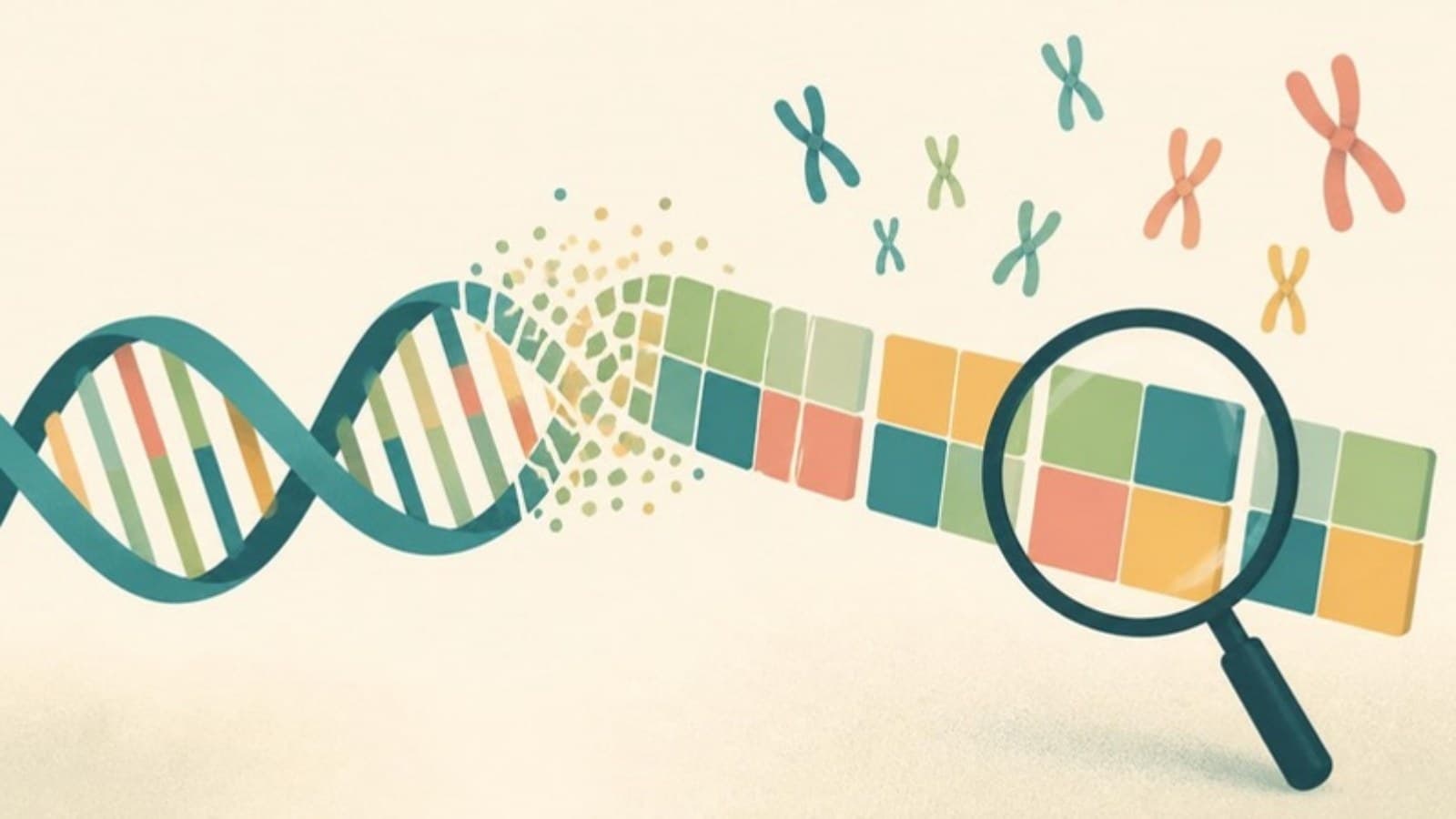
DNA (Deoxyribonucleic Acid) is a double helix polymer of nucleotides.
Nucleotide Components:
- Pentose Sugar: Deoxyribose (5-carbon sugar)
- Phosphate Group: Links nucleotides via phosphodiester bonds
- Nitrogenous Base: Purine or Pyrimidine
Base Pairing Rules (Chargaff's Rules):
- Adenine (A) pairs with Thymine (T) — 2 hydrogen bonds
- Guanine (G) pairs with Cytosine (C) — 3 hydrogen bonds
- Purines (A, G) pair with Pyrimidines (T, C)
- A + G = T + C (in any DNA molecule)
Double Helix Characteristics:
- Antiparallel strands (5'→3' and 3'→5')
- Major groove and minor groove run along the helix
- Diameter: 2 nm
- One complete turn: 10 base pairs (3.4 nm)
- Held together by hydrogen bonds and hydrophobic interactions
Packaging: Chromatin and Chromosomes
- DNA wraps around histone octamers (2 copies each of H2A, H2B, H3, H4) forming nucleosomes
- Each nucleosome = 147 bp of DNA + histone octamer
- H1 histone binds to linker DNA between nucleosomes
- Further compaction into 30 nm chromatin fiber
- Highly condensed chromatin = heterochromatin (transcriptionally inactive)
- Loosely organized = euchromatin (transcriptionally active)
2.2 DNA Replication
DNA replication is semi-conservative (proven by Meselson-Stahl experiment using N¹⁵ isotope).
Semi-Conservative Replication Process:
- Initiation: DNA helicase unwinds double helix at origins of replication
- Leading Strand: Synthesized continuously (5'→3') by DNA polymerase III
- Lagging Strand: Synthesized in short Okazaki fragments (1000-2000 nt in prokaryotes, 100-200 nt in eukaryotes)
- Primer Synthesis: Primase synthesizes RNA primers
- Elongation: DNA polymerase III adds nucleotides
- Primer Removal: DNA polymerase I removes RNA primers
- Ligation: DNA ligase seals nicks between fragments
Replication Fork: Y-shaped structure where unwinding and synthesis occur
Semi-Conservative Result: Each new DNA molecule contains one original strand and one newly synthesized strand
DNA Proofreading
- DNA polymerase III has 3'→5' exonuclease activity
- Removes incorrectly paired bases (error rate: 1 in 10⁷)
- Additional mismatch repair systems further reduce errors
2.3 The Genetic Code
The genetic code translates mRNA sequences into amino acid sequences.
Key Characteristics:
- Triplet Code: Each codon = 3 nucleotides coding for 1 amino acid
- 64 Total Codons:
- 61 code for amino acids (sense codons)
- 3 are stop signals (nonsense codons: UAA, UAG, UGA)
- Universal Code: Nearly identical in prokaryotes and eukaryotes
- Degenerate (Redundant): Multiple codons code for same amino acid
- Unambiguous: Each codon specifies only one amino acid
- Non-overlapping: Codons read sequentially without sharing nucleotides
- Comma-less: No punctuation between codons (reading frame established by start codon)
Wobble Hypothesis:
- Third position of codon shows flexibility in base pairing
- One tRNA can pair with multiple mRNAs differing in 3rd position
- Explains why multiple codons code for same amino acid
Start Codon: AUG (codes for N-formylmethionine in prokaryotes, methionine in eukaryotes)
Stop Codons: UAA (ochre), UAG (amber), UGA (opal)
2.4 Transcription
mRNA is synthesized using DNA as template, catalyzed by RNA polymerase.
Prokaryotic Transcription:
RNA Polymerase Core Enzyme:
- α₂ββ'ω subunits
- Requires sigma factor (σ) for promoter recognition (holloenzyme)
Promoter Elements:
- -35 box: TTGACA (6 bp upstream)
- -10 box (Pribnow box): TATAAT (6 bp upstream)
- Sigma factor recognizes these sequences
Stages:
- Initiation: Sigma factor guides RNAP to promoter; holoenzyme complex forms
- Elongation: RNAP moves 3'→5' on DNA template strand; mRNA synthesized 5'→3'; nucleotides added at rate of 40-50 nt/sec
- Termination:
- Intrinsic termination: GC-rich inverted repeats in RNA form hairpin structure; poly-U tail follows; hairpin destabilizes RNA-DNA hybrid
- Rho-dependent termination: Rho protein binds nascent RNA; unwinds RNA-DNA hybrid
Eukaryotic Transcription:
Three RNA Polymerases:
- RNA Pol I: Ribosomal RNA (18S, 5.8S, 28S rRNA)
- RNA Pol II: mRNA, most snRNAs, miRNAs
- RNA Pol III: tRNA, 5S rRNA, other small RNAs
Promoter Elements:
- TATA box (~25-30 bp upstream): TATAAA
- CAAT box (~80 bp upstream)
- GC box (~90 bp upstream)
- Transcription factors (TFIID, TFIIA, etc.) required for initiation
Eukaryotic mRNA Processing:
- 5' Capping: 7-methylguanosine added to 5' end (occurs co-transcriptionally)
- 3' Polyadenylation: AAUAAA signal followed by cleavage; poly-A tail (~200 As) added
- Splicing: Introns removed; exons joined
- snRNPs (small nuclear RNPs) + proteins form spliceosome
- Removes non-coding introns; retains coding exons
- Alternative splicing: different exons included in different mRNAs
2.5 Translation
mRNA is translated into protein by ribosomes with help of tRNA and various factors.
Ribosome Structure:
- Prokaryotic: 70S (50S + 30S subunits)
- Eukaryotic: 80S (60S + 40S subunits)
- rRNA and ribosomal proteins comprise ribosome
tRNA Structure:
- Cloverleaf secondary structure: Anticodon loop, D loop, TΨC loop, acceptor stem
- 3D L-shaped tertiary structure
- Anticodon: Pairs with mRNA codon (complementary, antiparallel)
- Amino acid attachment site (CCA): Aminoacyl-tRNA synthetase attaches specific amino acid
Translation Stages:
1. Initiation:
- Ribosome binds mRNA at ribosome binding site (Shine-Dalgarno in prokaryotes; Kozak sequence in eukaryotes)
- Initiator tRNA (fMet-tRNA in prokaryotes, Met-tRNA in eukaryotes) binds to start codon (AUG) in P site
- GTP provides energy; initiation factors (IF2 in prokaryotes, eIF2 in eukaryotes) assist
2. Elongation:
- Aminoacyl-tRNA enters A (aminoacyl) site
- Ribosome catalyzes peptide bond formation between P-site and A-site amino acids
- Ribosome translocates: P → E (exit) site; A → P site; E site empty for next tRNA
- EF-Tu delivers aminoacyl-tRNA; EF-G (prokaryotes) or EF-2 (eukaryotes) catalyzes translocation
- Continues until stop codon reached (30 amino acids/second in prokaryotes)
3. Termination:
- Stop codon (UAA, UAG, UGA) enters A site
- Release factors (RF1, RF2, RF3 in prokaryotes; eRF1, eRF3 in eukaryotes) recognize stop codon
- Peptide bond between polypeptide and tRNA is hydrolyzed
- mRNA, tRNA, and ribosome dissociate
Post-translational Modifications:
- Signal sequence removal: Cleaved from N-terminus
- Phosphorylation: Addition of phosphate groups
- Acetylation, methylation, ubiquitination: Regulate protein function
- Proteolytic cleavage: Removes pro-sequences to activate enzymes
- Disulfide bond formation: Stabilizes tertiary structure
2.6 Gene Regulation
Prokaryotic Gene Regulation: The Lac Operon (Lactose Operon)
E. coli synthesizes lactose-metabolizing enzymes only when lactose is present (conservation of energy).
Operon Components:
- Promoter: RNA polymerase binding site
- Operator: Repressor binding site (overlaps promoter)
- Structural Genes:
- lacZ: β-galactosidase (cleaves lactose into glucose + galactose)
- lacY: Permease (lactose transport)
- lacA: Transacetylase (modifies lactose metabolites)
- Regulatory Gene (lacI): Synthesizes repressor protein
Regulation:
-
No lactose (OFF state):
- Repressor protein synthesized from lacI
- Repressor binds operator → blocks RNA polymerase
- Structural genes not transcribed
-
Lactose present (ON state):
- Lactose (allolactose) acts as inducer
- Inducer binds repressor → allosteric change
- Repressor releases from operator
- RNA polymerase transcribes structural genes
- Enzymes synthesized
Additional Regulation - CAP-cAMP:
- Glucose present: cAMP levels low → CAP-cAMP complex doesn't form
- Glucose absent: cAMP levels high → CAP-cAMP binds promoter
- CAP-cAMP increases RNA polymerase affinity for promoter (positive regulation)
Eukaryotic Gene Regulation
Much more complex due to:
- Chromatin structure: Heterochromatin vs. euchromatin
- Transcription factors: Hundreds of TFs regulate each gene
- Enhancers and silencers: Regulatory elements at distance from promoter
- DNA methylation: CpG methylation (5-methylcytosine) silences genes
- Histone modifications: Acetylation (activation), methylation, phosphorylation
- microRNAs (miRNAs): Post-transcriptional gene silencing
2.7 Human Genome Project & DNA Fingerprinting
Human Genome Project (1990-2003)
Goals:
- Sequence entire human genome (3 billion base pairs)
- Identify all ~20,000-25,000 genes
- Locate disease genes
- Develop tools for genetic research
Key Findings:
- Only ~1.5% of human DNA codes for proteins
- Extensive variation between individuals (0.1% sequence difference)
- High similarity to other primates (98% with chimpanzees)
- Identified disease-causing genes: BRCA1 (breast cancer), cystic fibrosis, Huntington's disease
DNA Fingerprinting (DNA Profiling)
Technique to identify individuals based on unique DNA patterns.
Methods:
1. RFLP (Restriction Fragment Length Polymorphism):
- Restriction enzymes cut DNA at specific sequences
- Variations in cutting sites produce fragments of different lengths
- Slow, requires large DNA amount
2. VNTR (Variable Number of Tandem Repeats):
- Specific DNA sequences repeated multiple times
- Number of repeats varies between individuals
- Analyzed using Southern blotting
3. STR (Short Tandem Repeats) - Current Gold Standard:
- 2-6 bp sequences repeated 5-40 times
- 13+ STR loci analyzed for high discrimination
- PCR amplification; faster and uses smaller DNA samples
- ~1 in 10 billion chance of match between unrelated individuals
4. SNP (Single Nucleotide Polymorphism):
- Single base differences in DNA sequence
- 100,000+ SNPs per individual
- Used with DNA microarray chips
Applications:
- Forensic identification: Crime scene DNA vs. suspect
- Paternity testing: Determine biological father
- Criminal database matching: CODIS (Combined DNA Index System)
- Medical diagnosis: Identify disease-related mutations
- Population genetics: Track human migration and evolution
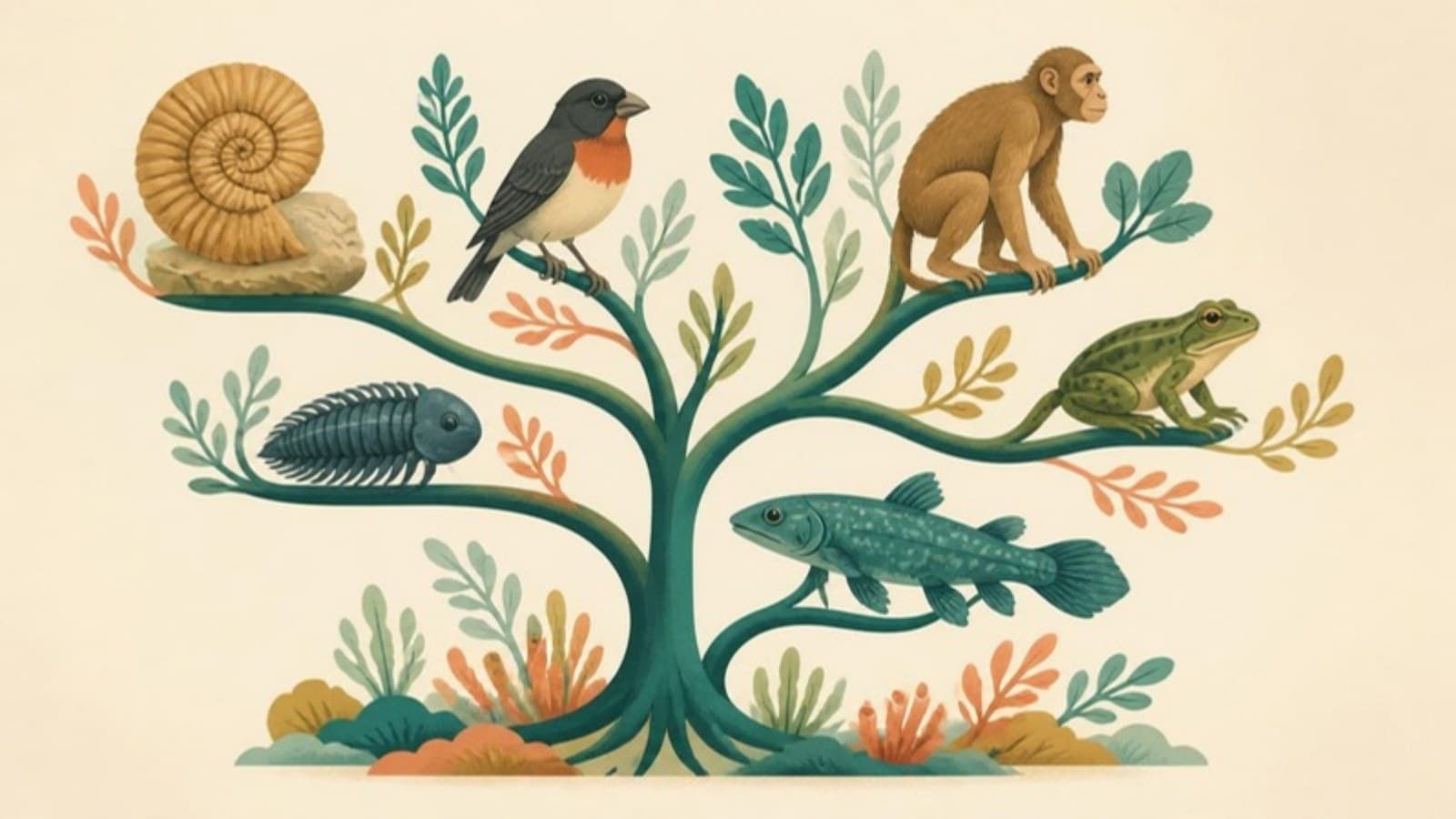
Evolution is the change in allele frequencies in populations over time, driven by natural selection and other mechanisms.
3.1 Theories of Evolution
Lamarckism (Lamarck, 1809)
- Organisms change in response to environment during lifetime
- Acquired characteristics passed to offspring
- Use and disuse principle: Used organs become stronger; unused organs degenerate
- Rejected: Acquired characters not heritable; mechanism unclear
Darwinism - Natural Selection (Darwin, 1859)
- Variation: Individuals in population show differences
- Adaptation: Organisms better suited to environment survive and reproduce (survival of the fittest)
- Inheritance: Beneficial traits passed to offspring
- Result: Gradual change in population over generations
Modern Synthetic Theory (1930s-1940s)
- Integrates Darwin's selection with Mendelian genetics
- Evolution = change in allele frequencies
- Microevolution: Small-scale changes within species
- Macroevolution: Large-scale changes, speciation (origin of new species)
3.2 Evidence for Evolution
Fossil Evidence:
- Transitional fossils: Show intermediate forms between species
- Radiometric dating: Determines fossil age using radioactive decay
- Index fossils: Mark specific geological time periods
- Examples:
- Archaeopteryx (dinosaur-bird transition)
- Lucy (Australopithecus - human ancestor)
- Tiktaalik (fish-tetrapod transition)
Comparative Anatomy:
- Homologous structures: Same origin, different function
- Human arm, bat wing, whale flipper - all have 5 digits
- Suggests common ancestor
- Vestigial structures: Non-functional remnants of ancestral structures
- Human coccyx (tailbone)
- Whale pelvic bones
- Appendix in humans
- Analogous structures: Different origin, similar function
- Bird wing and insect wing
- Result of convergent evolution
Comparative Embryology:
- Ontogeny recapitulates phylogeny (Haeckel):
- Embryonic development reflects evolutionary history
- All vertebrate embryos show gill slits, notochord early development
- Embryonic similarities stronger than adult similarities
- Supports idea of common ancestry
Molecular Evidence:
- DNA homology: Species share similar DNA sequences (% identity)
- Humans-chimpanzees: 98% identity
- Humans-mice: 85% identity
- Humans-bacteria: 30% identity
- Amino acid sequencing: Proteins of related species similar
- Cytochrome c: 37/104 amino acids identical in mammals
- Molecular clocks: Mutation accumulation estimates divergence time
- More differences = more evolutionary time
Biogeography:
- Geographic distribution: Species related to environment
- Darwin's finches (Galápagos Islands): 13 species, different beaks adapted to different foods
- Similar species in similar environments (convergent evolution)
- Isolation leads to differentiation (Galápagos vs. mainland)
- Endemic species: Found only in one region (island species)
Direct Observation:
- Antibiotic resistance: Bacteria evolve resistance in years, not millions of years
- Peppered moths: Industrial melanism in England (1850s)
- Light-colored moths prevalent before pollution
- Dark-colored moths common during industrial period
- Light moths returned after pollution control
- Natural selection in action over decades
- Malaria mosquitoes: Evolution of insecticide resistance
3.3 Mechanisms of Evolution
Natural Selection
- Differential reproduction: Organisms with advantageous traits produce more offspring
- Types of selection:
- Directional: Favors one extreme (e.g., larger body size advantageous)
- Stabilizing: Favors intermediate (e.g., medium weight most viable)
- Disruptive: Favors both extremes (e.g., very large and very small beneficial)
Genetic Drift
- Random changes in allele frequencies
- Causes: Random sampling in reproduction
- Effect:
- Stronger in small populations
- Can fix alleles regardless of fitness
- Leads to genetic differentiation between isolated populations
- Founder effect: Small founding population has different allele frequencies than original
- Bottleneck effect: Population reduction followed by recovery from few individuals
Gene Flow (Migration)
- Movement of alleles between populations
- Effect: Homogenizes allele frequencies between populations
- Result: Reduces genetic differentiation
Mutation
- Source of genetic variation
- Types:
- Point mutation: Single base change (transition, transversion)
- Insertion/deletion: Nucleotides added or removed
- Chromosomal: Large-scale rearrangements
- Rate: ~1 in 10⁹ per base pair per generation (very low)
- Direction: Random; not directed by selection
3.4 Hardy-Weinberg Equilibrium
Foundation of population genetics; predicts allele frequencies in non-evolving population.
Equation: p² + 2pq + q² = 1
Where:
- p = frequency of dominant allele (A)
- q = frequency of recessive allele (a)
- p² + q² = 1 (frequencies sum to 1)
Genotype frequencies:
- p² = frequency of AA
- 2pq = frequency of Aa
- q² = frequency of aa
Conditions for Hardy-Weinberg Equilibrium:
- No mutations: No new alleles introduced
- Random mating: No sexual selection or inbreeding
- No gene flow: No migration in or out
- Large population: No genetic drift
- No natural selection: All genotypes equally viable
Applications:
- Predicting disease frequency: If q = 0.01 (1% recessive), then q² = 0.0001 (0.01% of population has disease)
- Testing evolution: If allele frequencies change, population is evolving
- Determining if allele is dominant or recessive: Calculate expected frequencies; compare to observed
Example Calculation:
If brown eyes (B, dominant) = 84% and blue eyes (b, recessive) = 16%:
- q² = 0.16 → q = 0.4
- p = 1 - 0.4 = 0.6
- p² = 0.36 (BB), 2pq = 0.48 (Bb), q² = 0.16 (bb)
- Expected: 36% BB, 48% Bb, 16% bb
3.5 Human Evolution
Evolutionary Timeline:
| Stage | Time | Characteristics |
|---|
| Ape-human ancestor | 6-8 million years ago | Last common ancestor with chimpanzees |
| Australopithecus | 4-2 million years ago | Bipedal, small brain (400 cc), Africa |
| Homo habilis | 2.5-1.5 mya | Tool maker, brain 600-700 cc |
| Homo erectus | 1.8-0.3 mya | Walked upright, used fire, brain 800-1000 cc |
| Homo neanderthalensis | 200,000-30,000 ya | Large brain (1400 cc), Europe, used tools |
| Homo sapiens | 200,000 ya-present | Brain 1300-1400 cc, language, culture |
| Modern humans | 50,000 ya-present | Agriculture, civilization, science |
Human Characteristics:
- Bipedalism: Upright walking → freed hands for tool use
- Increasing brain size: Larger cortex for complex thinking
- Reduced jaw and tooth size: Cooked food easier to eat
- Extended childhood: More time for learning
- Language: Complex communication
- Culture: Transmission of knowledge non-genetically
| Topic | 2025 | 2024 | 2023 | 2022 | 2021 | 2020 | Total | Avg/Year |
|---|
| Mendelian Inheritance | 2 | 2 | 3 | 2 | 2 | 2 | 13 | 2.17 |
| Non-Mendelian Inheritance | 1 | 1 | 1 | 1 | 1 | 1 | 6 | 1.00 |
| Molecular Basis (DNA/RNA) | 2 | 3 | 2 | 3 | 2 | 2 | 14 | 2.33 |
| Gene Expression | 2 | 2 | 2 | 2 | 2 | 2 | 12 | 2.00 |
| Evolution | 2 | 2 | 2 | 2 | 2 | 2 | 12 | 2.00 |
| Human Genome/DNA Fingerprinting | 1 | 1 | 1 | 1 | 1 | 1 | 6 | 1.00 |
| Genetic Code & Mutations | 1 | 1 | 1 | 1 | 2 | 1 | 7 | 1.17 |
| Hardy-Weinberg/Population Genetics | 1 | 1 | 1 | 1 | 1 | 1 | 6 | 1.00 |
| TOTAL | 12 | 13 | 13 | 13 | 13 | 12 | 76 | 12.67 |
Practice break
Reading is prep. Practising is progress.
Free to try · replies within a few hours on WhatsApp
- Mendelian ratios: 3:1, 9:3:3:1, test cross results
- DNA structure: Base pairing, chargaff's rules, antiparallel strands
- Transcription/Translation: mRNA synthesis, codon-anticodon pairing, genetic code
- Gene regulation: Lac operon, promoter/operator
- Evolution: Natural selection, Hardy-Weinberg, fossil evidence
- DNA fingerprinting: STR, RFLP applications
- Confusing alleles with genes: Allele = variant form; Gene = DNA segment coding for trait
- Mixing up dominance and recessiveness: Dominant = expressed in heterozygote; Recessive = only in homozygote
- Incorrect dihybrid cross calculation: Forgetting 9:3:3:1 ratio or calculating phenotypes incorrectly
- DNA replication direction: Forgetting leading strand is continuous; lagging strand is fragmented
- Transcription vs. Translation: mRNA made from DNA in transcription; proteins made from mRNA in translation
- Genetic code degeneracy: Thinking each codon codes for unique amino acid (actually redundant)
- Evolution confusions:
- Thinking organisms evolve to adapt (evolution is non-directional)
- Confusing adaptation with evolution
- Misunderstanding natural selection mechanism
- Hardy-Weinberg application: Forgetting conditions; incorrectly calculating allele/genotype frequencies
- Gene regulation: Mixing up positive and negative regulation; repressor/activator roles
- DNA fingerprinting: Confusing STR with SNP; incorrectly calculating match probability
1. Mendel's Monohybrid Cross
P:        TT (Tall) × tt (Short)
              ↓
F₁:       100% Tt (Tall)
              ↓
F₂: Tt × Tt → 1 TT : 2 Tt : 1 tt
             3 Tall : 1 Short
2. Punnett Square for Dihybrid Cross
AaBb × AaBb

        AB      Ab      aB      ab
AB      AABB    AABb    AaBB    AaBb
Ab      AABb    AAbb    AaBb    Aabb
aB      AaBB    AaBb    aaBB    aaBb
ab      AaBb    Aabb    aaBb    aabb

Result: 9 A_B_ : 3 A_bb : 3 aaB_ : 1 aabb
3. DNA Replication (Semi-Conservative)
Original DNA: (A-T strand, T-A strand)
        ↓ Replication
New DNA #1: (A-T original + T-A new)
New DNA #2: (T-A original + A-T new)
Each contains one original + one new strand
4. DNA Double Helix Structure
        5' → 3'
         ATCG
         ||||
         TAGC
        3' ← 5'

Major groove and minor groove
Base pairs: A-T (2 H-bonds), G-C (3 H-bonds)
Antiparallel strands
Diameter: 2 nm, One turn: 10 bp, 3.4 nm
5. Central Dogma: DNA → RNA → Protein
DNA (Template strand, 3'→5')
  ↓ TRANSCRIPTION (RNA polymerase)
mRNA (5'→3') + cap + tail
  ↓ TRANSLATION (Ribosome + tRNA)
Protein (N-terminus → C-terminus)
6. Lac Operon Regulation
NO LACTOSE (OFF):
Repressor bound to operator → No transcription

LACTOSE PRESENT (ON):
Lactose (allolactose) binds repressor → Repressor releases
RNA polymerase transcribes lacZ, lacY, lacA → Enzymes made
7. DNA Fingerprinting: STR Profile
Individual 1:
Locus 1: 7 repeats (14 bp/repeat = 98 bp)
Locus 2: 5 repeats (100 bp)

Individual 2:
Locus 1: 9 repeats (126 bp)
Locus 2: 6 repeats (120 bp)

Each person has unique STR profile
DNA matches: Same STR pattern at 13+ loci
8. Hardy-Weinberg Equilibrium
p² + 2pq + q² = 1

Where p + q = 1

Genotype frequencies:
AA = p²
Aa = 2pq
aa = q²

If q² = 0.01 (1% recessive)
Then q = 0.1, p = 0.9
AA = 0.81 (81%)
Aa = 0.18 (18%)
aa = 0.01 (1%)
9. Gene Regulation: RNA Polymerase Binding (Prokaryotic)
            PROMOTER
            (RNA binding site)
    |-------|----------|
  -35 box  -10 box    Start (TSS)
  TTGACA   TATAAT      +1

Sigma (σ) factor recognizes -35 and -10 boxes
Helps RNA polymerase core enzyme bind promoter
Forms holoenzyme complex
10. Evolution: Natural Selection
POPULATION VARIATION
       ↓
Some individuals better adapted
(faster, stronger, disease-resistant, etc.)
       ↓
These survive and reproduce MORE
       ↓
Beneficial traits increase in frequency
       ↓
Population EVOLVES
(allele frequencies change)
-
Mendel's Law of Segregation: Alleles separate during meiosis; each gamete gets one allele.
-
Mendel's Law of Independent Assortment: Alleles of different genes assort independently during gamete formation.
-
Test Cross: Cross heterozygote with homozygous recessive to reveal hidden genotype (1:1 ratio).
-
Incomplete Dominance: Heterozygote shows intermediate phenotype (e.g., pink flowers from red × white).
-
Codominance: Both alleles fully expressed in heterozygote (e.g., AB blood type).
-
Multiple Alleles: More than two alleles exist for a gene; individuals have max two alleles.
-
Polygenic Inheritance: Multiple genes control trait; produces continuous variation (bell curve).
-
Pleiotropy: One gene affects multiple traits (e.g., PKU affects cognition, pigmentation, odor).
-
DNA Double Helix: Two antiparallel strands; 2 nm diameter; A-T (2 bonds), G-C (3 bonds).
-
Semi-Conservative Replication: Each new DNA has one original strand + one new strand.
-
Leading Strand: Synthesized continuously in 5'→3' direction; only one primer needed.
-
Lagging Strand: Synthesized discontinuously as Okazaki fragments (100-2000 nt); multiple primers.
-
DNA Proofreading: 3'→5' exonuclease activity removes mismatched bases (error: 1 in 10⁷).
-
Genetic Code: Triplet codons; 64 total (61 sense + 3 stop); universal and degenerate.
-
Start Codon: AUG codes for N-formylmethionine (prokaryotes) or methionine (eukaryotes).
-
Stop Codons: UAA (ochre), UAG (amber), UGA (opal); signal termination.
-
Wobble Hypothesis: Third codon position shows flexibility; one tRNA pairs multiple mRNAs.
-
Transcription: RNAP synthesizes mRNA from DNA template strand in 5'→3' direction.
-
Prokaryotic Promoter: -35 box (TTGACA) and -10 box (TATAAT); sigma factor recognizes.
-
Eukaryotic Promoter: TATA box (~25-30 bp upstream); CAAT box; GC box; TFs required.
-
mRNA Processing: 5' cap (7-methylguanosine), 3' poly-A tail, splicing (introns removed).
-
Translation: tRNA anticodon pairs mRNA codon (complementary, antiparallel); ribosome catalyzes peptide bonds.
-
Lac Operon: ON when lactose present (inducer binds repressor, releases from operator); glucose regulates via CAP-cAMP.
-
Hardy-Weinberg Equation: p² + 2pq + q² = 1; predicts equilibrium allele frequencies.
-
Natural Selection: Differential reproduction of traits; changes allele frequencies; drives evolution.
MCQ 1: Mendelian Inheritance
Question: In a cross between AaBb × AaBb (dihybrid cross with complete dominance), what is the probability of obtaining an offspring with genotype AaBB?
A) 1/16
B) 1/8
C) 1/4
D) 3/16
Answer: B) 1/8
Explanation:
- For each trait independently:
- Aa × Aa → AA (1/4), Aa (1/2), aa (1/4)
- BB required: Bb × Bb → BB (1/4)
- Probability of Aa = 1/2; Probability of BB = 1/4
- Combined probability = 1/2 × 1/4 = 1/8
- Alternatively, using Punnett square: 2 AaBB out of 16 total = 2/16 = 1/8
MCQ 2: DNA Structure
Question: According to Chargaff's rule, in a DNA sample where adenine (A) comprises 20% of bases, what is the percentage of guanine (G)?
A) 20%
B) 30%
C) 40%
D) Cannot be determined without more information
Answer: B) 30%
Explanation:
- Chargaff's rules: A = T and G = C; A + G + T + C = 100%
- If A = 20%, then T = 20% (A = T)
- A + T = 40%, so G + C = 60%
- Since G = C, then G = 30% and C = 30%
MCQ 3: DNA Replication
Question: In the Meselson-Stahl experiment using N¹⁵ (heavy isotope) and N¹⁴ (light isotope), after two rounds of replication, what would be the ratio of hybrid DNA to completely light DNA?
A) 1:1
B) 1:2
C) 2:2 (1:1)
D) 1:3
Answer: C) 2:2 (1:1)
Explanation:
- Starting DNA: One N¹⁵-N¹⁵ (heavy), synthesized in N¹⁴ medium
- After 1st replication: Two hybrid (N¹⁵-N¹⁴) DNA molecules (semi-conservative)
- After 2nd replication:
- First hybrid (N¹⁵-N¹⁴) separates:
- One hybrid (N¹⁵-N¹⁴)
- One light (N¹⁴-N¹⁴)
- Second hybrid separates:
- One hybrid (N¹⁵-N¹⁴)
- One light (N¹⁴-N¹⁴)
- Total: 2 hybrid : 2 light = 1:1 ratio
MCQ 4: Genetic Code
Question: A mutation changes the 3rd codon position from A to U. The original codon is GAA (glutamic acid). The mutated codon is GAU. How would this mutation likely affect the protein?
A) Nonsense (stop) mutation
B) Silent mutation
C) Missense mutation
D) Frameshift mutation
Answer: C) Missense mutation
Explanation:
- GAA codes for glutamic acid (Glu)
- GAU codes for aspartic acid (Asp)
- Both amino acids are acidic but different
- Results in different amino acid at this position = missense mutation
- Note: This demonstrates wobble; despite 3rd position change, both code for different amino acids (not silent)
MCQ 5: Gene Regulation - Lac Operon
Question: In the lac operon, when lactose is present, the repressor protein:
A) Binds more tightly to the operator
B) Is unable to bind to the operator due to allolactose binding
C) Is synthesized in greater quantities
D) Degrades rapidly
Answer: B) Is unable to bind to the operator due to allolactose binding
Explanation:
- Lactose (converted to allolactose) acts as inducer
- Allolactose binds repressor → allosteric change in repressor shape
- Altered repressor cannot recognize operator sequence
- Repressor releases → operator exposed → RNA polymerase transcribes genes
- This is negative inducible regulation
MCQ 6: Transcription & Translation
Question: During transcription in prokaryotes, if the DNA template strand has sequence 3'-TACGGCTAA-5', what would be the corresponding mRNA sequence?
A) 5'-AUGCCGAUU-3'
B) 3'-AUGCCGAUU-5'
C) 5'-AUGCCGAU-3'
D) 5'-AUGCGCUAA-3'
Answer: A) 5'-AUGCCGAUU-3'
Explanation:
- Template DNA: 3'-TACGGCTAA-5'
- mRNA synthesized 5'→3', complementary to template
- A pairs with U in RNA (not T)
- 3'-TAC' → 5'-AUG
- 'GGC' → 'CCG
- 'TAA-5'' → 'AUU-3'
- mRNA: 5'-AUGCCGAUU-3'
MCQ 7: Hardy-Weinberg Equilibrium
Question: A recessive genetic disorder affects 1 in 10,000 individuals. What is the frequency of the recessive allele?
A) 0.01
B) 0.001
C) 0.1
D) 0.001
Answer: A) 0.01
Explanation:
- Affected individuals = aa = 1/10,000 = 0.0001
- q² = 0.0001, so q = √0.0001 = 0.01
- Recessive allele frequency = 0.01 or 1%
MCQ 8: DNA Fingerprinting
Question: DNA fingerprinting using STR analysis has highest discriminatory power because:
A) STR regions are not subject to mutation
B) STR regions show high variation between individuals
C) STR regions are unique to each family
D) STR regions are located on sex chromosomes
Answer: B) STR regions show high variation between individuals
Explanation:
- STR (Short Tandem Repeat) regions have variable number of repeats (VNTR)
- Number of repeats differs between individuals (5-40 repeats at each locus)
- Analyzing 13+ STR loci gives probability of random match ~1 in 10 billion
- High variation = high discrimination power
MCQ 9: Evolution & Natural Selection
Question: Peppered moths in Industrial Revolution England showed rapid change from light to dark coloration. This is best explained by:
A) Lamarckian evolution (acquired characteristics)
B) Genetic mutation creating dark color
C) Natural selection (industrial pollution favored dark moths)
D) Gene flow from dark moth populations
Answer: C) Natural selection (industrial pollution favored dark moths)
Explanation:
- Dark moths were less visible on soot-darkened tree trunks
- Dark moths had better survival due to camouflage
- Dark moths reproduced more successfully
- Frequency of dark allele increased
- Classic example of natural selection in action (observable in decades, not millions of years)
- NOT Lamarckism (moths didn't develop darkness; pre-existing variation favored)
MCQ 10: Molecular Basis of Inheritance
Question: A mutation in the promoter region (e.g., -35 box from TTGACA → TTGAGA) in the lac operon would most likely result in:
A) Increased expression of lac genes
B) Decreased expression of lac genes
C) No change in regulation
D) Constitutive (constant) expression
Answer: B) Decreased expression of lac genes
Explanation:
- -35 box (TTGACA) is recognized by sigma factor
- Mutation (TTGACA → TTGAGA) reduces sigma factor recognition
- Sigma factor cannot efficiently guide RNA polymerase to promoter
- Transcription initiation efficiency decreases
- Less mRNA for lac genes → fewer enzymes produced
- Cells unable to metabolize lactose efficiently, even if present
1. Is Genetics one of the highest-scoring chapters in NEET?
Yes! Genetics accounts for approximately 12-15% of NEET marks (26-28 questions out of 180). It's one of the most important chapters for achieving a high score because:
- Questions are frequently straightforward if concepts are clear
- Previous year patterns help predict likely questions
- Genetics links to multiple other topics (evolution, molecular biology, human health)
- Many students struggle with it, so mastering it gives competitive advantage
2. What's the difference between allele frequency and genotype frequency?
Allele frequency = How often a specific allele (variant) appears in the population (e.g., 30% of population carries A allele)
Genotype frequency = How often a specific combination appears (e.g., 20% are AA, 40% are Aa, 40% are aa)
In Hardy-Weinberg: If p (frequency of A) = 0.6 and q (frequency of a) = 0.4, then p² (AA) = 0.36, 2pq (Aa) = 0.48, q² (aa) = 0.16
3. Why is the genetic code described as "degenerate"?
Degeneracy means multiple codons code for the same amino acid. Only 20 amino acids exist, but 61 codons code for amino acids. Examples:
- Leucine: 6 codons (UUA, UUG, CUU, CUC, CUA, CUG)
- Arginine: 6 codons
- Serine: 6 codons
- This reduces impact of certain mutations; codons differing only in 3rd position often code for same amino acid (wobble hypothesis)
4. What's the key difference between prokaryotic and eukaryotic transcription?
| Feature | Prokaryotic | Eukaryotic |
|---|
| RNA Polymerase | One type | Three types (Pol I, II, III) |
| Promoter | -35, -10 boxes | TATA, CAAT, GC boxes |
| Factors | Sigma factor | Multiple transcription factors |
| mRNA Processing | None | 5' cap, 3' poly-A, splicing |
| Location | Cytoplasm | Nucleus |
| Coupled | Transcription & translation coupled | Separate (transcription in nucleus, translation in cytoplasm) |
5. How do I calculate the probability of an offspring having a specific genotype?
Use the multiplication rule for independent events:
- Determine probability for each gene separately
- Multiply probabilities together
Example: AaBb × AaBb, probability of AaBb offspring?
- Probability of Aa = 1/2 (from Aa × Aa cross)
- Probability of Bb = 1/2 (from Bb × Bb cross)
- Probability of AaBb = 1/2 × 1/2 = 1/4 (25%)
6. What are the key evidences for evolution?
The strongest evidences are:
- Fossil record: Transitional forms, radiometric dating shows age progression
- Comparative anatomy: Homologous structures in different species suggest common ancestor
- Molecular evidence: DNA/protein sequences show similarities; more similar in closely related species
- Biogeography: Species distribution matches environmental conditions and evolutionary isolation
- Direct observation: Antibiotic resistance, peppered moths, Darwin's finches show evolution in action
- Embryology: Vertebrate embryos show similar structures early in development
7. How does natural selection differ from genetic drift?
Natural Selection:
- Non-random change in allele frequencies
- Beneficial traits increase; harmful traits decrease
- Stronger in large populations
- Predictable direction based on fitness advantages
Genetic Drift:
- Random change in allele frequencies
- Occurs in both beneficial and harmful directions
- Stronger in small populations
- Unpredictable; can fix disadvantageous alleles
8. What's the relationship between mutations and evolution?
Mutations are the SOURCE of genetic variation:
- Most mutations are neutral (don't affect fitness)
- Beneficial mutations increase through natural selection
- Harmful mutations decrease through selection
- Without mutations, no variation for selection to act upon
- Mutation rate is low (~1 in 10⁹), but over millions of years, accumulates enough variation
- Evolution requires variation (mutation) + selection (natural selection)
Genetics is a vast and high-scoring chapter requiring thorough understanding of both classical (Mendelian) and modern (molecular) concepts. Success comes from:
- Understanding mechanisms: Don't memorize ratios; understand why 9:3:3:1 appears
- Linking topics: Connect Mendelian inheritance → molecular basis (DNA/genes) → evolution
- Practice calculations: Work through many monohybrid, dihybrid, Hardy-Weinberg problems
- Learn key diagrams: DNA replication, central dogma, lac operon, evolutionary trees
- Review PYQs: 76 previous year questions show patterns; likely topics repeating
- Avoid common mistakes: Clarify allele vs. gene, dominance vs. expression, adaptation vs. evolution
With strategic preparation focusing on high-weightage topics and consistent practice, you can master Genetics and secure 20+ marks in this crucial unit.
Happy learning! Master Genetics, Master NEET Biology!
Genetics carries some of the highest marks in the syllabus, and it's also where students most often under-invest relative to the payoff. Message us on WhatsApp at +91 88264 44334 with your current genetics mock score, and we'll tell you whether your time on this unit is proportionate to what it's worth in NEET.
Related reading: Principles of Inheritance and Variation Notes · NEET Genetics Weightage Analysis · Class 12 Biology Coaching