Loading...
Loading...
NEET Plant Physiology chapter weightage breakdown covering Photosynthesis, Respiration in Plants, Plant Growth. Year-wise PYQ analysis and mastery roadmap.
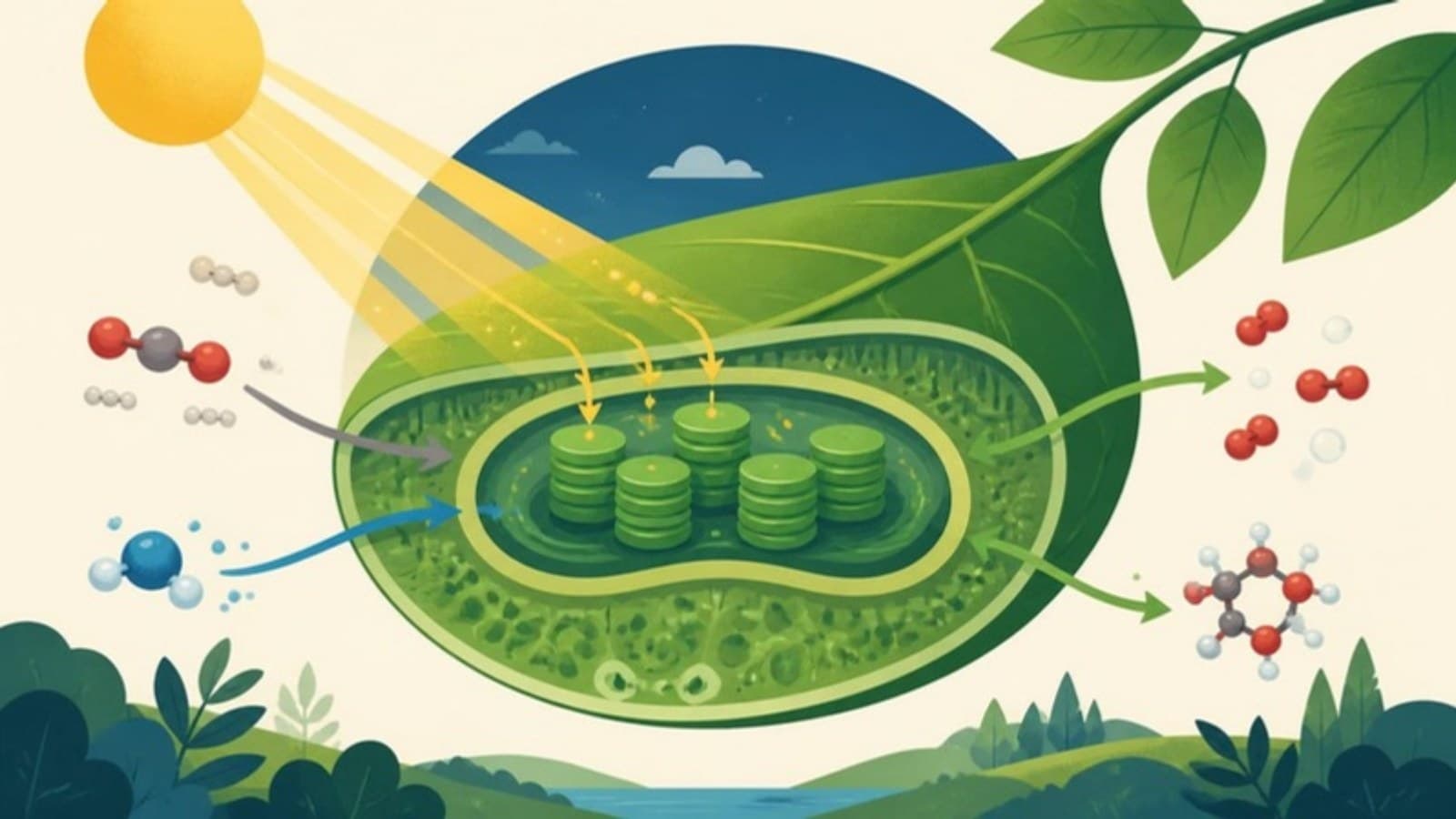

Plant Physiology is one of the most advanced and comprehensive units in NEET Biology, combining biochemistry, cellular processes, and ecological principles. This unit accounts for approximately 8-10 marks annually and is considered Advanced difficulty due to the integration of multiple complex biochemical pathways and regulatory mechanisms.
The Plant Physiology unit spans three critical chapters: Photosynthesis, Respiration in Plants, and Plant Growth and Development. Together, these chapters test your understanding of energy conversion, metabolic pathways, hormonal regulation, and environmental responses—all essential knowledge for biochemistry and molecular biology understanding.
| Year | Photosynthesis | Respiration | Plant Growth & Dev. | Total Marks | Total Questions |
|---|---|---|---|---|---|
| 2019 | 3 | 2 | 2 | 7 | 4 |
| 2020 | 2 | 2 | 2 | 6 | 3 |
| 2021 | 3 | 2 | 3 | 8 | 4 |
| 2022 | 4 | 2 | 2 | 8 | 4 |
| 2023 | 3 | 2 | 3 | 8 | 4 |
| 2024 | 3 | 3 | 2 | 8 | 4 |
| 2025 | 4 | 2 | 2 | 8 | 4 |
| Average | 3.1 | 2.1 | 2.3 | 8.6 | 3.7 |
Topics Covered:
Topic Priority Ranking:
PYQ Hotspots:
Detailed Topic Table:
| Topic | Mark Distribution | Key Concepts | Practice Focus |
|---|---|---|---|
| Light Reactions | 1.5-2 | PSII, ETC, PSI, chemiosmosis, O2 release | Diagram labeling, electron flow |
| Dark Reactions | 1-1.5 | Carbon fixation (RuBP + CO2), reduction (3-PG), regeneration | Cycle steps, intermediate compounds |
| C3 vs. C4 Plants | 1 | First compound (3-PG vs. OAA), anatomical differences | Plant examples, efficiency comparison |
| CAM Pathway | 0.5-1 | Temporal separation, succulents, desert plants | Adaptation understanding |
| Factors Affecting Rate | 0.5-1 | Light intensity, CO2, temperature, light wavelength | Graphical interpretations |
Study Tips:
Topics Covered:
Topic Priority Ranking:
PYQ Hotspots:
Detailed Topic Table:
| Topic | Mark Distribution | Key Concepts | Practice Focus |
|---|---|---|---|
| Glycolysis | 0.5-1 | 10 steps, ATP investment/payoff, NADH production | Step-by-step mechanism |
| Krebs Cycle | 1-1.5 | 8-step cycle, CO2 release, electron carriers | Intermediate compounds |
| Electron Transport Chain | 0.5-1 | Complexes I-IV, chemiosmosis, P/O ratio | Proton pumping, ATP synthesis |
| Anaerobic Respiration | 0.5-1 | Fermentation, lactate, ethanol, RQ calculation | Pathway comparison |
| Overall ATP Yield | 0.5-1 | Maximum 32-38 ATP per glucose (theoretical) | Calculation practice |
Study Tips:
Topics Covered:
Topic Priority Ranking:
PYQ Hotspots:
Detailed Topic Table:
| Topic | Mark Distribution | Key Concepts | Practice Focus |
|---|---|---|---|
| Auxin Effects | 0.5-1 | Phototropism, gravitropism, apical dominance | Mechanism understanding |
| Gibberellins | 0.5 | Seed germination, stem growth, flowering | Application in agriculture |
| Cytokinins | 0.5 | Cell division, senescence delay, callus formation | Tissue culture aspects |
| Ethylene | 0.5 | Ripening, senescence, responses to stress | Physiological effects |
| Photoperiodism | 0.5-1 | Critical day length, phytochrome, flowering timing | Plant classification |
| Abscisic Acid | 0.5 | Stress response, stomatal closure, seed dormancy | Environmental adaptation |
Study Tips:
PLANT PHYSIOLOGY UNIT
├── PHOTOSYNTHESIS
│   ├── Light Reactions (Thylakoid)
│   │   ├── Photosystem II (P680)
│   │   ├── Electron Transport Chain
│   │   ├── Photosystem I (P700)
│   │   └── Chemiosmosis → ATP + NADPH
│   ├── Dark Reactions (Stroma - Calvin Cycle)
│   │   ├── Carbon Fixation (RuBP + CO2)
│   │   ├── Reduction Phase (ATP + NADPH)
│   │   └── Regeneration (RuBP reformation)
│   ├── Photosynthetic Pathways
│   │   ├── C3 (Calvin pathway, Ribulose bisphosphate)
│   │   ├── C4 (Hatch-Slack pathway, Oxaloacetate)
│   │   └── CAM (Temporal separation, Cacti)
│   └── Factors: Light intensity, CO2, Temperature, Wavelength
├── RESPIRATION IN PLANTS
│   ├── Glycolysis (Cytoplasm)
│   │   ├── Glucose → 2 Pyruvate
│   │   ├── Net: 2 ATP + 2 NADH
│   │   └── Substrate-level phosphorylation
│   ├── Krebs Cycle (Mitochondrial matrix)
│   │   ├── Acetyl-CoA entry
│   │   ├── 2 ATP + 8 NADH + 2 FADH2
│   │   └── 2 CO2 release per acetyl group
│   ├── Electron Transport Chain (Inner membrane)
│   │   ├── NADH → 3 ATP
│   │   ├── FADH2 → 2 ATP
│   │   └── Total: ~32-38 ATP per glucose
│   └── Anaerobic Respiration (Fermentation)
│       ├── Lactate pathway
│       ├── Ethanol pathway
│       └── RQ = CO2/O2
└── PLANT GROWTH & DEVELOPMENT
    ├── Hormones
    │   ├── Auxin (Apical meristem)
    │   ├── Gibberellin (Immature seeds)
    │   ├── Cytokinin (Root nodules)
    │   ├── Ethylene (Ripening fruit)
    │   └── Abscisic Acid (Guard cells)
    ├── Seed Germination & Dormancy
    │   ├── Imbibition
    │   ├── Radical emergence
    │   └── Gibberellin signaling
    ├── Photoperiodism
    │   ├── Short-day plants (SD)
    │   ├── Long-day plants (LD)
    │   └── Phytochrome regulation
    ├── Apical Dominance
    │   ├── Auxin from shoot apex
    │   └── Inhibition of lateral buds
    └── Growth Phases
        ├── Cell division (Meristems)
        ├── Cell elongation (Auxin effect)
        └── Cell differentiation
Frequency: 1-2 questions every year
Practice: Diagram labeling with numbered sequential steps; understand direction of electron and proton movement
Frequency: 1 question per year
Practice: Learn compound names and number of carbons; practice stoichiometry of ATP and NADPH requirements
Practice break
Reading is prep. Practising is progress.
Free to try · replies within a few hours on WhatsApp
Frequency: 1 question per year
Practice: Learn distinguishing features; practice identifying plants; understand Kranz anatomy advantages
Frequency: 1 question per year
Practice: Step-by-step mechanism; ATP yield calculation at each phase; NADH fate in different organisms
Frequency: 1 question per year
Practice: Case studies of hormone application; understand mechanism through experimental reasoning
| Chapter | Estimated Marks | Question Count | Difficulty | Importance |
|---|---|---|---|---|
| Photosynthesis | 3-4 | 2 | Intermediate | Very High |
| Respiration in Plants | 2-3 | 1-2 | Intermediate | High |
| Plant Growth & Development | 2-3 | 1-2 | Advanced | High |
| Total | 8-10 | 4-5 | Advanced | Very High |
Confusing light and dark reactions: Dark reactions don't occur in darkness; they use products (ATP, NADPH) from light reactions. They occur during the day and night but depend on light reaction products.
Incorrect Calvin cycle stoichiometry: Remember that 3 CO2 entering the cycle produces 6 G3P, but only 1 G3P exits (net) to make glucose. 5 G3P molecules are used to regenerate 3 RuBP.
Wrong C3 and C4 plant examples: Common mistake mixing C3 and C4 plants. Remember: Wheat and rice are C3; maize and sugarcane are C4.
ATP yield miscalculation: Theoretical maximum is 32-38 ATP per glucose. Many students forget about the cost of transporting NADH across mitochondrial membrane (reducing yield by 1-2 ATP per NADH).
Misunderstanding hormone mechanisms: Hormones don't directly cause growth; they regulate genes that control growth. For example, auxin works through receptor proteins, not by direct enzyme inhibition.
Confusing anabolic and catabolic pathways: Photosynthesis is anabolic (building glucose); respiration is catabolic (breaking down glucose). Understand their opposing nature but interdependence.
Ignoring photoperiodism details: Students forget that short-day plants flower when day length is less than critical length (not more). This often leads to incorrect answers.
A: Light reactions are reactions that require light as an energy source. The products (ATP and NADPH) from light reactions are used in dark reactions. Dark reactions don't occur in darkness either; they use the products from light reactions that were generated during the light period.
A: The first stable compound is 3-phosphoglycerate (3-PG), a 3-carbon compound formed when RuBP (5-carbon) combines with CO2. This is why the pathway is called C3 photosynthesis.
A: C4 plants concentrate CO2 around RuBisCO enzyme in bundle sheath cells, reducing photorespiration losses. They also have better water use efficiency because they can fix CO2 at lower concentrations, allowing stomata to remain partially closed and conserve water.
A: NADH produced in glycolysis (cytoplasm) transfers electrons to the electron transport chain in mitochondria. Depending on the shuttle system used, these electrons generate 2-3 ATP molecules each during oxidative phosphorylation.
A: Theoretically, one glucose molecule can produce approximately 32-38 ATP molecules: 2 from glycolysis (substrate-level), 2 from Krebs cycle (substrate-level), and 28-34 from oxidative phosphorylation (approximately 3 ATP per NADH and 2 ATP per FADH2).
A: RuBisCO (Ribulose 1,5-bisphosphate carboxylase/oxygenase) catalyzes the first step of the Calvin cycle, combining RuBP (5-carbon) with CO2 to form 3-PG (3-carbon). It's considered the most abundant protein on Earth due to its crucial role in carbon fixation.
A: When exposed to unidirectional light, auxin is redistributed to the shaded side of the plant. Higher auxin concentration on the shaded side causes cells there to elongate more than cells on the illuminated side, causing the plant to bend toward light.
A: Long-day plants flower when the day length exceeds a critical length (e.g., >12 hours light). Short-day plants flower when the day length is shorter than a critical length (e.g., <12 hours light). Both respond to photoperiod through the phytochrome system.
A: Abscisic acid is produced in roots and transported to leaves during drought. It causes stomata to close by changing guard cell turgor pressure, reducing water loss through transpiration while also inhibiting photosynthesis to conserve resources during water scarcity.
A: RQ = CO2 released / O2 consumed. RQ values indicate the substrate being respired: RQ = 1 for carbohydrates (CH2O), RQ = 0.7 for fats, RQ = 0.8-0.9 for proteins. This helps identify which nutrient is being catabolized for energy.
Plant Physiology accounts for 8-10 marks in NEET with Advanced difficulty. Photosynthesis is the highest-weighted component (3-4 marks), requiring mastery of both light and dark reactions with detailed mechanism understanding.
Light reactions and Calvin cycle are the foundational concepts appearing in nearly every NEET exam. Focus on learning electron flow pathways, chemiosmosis mechanisms, and Calvin cycle stoichiometry to maximize scoring in this high-value topic.
C3 vs. C4 photosynthesis appears frequently with emphasis on understanding efficiency differences, anatomical adaptations (Kranz anatomy), and plant examples. Master this comparison to answer both direct and applied questions.
Respiration pathways (glycolysis, Krebs cycle, ETC) are essential for complete biochemistry understanding. Learn intermediate compounds, enzyme names, and ATP yield calculations to succeed in mechanistic and quantitative questions.
Plant hormones and photoperiodism require mechanism-based learning rather than memorization. Focus on understanding how auxin causes phototropism, how gibberellins regulate growth, and how critical day length determines flowering to excel in application-based questions.
Author: Dr. Shekhar, Founder & Senior Faculty Last Updated: 2026-02-07 Category: Chapter Guides Related Resource: NEET Biology Notes - Plant Physiology
The three chapters in Plant Physiology don't carry equal weight in NEET, even though they get revised as one unit. Message us on WhatsApp at +91 88264 44334 with your target score and current weak spot among the three, and we'll tell you where the next hour is best spent.
Related reading: Photosynthesis Complete NEET Guide · Respiration in Plants Notes · Class 11 Biology Coaching
Related resources

About the author
Dr. Shekhar C. Singh
AIIMS New Delhi alumnus who has taught biology since 2014, from NCERT foundations to the International Biology Olympiad.
Read his full profile →Get personalized guidance from AIIMS experts and achieve your medical college dreams
More from the blog
Complete photosynthesis guide for NEET 2026. Learn light reactions, Calvin cycle, C3/C4/CAM plants, photorespiration, and practice with 10 original MCQs. Analysis of 15 previous year questions included.
9 Feb 2026
Master Photosynthesis for NEET 2026 with comprehensive notes on light reactions, Calvin cycle, C3, C4, and CAM pathways. NCERT-aligned content with diagrams and previous year questions.
12 Jun 2026
title: NEET Animal Kingdom Weightage 2026 — Classification & Phyla Analysis. Complete weightage analysis, question patterns, and chapter-wise strategy for NEET 2026 Biology preparation.
7 Feb 2026
Share your thoughts, ask a question, or help another student
Type it below and send it to us on WhatsApp — no sign-up needed.
For NEET Biology, aim for 3-4 hours of focused study daily. Quality matters more than quantity!
Yes! NCERT covers 95% of NEET Biology questions. Master it completely before any reference book.
Human Physiology (20%), Genetics (18%), and Ecology (12%) are the highest-scoring areas.
Need personalized guidance?