Loading...
Loading...
Master Chemical Coordination and the Endocrine System for NEET 2026 with complete notes on all glands, hormones, mechanisms of action, feedback loops, and disorders. NCERT-aligned with PYQ analysis and 10 practice MCQs.

6 points to remember for NEET
Chemical Coordination and Integration (Chapter 22, Class 11 NCERT) contributes approximately 4-5 questions in NEET every year. This chapter requires memorisation of glands, hormones, functions, and disorders, but understanding the logic of hormone action and feedback mechanisms makes it significantly easier. This guide covers everything NCERT prescribes, with exam-focused tables and practice questions.
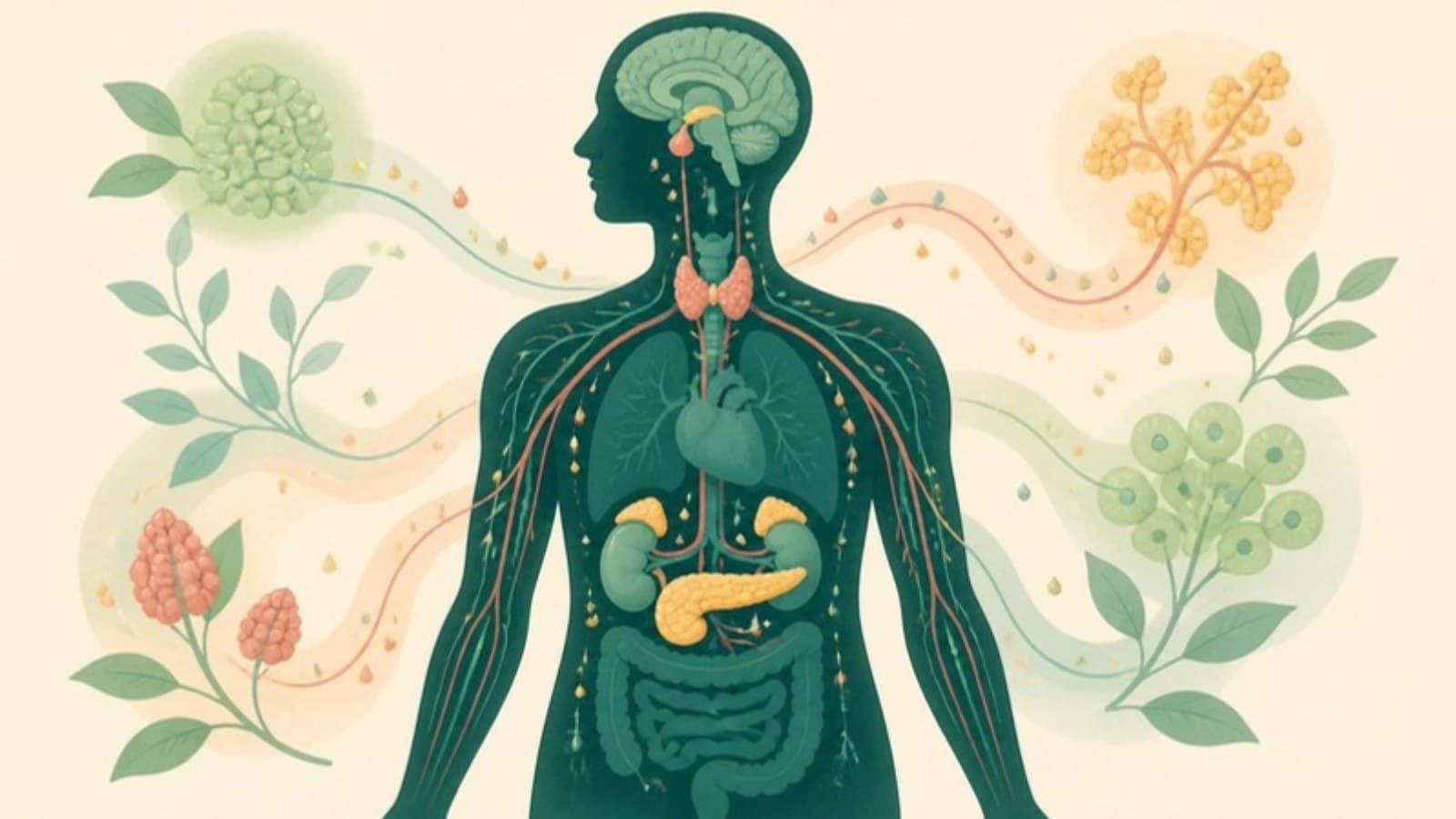
The endocrine system works alongside the nervous system to coordinate body functions. While the nervous system provides rapid, short-duration signals via electrical impulses, the endocrine system provides slower, longer-lasting regulation through chemical messengers called hormones.
Hormones are non-nutrient chemicals that act as intercellular messengers and are produced in trace amounts. They are secreted by endocrine glands (ductless glands) directly into the blood and act on distant target organs via specific receptors.
NEET Tip: Endocrine glands are ductless and secrete hormones into blood. Exocrine glands have ducts and secrete enzymes, sweat, saliva etc. Pancreas and gonads are both endocrine and exocrine (mixed glands).
The hypothalamus is a small region at the base of the brain (part of the diencephalon) that serves as the link between the nervous system and the endocrine system. It controls the pituitary gland by secreting:
| Hormone Type | Action on Pituitary | Examples |
|---|---|---|
| Releasing hormones | Stimulate anterior pituitary to release hormones | GnRH (Gonadotropin-releasing hormone), TRH (Thyrotropin-releasing hormone), CRH (Corticotropin-releasing hormone), GHRH (Growth hormone-releasing hormone) |
| Inhibiting hormones | Inhibit anterior pituitary from releasing hormones | Somatostatin (GH-inhibiting hormone), Dopamine (Prolactin-inhibiting hormone) |
NEET Tip: The hypothalamus produces releasing and inhibiting hormones that regulate the anterior pituitary. It also produces oxytocin and vasopressin (ADH), which are synthesised in hypothalamic neurons but stored and released from the posterior pituitary.
The pituitary gland (hypophysis) is located in the sella turcica (a bony cavity at the base of the brain) and is connected to the hypothalamus by the infundibulum (pituitary stalk). It has two main lobes.
| Hormone | Full Name | Target | Function |
|---|---|---|---|
| GH (STH) | Growth Hormone (Somatotropin) | Bones, muscles, all tissues | Stimulates growth; excess causes gigantism (children) / acromegaly (adults); deficiency causes dwarfism |
| TSH | Thyroid Stimulating Hormone | Thyroid gland | Stimulates synthesis and secretion of T3 and T4 |
| ACTH | Adrenocorticotropic Hormone | Adrenal cortex | Stimulates synthesis and secretion of glucocorticoids (cortisol) |
| FSH | Follicle Stimulating Hormone | Ovaries / Testes | Stimulates follicle development in females; spermatogenesis in males |
| LH | Luteinising Hormone | Ovaries / Testes | Triggers ovulation, corpus luteum formation in females; stimulates Leydig cells to secrete testosterone in males |
| PRL | Prolactin | Mammary glands | Stimulates milk production after childbirth |
NEET Tip: FSH and LH are collectively called gonadotropins because they regulate the gonads. LH surge triggers ovulation. Remember: "FSH = Follicle growth, LH = Luteinisation and ovulation."
The posterior pituitary does not synthesise hormones. It stores and releases hormones produced by the hypothalamus.
| Hormone | Function | Clinical Relevance |
|---|---|---|
| Oxytocin | Stimulates uterine contractions during labour; milk ejection (let-down reflex) | Used to induce labour |
| Vasopressin (ADH) | Promotes water reabsorption in kidney collecting ducts; increases blood pressure | Deficiency causes diabetes insipidus (dilute urine, excessive thirst) |
Secretes Melanocyte Stimulating Hormone (MSH), which regulates skin pigmentation. This lobe is vestigial in humans but significant in lower vertebrates.
The thyroid gland is the largest endocrine gland, located in the neck on either side of the trachea. It has two lobes connected by an isthmus. Composed of follicles filled with colloid containing thyroglobulin.
| Hormone | Full Name | Function |
|---|---|---|
| T4 (Thyroxine) | Tetraiodothyronine | Major circulating thyroid hormone; converted to T3 in tissues |
| T3 | Triiodothyronine | More active form; regulates basal metabolic rate (BMR), growth, development |
| Calcitonin (TCT) | Thyrocalcitonin | Lowers blood calcium levels by inhibiting bone resorption (secreted by parafollicular C-cells) |
Iodine is essential for synthesis of T3 and T4. Iodine deficiency leads to enlargement of the thyroid gland called goitre.
| Disorder | Cause | Features |
|---|---|---|
| Goitre | Iodine deficiency | Enlargement of thyroid gland |
| Cretinism | Hypothyroidism in infancy | Stunted growth, mental retardation, low BMR |
| Myxoedema | Hypothyroidism in adults | Puffiness, low BMR, weight gain, lethargy |
| Graves' disease | Hyperthyroidism (autoimmune) | Weight loss, high BMR, exophthalmos (bulging eyes), increased heart rate |
| Hashimoto's thyroiditis | Autoimmune destruction of thyroid | Hypothyroidism |
NEET Tip: Cretinism occurs in children, myxoedema in adults - both are caused by hypothyroidism. Exophthalmos (bulging eyes) is a hallmark of Graves' disease (hyperthyroidism).
Four small glands embedded on the posterior surface of the thyroid gland. They secrete Parathyroid Hormone (PTH) or parathormone.
| Feature | PTH | Calcitonin |
|---|---|---|
| Source | Parathyroid gland (chief cells) | Thyroid gland (parafollicular C-cells) |
| Effect on blood calcium | Increases blood Ca2+ levels | Decreases blood Ca2+ levels |
| Mechanism | Stimulates bone resorption, increases Ca2+ absorption from gut, increases Ca2+ reabsorption in kidneys | Inhibits bone resorption, promotes Ca2+ deposition in bones |
| Disorder if excess | Hypercalcaemia, kidney stones, weakened bones | Hypocalcaemia (rare) |
NEET Tip: PTH and Calcitonin are antagonistic hormones that maintain calcium homeostasis. PTH increases blood calcium (hypercalcaemic), Calcitonin decreases it (hypocalcaemic). This is a very frequently tested concept.
Two adrenal glands sit atop each kidney. Each gland has two distinct regions: the outer cortex and the inner medulla.
The cortex has three zones, each producing different hormones:
| Zone | Hormones | Function |
|---|---|---|
| Zona glomerulosa (outermost) | Mineralocorticoids (Aldosterone) | Regulates electrolyte balance; promotes Na+ reabsorption and K+ excretion in kidney |
| Zona fasciculata (middle) | Glucocorticoids (Cortisol) | Stimulates gluconeogenesis, anti-inflammatory, immunosuppressive, stress response |
| Zona reticularis (innermost) | Androgens (DHEA) | Supplementary sex hormones; role in pubic and axillary hair growth |
Disorders:
| Disorder | Cause | Features |
|---|---|---|
| Addison's disease | Adrenal cortex hyposecretion | Low BP, weight loss, darkening of skin, weakness, low blood sugar |
| Cushing's syndrome | Excess cortisol (glucocorticoid) | Moon face, buffalo hump, obesity, high blood sugar, thin skin |
| Conn's syndrome | Excess aldosterone | High BP, low potassium, muscle weakness |
The adrenal medulla is derived from neural crest cells and is functionally part of the sympathetic nervous system.
| Hormone | Function |
|---|---|
| Adrenaline (Epinephrine) | "Fight or flight" response: increases heart rate, BP, blood glucose, dilates bronchi, dilates pupils |
| Noradrenaline (Norepinephrine) | Similar to adrenaline; primarily increases blood pressure by vasoconstriction |
NEET Tip: Adrenaline is called the emergency hormone or hormone of fight or flight. It is secreted during stress, fear, or anger and prepares the body for immediate physical action.
The pancreas is a mixed gland (both exocrine and endocrine). The endocrine portion consists of Islets of Langerhans containing:
| Cell Type | Hormone | Function |
|---|---|---|
| Alpha cells | Glucagon | Increases blood glucose (glycogenolysis and gluconeogenesis) |
| Beta cells | Insulin | Decreases blood glucose (promotes glucose uptake, glycogenesis, lipogenesis) |
| Delta cells | Somatostatin | Inhibits both insulin and glucagon secretion |
| Feature | Insulin | Glucagon |
|---|---|---|
| Source | Beta cells | Alpha cells |
| Effect on blood glucose | Decreases (hypoglycaemic) | Increases (hyperglycaemic) |
| Effect on glycogen | Promotes glycogenesis (glucose to glycogen) | Promotes glycogenolysis (glycogen to glucose) |
| Effect on gluconeogenesis | Inhibits | Stimulates |
| Type | Type 1 (IDDM) | Type 2 (NIDDM) |
|---|---|---|
| Cause | Autoimmune destruction of beta cells | Insulin resistance; beta cell dysfunction |
| Onset | Usually childhood/adolescence | Usually adulthood |
| Insulin production | Little or none | Normal or high initially |
| Treatment | Insulin injections required | Diet, exercise, oral drugs |
NEET Tip: Diabetes mellitus is characterised by hyperglycaemia, glycosuria (glucose in urine), polyuria (frequent urination), polydipsia (excessive thirst), and polyphagia (excessive hunger). Do not confuse with diabetes insipidus (caused by ADH deficiency).
| Hormone | Secreted By | Function |
|---|---|---|
| Testosterone | Leydig cells (interstitial cells) | Development of male secondary sexual characters, spermatogenesis, muscle mass, bone growth |
| Inhibin | Sertoli cells | Inhibits FSH secretion (negative feedback) |
| Hormone | Secreted By | Function |
|---|---|---|
| Estrogen | Ovarian follicles (granulosa cells) | Female secondary sexual characters, growth of uterine endometrium, follicle maturation |
| Progesterone | Corpus luteum | Maintains pregnancy, prepares endometrium for implantation, inhibits uterine contractions |
| Relaxin | Corpus luteum / Placenta | Relaxes pelvic ligaments during childbirth |
| Hormone | Source | Function |
|---|---|---|
| Gastrin | Stomach (G-cells) | Stimulates HCl secretion |
| Secretin | Duodenum (S-cells) | Stimulates pancreatic bicarbonate secretion |
| CCK (Cholecystokinin) | Duodenum (I-cells) | Stimulates pancreatic enzyme secretion and gallbladder contraction |
| GIP (Gastric Inhibitory Peptide) | Small intestine | Inhibits gastric secretion, stimulates insulin release |
Practice break
Reading is prep. Practising is progress.
Free to try · replies within a few hours on WhatsApp
Hormones act on target cells by binding to specific receptors. The mechanism depends on whether the hormone is lipophilic or hydrophilic.
| Feature | Steroid / Lipophilic Hormones | Peptide / Hydrophilic Hormones |
|---|---|---|
| Chemical nature | Steroids, thyroid hormones, vitamin D | Peptides, proteins, amines (adrenaline, insulin) |
| Solubility | Lipid-soluble, cross cell membrane | Water-soluble, cannot cross cell membrane |
| Receptor location | Intracellular (cytoplasmic or nuclear) | Cell surface (membrane receptors) |
| Mechanism | Hormone enters cell, binds receptor, hormone-receptor complex acts as transcription factor, directly activates gene expression | Hormone binds membrane receptor (first messenger), activates second messenger (cAMP, IP3, Ca2+), triggers enzyme cascade |
| Speed of action | Slow (hours to days) | Fast (seconds to minutes) |
| Examples | Cortisol, testosterone, estrogen, T3/T4, aldosterone | Insulin, glucagon, GH, adrenaline, FSH, LH, oxytocin |
NEET Tip: Remember "Steroids go IN, Peptides stay OUT." Steroid hormones enter the cell and bind intracellular receptors. Peptide hormones bind surface receptors and use cAMP as a second messenger (Earl Sutherland's discovery, Nobel Prize). This mechanism distinction is frequently tested.
Hormone secretion is regulated primarily by negative feedback mechanisms:
Hypothalamus-Pituitary-Thyroid Axis: High T3/T4 levels inhibit TRH from hypothalamus and TSH from pituitary, reducing thyroid hormone production. Low T3/T4 stimulates TRH and TSH release.
Hypothalamus-Pituitary-Adrenal Axis: High cortisol inhibits CRH and ACTH. Low cortisol stimulates CRH and ACTH.
Blood Glucose Regulation: High glucose stimulates insulin and inhibits glucagon. Low glucose stimulates glucagon and inhibits insulin.
Blood Calcium Regulation: High Ca2+ stimulates calcitonin (lowers Ca2+). Low Ca2+ stimulates PTH (raises Ca2+).
Positive Feedback Example: LH surge during ovulation - rising estrogen levels during the follicular phase eventually trigger a positive feedback on the hypothalamus and pituitary, causing an LH surge that triggers ovulation.
| Disorder | Gland/Hormone | Hypo/Hyper | Key Features |
|---|---|---|---|
| Dwarfism | GH (Pituitary) | Hypo (childhood) | Short stature, proportionate body |
| Gigantism | GH (Pituitary) | Hyper (childhood) | Excessive height |
| Acromegaly | GH (Pituitary) | Hyper (adulthood) | Enlarged jaw, hands, feet |
| Diabetes insipidus | ADH (Posterior pituitary) | Hypo | Excessive dilute urine, extreme thirst |
| Cretinism | T3/T4 (Thyroid) | Hypo (childhood) | Stunted growth, mental retardation |
| Myxoedema | T3/T4 (Thyroid) | Hypo (adult) | Puffiness, weight gain, low BMR |
| Graves' disease | T3/T4 (Thyroid) | Hyper | Exophthalmos, weight loss, high BMR |
| Goitre | Iodine/Thyroid | Deficiency | Enlarged thyroid gland |
| Tetany | PTH (Parathyroid) | Hypo | Muscle spasms due to low blood Ca2+ |
| Addison's disease | Cortisol (Adrenal cortex) | Hypo | Low BP, skin darkening, weakness |
| Cushing's syndrome | Cortisol (Adrenal cortex) | Hyper | Moon face, buffalo hump, obesity |
| Conn's syndrome | Aldosterone (Adrenal cortex) | Hyper | High BP, low potassium |
| Diabetes mellitus (Type 1) | Insulin (Pancreas) | Hypo | High blood sugar, glycosuria |
| Year | Question Topic | Correct Answer |
|---|---|---|
| 2025 | Hormone that lowers blood calcium | Calcitonin (from thyroid parafollicular C-cells) |
| 2024 | Fight or flight hormone | Adrenaline / Epinephrine |
| 2024 | Cushing's syndrome is caused by excess of | Cortisol (glucocorticoid) |
| 2023 | Master endocrine gland | Pituitary gland |
| 2023 | Second messenger in peptide hormone signalling | cAMP (cyclic AMP) |
| 2022 | Diabetes insipidus is caused by deficiency of | ADH (Vasopressin) |
| 2022 | Cretinism is caused by hyposecretion of | Thyroid hormones (T3/T4) in childhood |
| 2021 | Hormone that stimulates spermatogenesis | FSH + Testosterone |
| 2021 | Islets of Langerhans - beta cells secrete | Insulin |
| 2020 | Acromegaly is caused by excess of | Growth hormone (in adults) |
| 2020 | Melatonin is secreted by | Pineal gland |
| 2019 | Hormone acting through intracellular receptors | Steroid hormones (cortisol, testosterone) |
| 2019 | Goitre caused by deficiency of | Iodine |
Q1. Which of the following is called the master endocrine gland?
The pituitary gland is called the master endocrine gland because it secretes tropic hormones (TSH, ACTH, FSH, LH) that regulate the secretion of other endocrine glands. However, the hypothalamus controls the pituitary itself.
Q2. Acromegaly is caused by:
Acromegaly results from excess growth hormone secretion after the closure of epiphyseal plates (in adults), causing enlargement of extremities (hands, feet, jaw) but not increase in height. Excess GH in childhood causes gigantism.
Q3. Which hormone uses cAMP as a second messenger?
Adrenaline is a peptide/amine hormone that binds to cell surface receptors and uses cAMP as a second messenger to produce its effects. Cortisol, testosterone, and estrogen are steroid hormones that use intracellular receptors.
Q4. Addison's disease is caused by:
Addison's disease results from hyposecretion of adrenal cortical hormones (particularly cortisol and aldosterone), causing low blood pressure, weight loss, weakness, and darkening of skin.
Q5. PTH and calcitonin are antagonistic with respect to:
PTH (from parathyroid) increases blood calcium, while calcitonin (from thyroid C-cells) decreases blood calcium. They work antagonistically to maintain calcium homeostasis.
Q6. Diabetes insipidus is caused by the deficiency of:
Diabetes insipidus results from deficiency of ADH (antidiuretic hormone / vasopressin), leading to excessive production of dilute urine and intense thirst. It is different from diabetes mellitus, which involves insulin.
Q7. Which cells of the pancreatic islets secrete glucagon?
Alpha cells of the Islets of Langerhans secrete glucagon, which is a hyperglycaemic hormone. Beta cells secrete insulin (hypoglycaemic). Delta cells secrete somatostatin.
Q8. Melatonin is secreted by:
Melatonin is secreted by the pineal gland and regulates the circadian rhythm (sleep-wake cycle). Its secretion increases in darkness and decreases in light.
Q9. Which of the following is NOT secreted by the anterior pituitary?
Oxytocin is synthesised in the hypothalamus and stored/released from the posterior pituitary, not the anterior pituitary. GH, Prolactin, and TSH are all anterior pituitary hormones.
Q10. Exophthalmos (bulging of eyes) is a symptom of:
Exophthalmos (protrusion of eyeballs) is a characteristic feature of Graves' disease, which is caused by hyperthyroidism (excess T3 and T4). It is an autoimmune condition where antibodies mimic TSH and overstimulate the thyroid.
Anterior Pituitary Hormones: "FLAT PiG" = FSH, LH, ACTH, TSH, Prolactin, GH
Posterior Pituitary Hormones: "OV" = Oxytocin, Vasopressin (ADH)
Adrenal Cortex Zones (outside to inside): "GFR - Salt, Sugar, Sex" = Glomerulosa (mineralocorticoids/salt), Fasciculata (glucocorticoids/sugar), Reticularis (androgens/sex)
GH Disorders: "Children = extremes of height (Dwarf or Giant), Adults = extremes of hands/feet (Acromegaly)"
Calcium Regulation: "PTH = Pulls calcium To blood (Hyper-calcaemic), Calcitonin = Calcium Toned down (Hypo-calcaemic)"
Thyroid Disorders by Age: "C for Children = Cretinism, M for Mature adults = Myxoedema" (both hypothyroidism)
Steroid vs Peptide Mechanism: "Steroids Sneak IN through the membrane (intracellular receptors), Peptides knock on the door and send a messenger inside (cAMP)"
Q: Why is the pituitary called the master gland if it is controlled by the hypothalamus? A: The pituitary gland is called the master endocrine gland because its tropic hormones (TSH, ACTH, FSH, LH) regulate the secretion of most other endocrine glands. However, the pituitary itself is under the control of the hypothalamus, which is sometimes called the "master of the master gland."
Q: What is the difference between diabetes mellitus and diabetes insipidus? A: Diabetes mellitus is caused by insulin deficiency or resistance, leading to high blood glucose, glucose in urine, and metabolic complications. Diabetes insipidus is caused by ADH (vasopressin) deficiency, leading to excessive dilute urine and extreme thirst but normal blood glucose. The word "diabetes" means excessive urination, which is common to both.
Q: How do steroid and peptide hormones differ in their mechanism of action? A: Steroid hormones (cortisol, testosterone, estrogen) are lipid-soluble. They cross the cell membrane, bind to intracellular receptors (cytoplasmic or nuclear), and directly activate gene transcription. Peptide hormones (insulin, GH, adrenaline) are water-soluble. They cannot cross the membrane, so they bind to surface receptors and activate second messengers like cAMP inside the cell, which triggers an enzyme cascade.
Q: Why does iodine deficiency cause goitre? A: Without sufficient iodine, the thyroid gland cannot produce adequate T3 and T4. Low thyroid hormone levels remove negative feedback on the pituitary, causing increased TSH secretion. Elevated TSH continuously stimulates the thyroid gland, causing it to enlarge (hypertrophy), resulting in goitre. The gland grows bigger but still cannot produce enough hormone without iodine.
Q: What is the role of the thymus gland and why does it degenerate with age? A: The thymus secretes thymosins, which are essential for the differentiation and maturation of T-lymphocytes (T-cells), a critical component of cell-mediated immunity. The thymus is most active during childhood when the immune system is being established. After puberty, it gradually degenerates (involution), but the T-cells it produced continue to function throughout life.
This chapter has a lot of glands and a lot of hormones, but NEET returns to a fairly narrow set of pairings. Message us on WhatsApp at +91 88264 44334 and we'll send you the gland-hormone combinations that have repeated most often in past papers, so you know where to spend your revision time.
Related reading: Neural Control and Coordination Notes · Human Physiology Complete Notes · Class 11 Biology Coaching
Related resources

About the author
Dr. Shekhar C. Singh
AIIMS New Delhi alumnus who has taught biology since 2014, from NCERT foundations to the International Biology Olympiad.
Read his full profile →Get personalized guidance from AIIMS experts and achieve your medical college dreams
More from the blog
Master Nervous System for NEET 2026 with comprehensive notes on neuron structure, nerve impulse, brain anatomy, and reflex action. NCERT-aligned content with diagrams and PYQs.
12 Jun 2026
Master Photosynthesis for NEET 2026 with comprehensive notes on light reactions, Calvin cycle, C3, C4, and CAM pathways. NCERT-aligned content with diagrams and previous year questions.
12 Jun 2026
Master Animal Kingdom classification for NEET 2026 with this complete guide covering all non-chordate and chordate phyla, basis of classification, vertebrate classes, mnemonics, PYQs, and 12 practice MCQs aligned with NCERT.
2 Mar 2026
Share your thoughts, ask a question, or help another student
Type it below and send it to us on WhatsApp — no sign-up needed.
For NEET Biology, aim for 3-4 hours of focused study daily. Quality matters more than quantity!
Yes! NCERT covers 95% of NEET Biology questions. Master it completely before any reference book.
Human Physiology (20%), Genetics (18%), and Ecology (12%) are the highest-scoring areas.
Need personalized guidance?