Loading...
Loading...
Complete NEET notes on Human Health and Disease covering immunity types, AIDS pathogenesis, cancer biology, common diseases, and drug abuse. NCERT-aligned content with PYQs and practice MCQs for NEET 2026.

5 points to remember for NEET
Human Health and Disease is one of the highest-yielding chapters in NEET Biology from Class 12, contributing 3-5 questions every year. It covers a broad range of topics including common diseases, immunity, AIDS, cancer, and substance abuse. This chapter bridges basic biology with medical science, making it both conceptually important and highly scoring.
This guide covers every NCERT concept with comparison tables, previous year analysis, memory aids, and practice MCQs to help you score full marks.
Understanding the pathogen, mode of transmission, and key symptoms of common diseases is essential. NEET frequently tests direct factual recall from this section.
| Disease | Pathogen | Transmission | Key Symptoms |
|---|---|---|---|
| Typhoid | Salmonella typhi | Contaminated food/water | Sustained high fever, intestinal perforation |
| Pneumonia | Streptococcus pneumoniae, Haemophilus influenzae | Inhaling droplets, sharing utensils | Fever, chills, cough, headache |
| Plague | Yersinia pestis | Rat flea bite | High fever, swollen lymph nodes (buboes) |
| Diphtheria | Corynebacterium diphtheriae | Droplet infection | Sore throat, membrane in throat |
| Disease | Pathogen | Transmission | Key Symptoms |
|---|---|---|---|
| Common cold | Rhinovirus | Droplets, contaminated objects | Nasal congestion, sore throat |
| AIDS | HIV (retrovirus) | Sexual contact, blood, mother to child | Immunodeficiency, opportunistic infections |
| Chikungunya | Chikungunya virus | Aedes mosquito | Joint pain, fever, rash |
| Dengue | Dengue virus | Aedes aegypti | High fever, severe body pain |
| Disease | Pathogen | Vector/Transmission | Key Features |
|---|---|---|---|
| Malaria | Plasmodium (vivax, falciparum, malariae, ovale) | Female Anopheles mosquito | Cyclic fever with chills, anaemia |
| Amoebiasis | Entamoeba histolytica | Contaminated food/water (housefly vector) | Abdominal pain, bloody stools |
| Sleeping sickness | Trypanosoma brucei | Tsetse fly | Fever, lethargy, sleep disturbance |
| Disease | Pathogen | Transmission | Key Features |
|---|---|---|---|
| Ascariasis | Ascaris lumbricoides | Contaminated soil/food/water | Intestinal blockage, abdominal pain |
| Filariasis (Elephantiasis) | Wuchereria bancrofti | Culex mosquito | Chronic inflammation of lymph vessels, swelling of limbs |
| Ringworm | Microsporum, Trichophyton, Epidermophyton (fungi) | Soil, towels, direct contact | Dry, scaly lesions on skin |
NEET Tip: Malaria is the most frequently asked disease in NEET. Remember the life cycle of Plasmodium - the sexual cycle occurs in the mosquito (definitive host) and the asexual cycle occurs in humans (intermediate host).
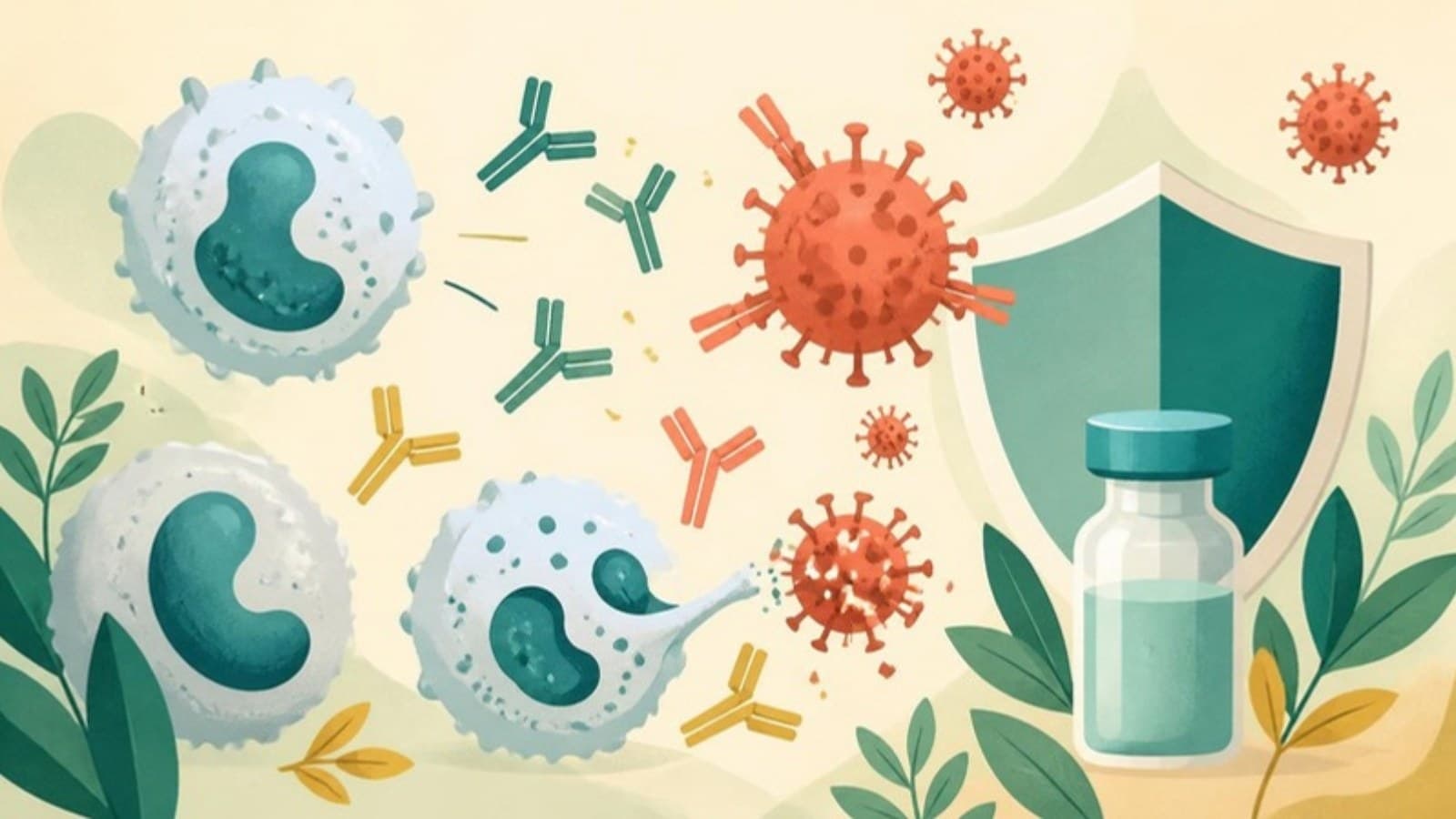
Immunity is the ability of the body to fight against disease-causing organisms (pathogens). It is broadly classified into innate and adaptive immunity.
Innate immunity is present from birth and provides the first line of defence. It does not distinguish between pathogens and has no memory.
| Barrier Type | Examples | Mechanism |
|---|---|---|
| Physical barriers | Skin, mucous membranes | Prevent pathogen entry; mucus traps microbes |
| Physiological barriers | Acid in stomach (HCl), lysozyme in tears/saliva | Destroy pathogens chemically |
| Cellular barriers | Neutrophils, monocytes, macrophages, natural killer cells | Phagocytosis and destruction of pathogens |
| Cytokine barriers | Interferons | Protect non-infected cells from viral infection |
NEET Tip: Interferons are produced by virus-infected cells to protect neighbouring healthy cells - they do not directly kill the virus.
Adaptive immunity is pathogen-specific, develops after exposure, and has immunological memory.
Key Features:
| Feature | Humoral Immunity | Cell-Mediated Immunity |
|---|---|---|
| Mediated by | B-lymphocytes | T-lymphocytes |
| Effector | Antibodies (immunoglobulins) | Cytotoxic T-cells, helper T-cells |
| Target | Extracellular pathogens (bacteria, toxins) | Intracellular pathogens (viruses, cancer cells) |
| Involves | Plasma cells + Memory B-cells | Killer T-cells + Memory T-cells |
| Maturation site | Bone marrow | Thymus |
| Feature | Primary Response | Secondary Response |
|---|---|---|
| Timing | After first exposure (slow, 7-10 days) | After subsequent exposure (rapid, 1-3 days) |
| Antibody level | Low | High (100-1000x more) |
| Antibody type | Mainly IgM | Mainly IgG |
| Memory cells | Generated | Activated |
| Intensity | Weak | Strong |
Antibodies are Y-shaped glycoproteins produced by plasma cells (activated B-cells). Each antibody has 2 heavy chains and 2 light chains connected by disulphide bonds.
| Class | Structure | Location | Function |
|---|---|---|---|
| IgG | Monomer | Blood, tissue fluid | Most abundant (75%); crosses placenta; secondary response |
| IgM | Pentamer | Blood | First antibody in primary response; largest antibody |
| IgA | Dimer | Saliva, tears, breast milk, mucus | Mucosal immunity; protects body surfaces |
| IgE | Monomer | Bound to mast cells | Allergic reactions; defence against parasites |
| IgD | Monomer | B-cell surface | Functions as B-cell receptor; initiates immune response |
Memory Aid - GAMED: IgG (most abundant, crosses placenta), IgA (secretions, mucosal), IgM (first responder, pentamer), IgE (allergy, eosinophils), IgD (on B-cells, detection).
Vaccination is based on the principle of immunological memory. A vaccine contains killed or weakened pathogens (or their antigens) that stimulate the immune system to produce memory cells without causing disease.
Types of Vaccines:
Passive Immunisation: Ready-made antibodies are directly injected (e.g., anti-tetanus serum, colostrum to newborn). Provides immediate but short-lived protection.
NEET Tip: Vaccination provides active immunity (body makes its own antibodies), while injection of preformed antibodies is passive immunity.
An allergy is an exaggerated immune response to harmless substances called allergens (pollen, dust, food proteins). The antibody involved is IgE.
The immune system attacks the body's own cells, failing to distinguish self from non-self.
| Disease | Target | Effect |
|---|---|---|
| Rheumatoid arthritis | Joint cartilage | Joint inflammation and destruction |
| Type 1 diabetes | Pancreatic beta cells | Insulin deficiency |
| Multiple sclerosis | Myelin sheath of neurons | Loss of nerve function |
| Systemic lupus erythematosus (SLE) | Multiple organs | Widespread inflammation |
HIV (Human Immunodeficiency Virus) is a retrovirus belonging to the genus Lentivirus. It contains:
| Stage | Time After Infection | CD4+ Count | Symptoms |
|---|---|---|---|
| Acute phase | 2-6 weeks | Drops slightly | Flu-like symptoms (fever, rash, lymphadenopathy) |
| Asymptomatic phase | 6 months - 10 years | Gradual decline | No symptoms; virus replicates slowly |
| Symptomatic phase | Variable | 200-500 cells/uL | Recurring infections, weight loss, diarrhoea |
| Full-blown AIDS | Variable | Below 200 cells/uL | Opportunistic infections (Toxoplasma, Mycobacterium, fungal) |
Normal CD4+ count: 800-1200 cells/uL
HIV is NOT transmitted by: Touch, handshake, sharing food, mosquito bites, toilet seats, swimming pools
NEET Tip: HIV is a retrovirus because it uses reverse transcriptase to convert RNA into DNA, which is the reverse of the central dogma.
Cancer is the uncontrolled proliferation of cells that leads to formation of masses called tumours (except in blood cancers like leukaemia).
| Feature | Benign Tumour | Malignant Tumour (Cancer) |
|---|---|---|
| Growth rate | Slow | Rapid |
| Spread | Localised, encapsulated | Invades surrounding tissues |
| Metastasis | No | Yes (spreads through blood/lymph) |
| Differentiation | Well-differentiated | Poorly differentiated |
| Danger | Usually not life-threatening | Life-threatening |
| Example | Uterine fibroid, lipoma | Carcinoma, sarcoma, leukaemia |
| Feature | Oncogenes | Tumour Suppressor Genes |
|---|---|---|
| Normal form | Proto-oncogenes (promote cell growth) | Active genes that inhibit cell growth |
| Effect of mutation | Gain of function (overactive) | Loss of function (inactive) |
| Role in cancer | Accelerate cell division | Fail to stop abnormal division |
| Analogy | Stuck accelerator | Failed brakes |
| Examples | ras, myc, HER2 | p53, Rb (retinoblastoma) |
Practice break
Reading is prep. Practising is progress.
Free to try · replies within a few hours on WhatsApp
Metastasis is the process by which cancer cells break away from the primary tumour, enter blood or lymphatic vessels, and form secondary tumours at distant sites. This is the hallmark of malignant cancers and the main cause of cancer-related death.
| Type | Examples |
|---|---|
| Physical agents | UV radiation, X-rays, gamma rays |
| Chemical agents | Tobacco smoke (benzo[a]pyrene), asbestos, coal tar, cadmium |
| Biological agents | Oncogenic viruses (HPV, EBV, Hepatitis B, HTLV) |
Detection:
Treatment:
NEET Tip: p53 is the most commonly mutated gene in human cancers. It is called the "guardian of the genome" because it triggers apoptosis in damaged cells.
| Category | Examples | Effect |
|---|---|---|
| Opioids | Morphine, heroin, codeine (from Papaver somniferum) | Depress CNS, pain relief, sedation |
| Cannabinoids | Marijuana, hashish, charas, ganja (from Cannabis sativa) | Affect cardiovascular system, alter perception |
| Coca alkaloids | Cocaine (from Erythroxylum coca) | CNS stimulant, euphoria, hallucinations |
| Hallucinogens | LSD (lysergic acid diethylamide from Claviceps purpurea) | Alter perception, hallucinations |
| Barbiturates | Valium, diazepam | CNS depressants, sedation |
| Stimulants | Amphetamines, caffeine, nicotine | Increase alertness, euphoria |
Adolescents are particularly vulnerable due to peer pressure, curiosity, stress, and a desire for experimentation. Prevention strategies include education, counselling, and strong family support.
NEET Tip: Opioid receptors are present in the CNS and GI tract. Heroin (diacetylmorphine) is a semi-synthetic opioid derived from morphine.
| Year | Topic Tested | Question Focus | Correct Answer |
|---|---|---|---|
| 2025 | Immunity | Type of antibody in allergic reactions | IgE |
| 2024 | Cancer | Difference between benign and malignant tumour | Metastasis in malignant only |
| 2024 | AIDS | Confirmatory test for HIV | Western Blot |
| 2023 | Immunity | Antibody that crosses placenta | IgG |
| 2023 | Malaria | Definitive host of Plasmodium | Female Anopheles mosquito |
| 2022 | Cancer | p53 gene function | Tumour suppressor |
| 2022 | Drugs | Source plant of marijuana | Cannabis sativa |
| 2021 | Immunity | Primary vs secondary immune response | Secondary is faster and stronger |
| 2021 | AIDS | HIV target cells | CD4+ Helper T-cells |
| 2020 | Diseases | Vector of filariasis | Culex mosquito |
| 2020 | Immunity | Active vs passive immunity | Active involves memory cells |
| 2019 | Cancer | Oncogene vs tumour suppressor | Oncogene = gain of function |
| 2019 | Diseases | Widal test used for | Typhoid diagnosis |
Q1. Which of the following is NOT a barrier of innate immunity?
Antibody production is part of adaptive (acquired) immunity, not innate immunity. Innate barriers include physical, physiological, cellular, and cytokine barriers.
Q2. The largest immunoglobulin with a pentameric structure is:
IgM is a pentamer (5 units joined by J-chain), making it the largest antibody. It is the first antibody produced during a primary immune response.
Q3. HIV primarily infects cells bearing which surface receptor?
HIV specifically binds to CD4 receptors on helper T-lymphocytes using its gp120 glycoprotein.
Q4. Which of the following is a characteristic feature of malignant tumours?
Malignant tumours show metastasis, where cancer cells spread to distant organs through blood and lymph. This is absent in benign tumours.
Q5. The confirmatory test for AIDS is:
ELISA is the screening test for HIV, while Western Blot is the confirmatory test that detects specific HIV antibodies.
Q6. Which drug is obtained from Papaver somniferum?
Morphine (and heroin, codeine) are opioids derived from the latex of Papaver somniferum (opium poppy). Cocaine comes from Erythroxylum coca.
Q7. Interferons are produced in response to:
Interferons are cytokines secreted by virus-infected cells to protect neighbouring uninfected cells from viral infection.
Q8. In the immune response, memory cells are responsible for:
Memory B-cells and memory T-cells generated during the primary response enable a rapid and intense secondary immune response upon re-exposure to the same antigen.
Q9. Which gene, when mutated, is most commonly associated with human cancers?
p53 is a tumour suppressor gene mutated in over 50% of all human cancers. It normally induces apoptosis in cells with damaged DNA.
Q10. The**(antibody)** class is present in colostrum and provides passive immunity to the newborn:
IgA is the predominant antibody in colostrum (first breast milk) and provides mucosal immunity to the newborn. IgG crosses the placenta, but colostrum is rich in IgA.
Immunoglobulin classes - "GAMED":
Innate immunity barriers - "PPCC":
HIV enzyme - "Reverse the dogma": HIV uses reverse transcriptase to convert RNA to DNA, reversing the central dogma (DNA to RNA).
Cancer genes analogy - "Car on a hill":
Malaria hosts:
Q: What is the difference between active and passive immunity? A: Active immunity involves the body producing its own antibodies after exposure to an antigen (natural infection or vaccination). It is long-lasting due to memory cells. Passive immunity involves receiving preformed antibodies from an external source (mother to foetus via IgG, or anti-serum injection). It provides immediate but temporary protection.
Q: Why does HIV cause immunodeficiency? A: HIV specifically destroys CD4+ helper T-cells, which are central coordinators of the immune response. Without helper T-cells, B-cells cannot produce antibodies efficiently, and cytotoxic T-cells are not activated properly. As CD4+ count drops below 200 cells/uL, the body becomes vulnerable to opportunistic infections.
Q: What is the difference between an oncogene and a proto-oncogene? A: Proto-oncogenes are normal genes that regulate cell growth and division. When mutated, they become oncogenes that promote uncontrolled cell proliferation. The mutation is a "gain of function" - the gene becomes overactive or permanently switched on.
Q: Can malaria be transmitted from person to person directly? A: No. Malaria requires the female Anopheles mosquito as a vector. The parasite undergoes essential sexual reproduction stages inside the mosquito, so direct person-to-person transmission is not possible (except through contaminated blood transfusion or shared needles).
Q: Why is the secondary immune response faster than the primary? A: During the primary response, the body creates memory B-cells and memory T-cells specific to the pathogen. On re-exposure, these memory cells recognise the antigen immediately and mount a rapid, stronger response with higher antibody production, eliminating the pathogen before it can cause disease.
This chapter mixes immunology, virology and cell biology, so it's easy to blur the parts that NEET actually keeps separate. Message us on WhatsApp at +91 88264 44334 with which part is unclear — immunity types, AIDS pathogenesis, or cancer biology — and we'll send the specific NCERT lines NEET has picked questions from.
Related reading: Microbes in Human Welfare Guide · Class 12 Biology Coaching
Related resources

About the author
Dr. Shekhar C. Singh
AIIMS New Delhi alumnus who has taught biology since 2014, from NCERT foundations to the International Biology Olympiad.
Read his full profile →Get personalized guidance from AIIMS experts and achieve your medical college dreams
More from the blog
Complete NEET notes on Evolution covering Origin of Life, Oparin-Haldane theory, Miller-Urey experiment, Darwin vs Lamarck, Hardy-Weinberg principle, adaptive radiation, and human evolution with PYQs and MCQs.
2 Mar 2026
Complete NEET notes on Reproductive Health covering contraceptive methods, STIs, infertility, ART techniques (IVF, ZIFT, GIFT, ICSI), MTP, and population control. NCERT-aligned with PYQs and practice MCQs.
2 Mar 2026
Master Genetics for NEET 2026 with comprehensive notes on Mendel's laws, inheritance patterns, chromosomal basis, linkage, and genetic disorders. NCERT-aligned content with diagrams and PYQs.
12 Jun 2026
Share your thoughts, ask a question, or help another student
Type it below and send it to us on WhatsApp — no sign-up needed.
For NEET Biology, aim for 3-4 hours of focused study daily. Quality matters more than quantity!
Yes! NCERT covers 95% of NEET Biology questions. Master it completely before any reference book.
Human Physiology (20%), Genetics (18%), and Ecology (12%) are the highest-scoring areas.
Need personalized guidance?