Loading...
Loading...
Master Human Physiology - the highest-scoring NEET Biology chapter (12-15 questions = 48-60 marks). Complete system-wise breakdown, diagrams, NCERT strategy, and scoring tips.
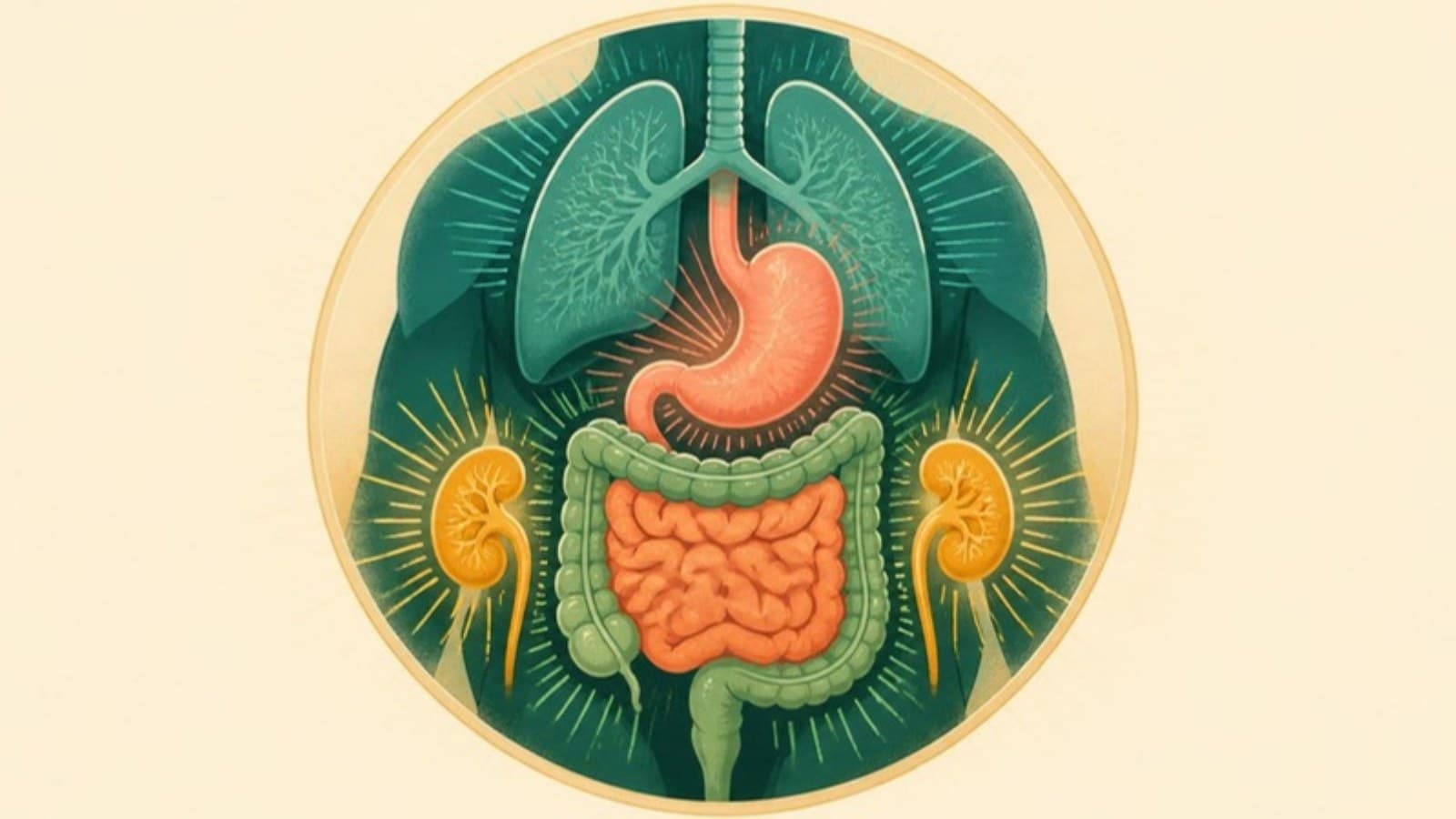

5 points to remember for NEET
Human Physiology is the single highest-scoring chapter in NEET Biology, consistently contributing 12-15 questions (48-60 marks) - that's nearly 17% of your entire Biology score from just one chapter. If you master Human Physiology, you've secured 1/6th of your total NEET marks (60 out of 720).
Yet, most students struggle with Physiology because they treat it as "theory to memorize" rather than "processes to understand."
The truth: Physiology is the EASIEST high-scoring chapter if you approach it systematically.
Why Physiology is Different:
This comprehensive guide breaks down all 5 major physiological systems, provides NCERT-focused strategies, highlights critical diagrams, shares common mistakes to avoid, and gives you a system-wise scoring plan to secure 50+ marks from this goldmine chapter.
| Year | Questions | Marks | % of Biology | Top Topics Asked |
|---|---|---|---|---|
| NEET 2025 | 14 | 56 | 15.6% | Heart structure, Nephron, Digestion enzymes, Synapse |
| NEET 2024 | 13 | 52 | 14.4% | Breathing mechanism, Cardiac cycle, Hormone regulation |
| NEET 2023 | 15 | 60 | 16.7% | Nephron function, Neuron structure, Digestive glands |
| NEET 2022 | 13 | 52 | 14.4% | Blood groups, Excretory products, Neural transmission |
| NEET 2021 | 12 | 48 | 13.3% | Heart conduction, Renal regulation, Breathing control |
| 5-Year Average | 13.4 | 53.6 | 14.9% | Circulation, Excretion, Digestion |
Key Insight: Human Physiology NEVER drops below 12 questions. It's the most consistent high-scorer across all NEET years.
| Factor | Advantage | How to Leverage |
|---|---|---|
| NCERT is Enough | 85-90% questions directly from NCERT Class 11 (Chapter 17-22) | Line-by-line reading, no reference books needed |
| Logical Flow | Processes follow cause-effect sequences | Understand the "why" behind each step - easy retention |
| Diagram-Heavy | 4-5 questions are direct diagram-based | Practice labeling 10 key diagrams repeatedly |
| Factual Recall | 70% questions test memory, not application | Mnemonics, flashcards, and repetition work perfectly |
| Less Calculation | Unlike Chemistry/Physics, no numerical problems | Time-efficient in exam (1 min per question max) |
| Real-Life Connect | Relates to your own body functions | Easier to visualize and remember (you ARE the subject!) |
NCERT Coverage: Class 11, Chapter 16: Digestion and Absorption
| Sub-Topic | Weightage | Key Concepts to Master |
|---|---|---|
| Alimentary Canal Structure | 1-2 Q | Mouth → Stomach → Small Intestine → Large Intestine (sequence, length, functions) |
| Digestive Glands | 1 Q | Salivary glands, Liver, Pancreas (secretions, pH, enzymes) |
| Enzymes & Their Actions | 1-2 Q | Amylase, Pepsin, Trypsin, Lipase (substrate, product, pH optima) |
| Absorption Mechanism | 0-1 Q | Villi structure, nutrient absorption sites (glucose, amino acids, fatty acids) |
| Disorders | 0-1 Q | Jaundice, Diarrhea, Constipation, Vomiting (causes, symptoms) |
Human Digestive System (Full labeled diagram)
Structure of Villi (Small intestine absorption site)
Tooth Structure (Vertical Section - LS)
| Enzyme | Source | Acts On | Products | pH | Site of Action |
|---|---|---|---|---|---|
| Salivary Amylase (Ptyalin) | Saliva | Starch | Maltose | 6.8 (neutral) | Mouth |
| Pepsin | Gastric glands | Proteins | Peptones | 1.5-2.5 (acidic) | Stomach |
| Rennin | Gastric glands (infants) | Milk protein (Casein) | Paracasein | Acidic | Stomach |
| Trypsin | Pancreas | Proteins | Peptides | 8.5 (alkaline) | Duodenum |
| Chymotrypsin | Pancreas | Proteins | Peptides | Alkaline | Duodenum |
| Lipase (Pancreatic) | Pancreas | Fats | Fatty acids + Glycerol | Alkaline | Duodenum |
| Amylase (Pancreatic) | Pancreas | Starch | Maltose | Alkaline | Duodenum |
| Maltase | Intestinal juice | Maltose | Glucose + Glucose | Alkaline | Intestine |
| Lactase | Intestinal juice | Lactose | Glucose + Galactose | Alkaline | Intestine |
| Sucrase | Intestinal juice | Sucrose | Glucose + Fructose | Alkaline | Intestine |
| Dipeptidases | Intestinal juice | Dipeptides | Amino acids | Alkaline | Intestine |
Mnemonic for Protein Digestion:
"Pepsin Peptones, Trypsin Peptides, Dipeptidases Amino acids" (Pepsin breaks to Peptones, Trypsin breaks to Peptides, Dipeptidases break to Amino acids)
"Thecodont, diphyodont, heterodont dentition" - Describe these terms.
"Adult human has 32 permanent teeth which are of four different types (heterodont dentition), namely, incisors (I), canine (C), premolars (PM) and molars (M)."
"An adult human has 16 teeth in each jaw. Each half of the upper and lower jaw has the arrangement of teeth as 2123 / ICPM (dental formula)."
"Stomach stores the food for 4-5 hours."
"Liver is the largest gland of the body weighing about 1.2 to 1.5 kg in an adult human."
"Pancreas acts as both exocrine (digestive enzymes) and endocrine gland (insulin, glucagon)."
Strategy: Highlight these exact lines in your NCERT. They appear as "fill in the blanks" or "assertion-reason" questions.
NCERT Coverage: Class 11, Chapter 17: Breathing and Exchange of Gases
| Sub-Topic | Weightage | Key Concepts |
|---|---|---|
| Respiratory Organs | 0-1 Q | Nostrils → Pharynx → Larynx → Trachea → Bronchi → Bronchioles → Alveoli |
| Mechanism of Breathing | 1-2 Q | Inspiration (diaphragm contracts, ribs lift) vs Expiration (diaphragm relaxes, ribs fall) |
| Lung Volumes | 1 Q | Tidal Volume, Vital Capacity, Residual Volume, Total Lung Capacity (values + definitions) |
| Transport of Gases | 1 Q | O₂ via Hb (oxyhemoglobin), CO₂ via plasma (70%), HCO₃⁻ (bicarbonate) |
| Respiratory Disorders | 0-1 Q | Asthma, Emphysema, COPD, Pneumonia |
Human Respiratory System (Full labeled diagram)
Structure of Alveolus (Site of gas exchange)
| Volume/Capacity | Normal Value | Definition |
|---|---|---|
| Tidal Volume (TV) | 500 mL | Volume of air inspired/expired in normal breath |
| Inspiratory Reserve Volume (IRV) | 2500-3000 mL | Additional air inspired after normal inspiration |
| Expiratory Reserve Volume (ERV) | 1000-1100 mL | Additional air expired after normal expiration |
| Residual Volume (RV) | 1100-1200 mL | Air remaining in lungs after forceful expiration |
| Vital Capacity (VC) | 4000 mL | TV + IRV + ERV (maximum air exhaled after deep breath) |
| Total Lung Capacity (TLC) | 5000-6000 mL | VC + RV (total air lungs can hold) |
NEET Formula Questions:
Common MCQ: "A person's tidal volume is 500 mL, IRV is 3000 mL, ERV is 1100 mL, and RV is 1200 mL. Calculate Vital Capacity." Answer: VC = 500 + 3000 + 1100 = 4600 mL
Beyond NEET: Understanding lung volumes isn't just exam fodder. It's the foundation of pulmonary function testing used in hospitals worldwide.
Real-world examples:
Career relevance: In medical school, you'll learn to interpret PFT reports in Medicine rotation. Understanding these volumes NOW prepares you for Respiratory Physiology in MBBS Year 2.
Fun fact: Competitive swimmers and athletes have Vital Capacities of 5500-6000 mL (vs normal 4000 mL) due to respiratory muscle training.
Oxygen Transport:
Carbon Dioxide Transport:
Mnemonic for CO₂ Transport:
"70-23-7 Rule: 70 Bicarb, 23 Carb, 7 Dissolved"
NCERT Coverage: Class 11, Chapter 18: Body Fluids and Circulation
HIGHEST SCORING SYSTEM - Nearly 1/3rd of Human Physiology marks come from circulation alone.
| Sub-Topic | Weightage | Key Concepts |
|---|---|---|
| Heart Structure | 2 Q | 4 chambers, valves, coronary arteries, double circulation |
| Cardiac Cycle | 1 Q | Systole (contraction) vs Diastole (relaxation), 0.8 sec duration, 72 beats/min |
| Cardiac Output | 1 Q | CO = Stroke Volume × Heart Rate = 70 mL × 72 = 5000 mL/min ≈ 5 L/min |
| Blood Composition | 1 Q | Plasma (55%) vs Formed elements (45%): RBC, WBC, Platelets |
| Blood Groups | 0-1 Q | ABO system (A, B, AB, O), Rh factor, Universal donor/recipient |
| Disorders | 0-1 Q | Hypertension, CAD, Angina, Heart attack |
Human Heart (Sectional View) - NEET'S #1 FAVORITE DIAGRAM
Double Circulation Pathway (Diagram with arrows)
Structure of RBC (Erythrocyte)
| Blood Group | Antigens on RBC | Antibodies in Plasma | Can Donate To | Can Receive From |
|---|---|---|---|---|
| A | A | Anti-B | A, AB | A, O |
| B | B | Anti-A | B, AB | B, O |
| AB | A, B | None | AB only | A, B, AB, O (Universal Recipient) |
| O | None | Anti-A, Anti-B | A, B, AB, O (Universal Donor) | O only |
Rh Factor:
Mnemonic for Universal Donor/Recipient:
"O is the Hero (Donor), AB is the Zero (Recipient)" (O can give to all, AB can take from all but can't give to others)
| Phase | Duration | Events | Blood Flow |
|---|---|---|---|
| Atrial Systole | 0.1 sec | Atria contract → Blood pushed to ventricles | Atria → Ventricles |
| Ventricular Systole | 0.3 sec | Ventricles contract → Blood pushed to arteries | Ventricles → Aorta + Pulmonary Artery |
| Joint Diastole | 0.4 sec | Both atria & ventricles relax → Blood fills heart | Veins → Atria → Ventricles (passive) |
Heart Sounds:
NCERT Coverage: Class 11, Chapter 19: Excretory Products and Their Elimination
| Sub-Topic | Weightage | Key Concepts |
|---|---|---|
| Excretory Organs | 0-1 Q | Kidneys (main), Lungs (CO₂), Skin (sweat), Liver (bile pigments) |
| Nephron Structure & Function | 2 Q | Glomerulus, Bowman's capsule, PCT, Loop of Henle, DCT, Collecting duct |
| Urine Formation | 1 Q | Ultrafiltration, Reabsorption, Secretion (3 steps) |
| Regulation of Kidney Function | 0-1 Q | ADH (water reabsorption), Aldosterone (Na⁺ reabsorption), ANF |
| Disorders | 0-1 Q | Kidney stones, Renal failure, Uremia, Dialysis |
Structure of Nephron - NEET'S #2 FAVORITE DIAGRAM (After Heart)
L.S. of Kidney (Longitudinal Section)
| Step | Location | Process | What Happens | Result |
|---|---|---|---|---|
| 1. Ultrafiltration | Glomerulus → Bowman's Capsule | Blood pressure forces water + small molecules through glomerular capillaries | Forms glomerular filtrate (180 L/day) | Filtrate contains water, glucose, amino acids, salts, urea, uric acid |
| 2. Reabsorption | PCT, Loop of Henle, DCT | Useful substances absorbed back into blood | 99% of filtrate reabsorbed (178.5 L/day) | Only 1.5 L/day becomes urine |
| 3. Tubular Secretion | DCT, Collecting Duct | Waste products (K⁺, H⁺, ammonia) actively secreted into tubule | Final urine composition adjusted | Urine ready for excretion |
Maximum Reabsorption Sites:
Mnemonic for Nephron Parts:
"GB → PC → Loop → DC → Collection" (Glomerulus-Bowman's → PCT → Loop of Henle → DCT → Collecting duct)
| Hormone | Source | Target | Action | Effect on Urine |
|---|---|---|---|---|
| ADH (Vasopressin) | Posterior Pituitary | DCT + Collecting Duct | Increases water reabsorption | Concentrated urine (less volume) |
| Aldosterone | Adrenal Cortex | DCT | Increases Na⁺ reabsorption (& water follows) | Increased blood volume, less urine |
| ANF (Atrial Natriuretic Factor) | Heart (Atria) | Kidney | Decreases Na⁺ reabsorption (↓ blood pressure) | Dilute urine (more volume) |
Common NEET Question: "If ADH secretion is reduced, what happens?" Answer: More dilute urine in large quantities (Diabetes Insipidus)
NCERT Coverage: Class 11, Chapter 21: Neural Control and Coordination + Chapter 22: Chemical Coordination
| Sub-Topic | Weightage | Key Concepts |
|---|---|---|
| Neuron Structure | 1 Q | Cell body, Dendrites, Axon, Myelin sheath, Nodes of Ranvier, Synapse |
| Nerve Impulse Transmission | 1 Q | Resting potential (-70 mV), Action potential (+30 mV), Na⁺-K⁺ pump |
| Synapse & Neurotransmitters | 1 Q | Synaptic cleft, Acetylcholine, Dopamine, Serotonin |
| Human Brain Structure | 1 Q | Forebrain (Cerebrum, Thalamus, Hypothalamus), Midbrain, Hindbrain (Cerebellum, Pons, Medulla) |
| Reflex Action | 0-1 Q | Reflex arc: Receptor → Sensory neuron → Spinal cord → Motor neuron → Effector |
| Endocrine Glands | 1-2 Q | Pituitary (master gland), Thyroid, Adrenal, Pancreas (insulin/glucagon) |
| Disorders | 0-1 Q | Parkinson's, Alzheimer's, Epilepsy, Diabetes (Type 1/2) |
Structure of Neuron (Myelinated Nerve Cell)
Structure of Synapse (Chemical Synapse)
Human Brain (Sagittal Section)
Practice break
Reading is prep. Practising is progress.
Free to try · replies within a few hours on WhatsApp
| State | Membrane Potential | Ions | Cause |
|---|---|---|---|
| Resting Potential | -70 mV (inside negative) | High K⁺ inside, High Na⁺ outside | Na⁺-K⁺ pump (3 Na⁺ out, 2 K⁺ in) |
| Depolarization (Action Potential) | +30 mV (inside positive) | Na⁺ rushes INSIDE | Na⁺ channels open |
| Repolarization | Return to -70 mV | K⁺ moves OUTSIDE | K⁺ channels open, Na⁺ channels close |
Threshold Potential: -55 mV (minimum stimulus strength needed to trigger action potential)
All-or-None Law: Once threshold is reached, action potential is ALWAYS the same magnitude (+30 mV). There's no "weak" or "strong" action potential.
| Gland | Location | Hormone | Target/Function | Disorder (Hypo/Hyper) |
|---|---|---|---|---|
| Pituitary (Master Gland) | Brain (below hypothalamus) | GH (Growth Hormone) | Bone & muscle growth | Hypo: Dwarfism; Hyper: Gigantism/Acromegaly |
| TSH (Thyroid Stimulating) | Stimulates thyroid gland | Hypo: Hypothyroidism | ||
| ACTH (Adrenocorticotropic) | Stimulates adrenal cortex | Cushing's syndrome | ||
| ADH (Vasopressin) | Kidney (water reabsorption) | Hypo: Diabetes Insipidus | ||
| Thyroid | Neck (below larynx) | Thyroxine (T₄) | Regulates metabolism (BMR) | Hypo: Goiter, Cretinism; Hyper: Exophthalmic goiter |
| Calcitonin | Lowers blood calcium | Hypocalcemia | ||
| Parathyroid | Behind thyroid | PTH (Parathormone) | Increases blood calcium | Hypo: Tetany; Hyper: Osteoporosis |
| Adrenal (Cortex) | Above kidneys | Aldosterone | Kidney (Na⁺ reabsorption) | Hypo: Addison's disease |
| Cortisol | Stress response, metabolism | Hyper: Cushing's syndrome | ||
| Adrenal (Medulla) | Above kidneys | Adrenaline (Epinephrine) | Fight-or-flight response | Hypertension if excess |
| Pancreas | Behind stomach | Insulin | Lowers blood glucose (↓ sugar) | Hypo: Diabetes Mellitus Type 1 |
| Glucagon | Raises blood glucose (↑ sugar) | Hyperglycemia | ||
| Gonads (Testes) | Scrotum | Testosterone | Male secondary sex characters | Hypo: Hypogonadism |
| Gonads (Ovaries) | Pelvic cavity | Estrogen | Female secondary sex characters | Hypo: Amenorrhea |
| Progesterone | Maintains pregnancy | Low: Miscarriage |
Antagonistic Hormones (Opposite Actions):
Mnemonic for Pituitary Hormones:
"FLAT PEG" = FSH, LH, ACTH, TSH, Prolactin, Endorphins, GH
| Week | System | Daily Time | Strategy |
|---|---|---|---|
| Week 1 | Digestion + Respiration | 2 hours | NCERT reading + Diagram practice + Enzyme table memorization |
| Week 2 | Circulation | 2.5 hours | Heart diagram (MUST MASTER) + Blood groups + Cardiac cycle |
| Week 3 | Excretion + Neural | 2 hours | Nephron diagram + Hormones table + Neuron structure |
| Week 4 | Revision + MCQs | 3 hours | Solve 200+ MCQs (system-wise) + Weak area fixing |
10 Diagrams You MUST Master (in priority order):
Daily Drill:
Wrong Approach: Rote-learning enzyme names and functions without understanding the digestive process flow.
Impact: Forget everything within 2 days; can't answer application-based questions.
Right Approach:
Wrong Approach: Reading text but not practicing diagram labeling.
Impact: 4-5 questions lost (16-20 marks) due to incorrect labels or structure identification.
Statistics: 30% of students lose marks on diagram questions despite knowing theory.
Right Approach - The 5-Step Diagram Method:
Practice Schedule:
Cerebrum Tip: We provide unlabeled diagram practice sheets for all 10 critical diagrams. Download free practice pack
Common confusions students make:
| Confused Terms | Actual Meaning | How to Remember |
|---|---|---|
| Systole vs Diastole | Systole = Contraction; Diastole = Relaxation | Systole = System ON (contraction) |
| Artery vs Vein | Artery = From heart; Vein = To heart | Artery = Away from heart |
| Afferent vs Efferent | Afferent = Toward; Efferent = Away | Afferent = Approaching |
| Antigen vs Antibody | Antigen = Foreign substance; Antibody = Defense protein | Antigen = Anti (against) our body |
| ADH vs ACTH | ADH = Water reabsorption; ACTH = Adrenal stimulation | ADH = Anti-Diuretic (prevents urine) |
Wrong Approach: Reading NCERT 3 times but not solving MCQs.
Impact: Can't identify how questions are twisted; time management poor in exam.
Right Approach - The 50-MCQ Rule:
After completing each system:
MCQ Practice Schedule:
Best MCQ Sources:
In Human Physiology, questions are typically distributed as:
Your Strategy:
| Your Preparation Level | Target Questions | Expected Marks | What to Focus On |
|---|---|---|---|
| Beginner (Just started) | 8-9 / 13 | 28-32 marks | Master diagrams + Enzyme tables + Blood groups |
| Intermediate (60% syllabus) | 11-12 / 13 | 40-44 marks | Add hormones + Nephron function + Cardiac cycle |
| Advanced (90% syllabus) | 13-14 / 13 | 52-56 marks | Cover ALL topics + MCQ practice + Speed |
Realistic Target: With 4 weeks of focused preparation, you should aim for 11-12 correct (44-48 marks).
To Reach 50+ Marks:
Human Physiology in NEET 2026:
Question-Wise Timing:
| Question Type | Time Allocation | Strategy |
|---|---|---|
| Diagram-based (4-5 Q) | 30 seconds each | Instant recognition; don't overthink |
| Direct fact recall (5-6 Q) | 40 seconds each | If you know, mark immediately; if not, skip |
| Application/Reasoning (2-3 Q) | 1.5 minutes each | Read carefully, eliminate options, then mark |
Pro Tip: Attempt Physiology questions FIRST in Biology section. They're factual and diagram-heavy (high confidence) → Build momentum early.
Q1: Is NCERT enough for Human Physiology, or should I refer to H.C. Verma/Trueman's Biology?
A: NCERT is MORE than enough for Human Physiology. In fact, 90% of Physiology questions are directly from NCERT. Reference books add unnecessary complexity and confuse students with extra details not asked in NEET.
What to do:
When to use reference books:
At Cerebrum Biology Academy, we emphasize NCERT-first approach. 95% of our teaching is NCERT line-by-line analysis.
Q2: How many times should I revise Human Physiology?
A: Minimum 3 complete revisions before NEET exam.
Revision Schedule:
Between revisions: Solve MCQs to identify weak areas and target them in next revision.
Q3: I keep forgetting enzyme names and hormones. Any memory tricks?
A: Use mnemonics, acronyms, and associations. Here are some tested tricks:
Digestive Enzymes (Order of action):
"SAP The Chip Later" Salivary Amylase, Pepsin, Trypsin, Chymotrypsin, Lipase
Pituitary Hormones:
"FLAT PEG" FSH, LH, ACTH, TSH, Prolactin, Endorphins, GH
Blood Groups Compatibility:
"O for Others, AB for All Babies" O can donate to all; AB can receive from all
Nephron Parts:
"GB Puts Little Dogs Carefully" Glomerulus-Bowman's, PCT, Loop of Henle, DCT, Collecting duct
Brain Parts (Largest to Smallest):
"Cerebrum Comes Before Cerebellum" Cerebrum (largest), Cerebellum, Medulla
We teach 50+ biology mnemonics in our crash course. Download free mnemonic guide
Q4: Diagram questions scare me. How to master them in 2 weeks?
A: Follow this 15-day diagram mastery plan:
Days 1-5: OBSERVATION
Days 6-10: REPRODUCTION
Days 11-13: LABELING PRACTICE
Days 14-15: QUIZ MODE
Result: By Day 15, you should be able to draw and label any of the 10 diagrams in under 3 minutes with 90%+ accuracy.
Q5: Should I focus equally on all 5 systems, or prioritize some?
A: Prioritize based on weightage and difficulty.
Priority 1 (MUST-DO): Circulation (4-5 Q) + Neural (3-4 Q)
Priority 2 (IMPORTANT): Digestion (3-4 Q) + Excretion (2-3 Q)
Priority 3 (Good to Cover): Respiration (2-3 Q)
Strategy:
At Cerebrum Biology Academy, we've perfected the art of teaching Human Physiology through our NCERT-First, Diagram-Focused methodology. Our students consistently score 50-56 marks from this chapter alone.
✓ Diagram Mastery Program: Daily 15-minute diagram practice with blank worksheets ✓ NCERT Line-by-Line Analysis: Dr. Shekhar explains EVERY line that appears in NEET ✓ Mnemonic Bank: 50+ tested mnemonics for enzymes, hormones, processes ✓ System-Wise Tests: 50-question tests after each system (with detailed solutions) ✓ 3D Models: Physical heart and nephron models in class for visual understanding ✓ Small Batches (Max 25): Personal attention to YOUR weak areas
"I used to confuse Proximal Convoluted Tubule (PCT) vs Distal Convoluted Tubule (DCT) in Nephron diagrams - got it wrong 4 times in my first 5 mock tests. The problem? I was memorizing labels without understanding their POSITION relative to Bowman's capsule. After Dr. Shekhar taught the 5-step diagram method (trace 5 times, draw 5 times, label from blank diagrams), I finally visualized the nephron structure in 3D. I practiced drawing the nephron 20+ times over 2 weeks.
In NEET 2025, they asked: 'Maximum reabsorption occurs in which part of nephron?' - instant answer: PCT. Another question: 'ADH acts on which structure?' - DCT + Collecting duct. Got all 3 nephron-related questions correct.
Final score: 13/15 in NEET 2025 Physiology (52 marks) - my highest-scoring chapter! From 6-7 correct in mocks (28 marks) to 13/15 in the actual exam. The diagram practice sheets and enzyme tables were absolute game-changers." — Priya Sharma, NEET 2025, AIR 3,458, MAMC Delhi
Physiology Mastery Module:
Crash Course (Full NEET Coverage):
Investment: ₹25,000 (Full course) | ₹8,000 (Physiology only)
Book FREE Demo Class → Call/WhatsApp: +91-8826444334 Visit: Laxmi Nagar, Delhi (Near Nirman Vihar Metro)
Taught by: Dr. Shekhar - AIIMS New Delhi Alumnus, 15+ years NEET teaching experience, 680+ students in top medical colleges
Human Physiology is not just a high-scoring chapter - it's a confidence-building chapter. Once you master Physiology, you realize that NEET Biology is logical, not difficult. The diagrams make sense, the processes connect, and the marks come naturally.
Your 30-Day Physiology Action Plan:
Target: 12+ correct answers (48+ marks) 🎯
Remember: Every mark in Physiology is a mark you DON'T have to struggle for in Physics or Chemistry. Maximize biology, secure your NEET seat.
Related Articles:
Nervous system, endocrine, and excretion are usually where the marks leak even after a full read-through. Message us on WhatsApp at +91 88264 44334 and tell us which system — we'll help you close the gap.
Related reading: NCERT Line-by-Line Reading Strategy for NEET · Our Class 11 programme
Related resources

About the author
Dr. Shekhar C. Singh
AIIMS New Delhi alumnus who has taught biology since 2014, from NCERT foundations to the International Biology Olympiad.
Read his full profile →Get personalized guidance from AIIMS experts and achieve your medical college dreams
More from the blog
Master the differences between photosynthesis and respiration with detailed comparison charts, equations, and practice questions for NEET success.
10 Feb 2024
Master Genetics & Molecular Biology - score 8-12 questions (32-48 marks) in NEET. Complete breakdown of DNA replication, transcription, translation, Mendelian genetics, and molecular basis of inheritance.
10 Feb 2026
Complete Biotechnology guide for NEET simplified: Principles & Processes (genetic engineering, PCR, cloning), Applications (Bt cotton, insulin, gene therapy), and step-by-step techniques. Score 4-6 questions = 16-24 marks.
10 Feb 2026
Share your thoughts, ask a question, or help another student
Type it below and send it to us on WhatsApp — no sign-up needed.
For NEET Biology, aim for 3-4 hours of focused study daily. Quality matters more than quantity!
Yes! NCERT covers 95% of NEET Biology questions. Master it completely before any reference book.
Human Physiology (20%), Genetics (18%), and Ecology (12%) are the highest-scoring areas.
Need personalized guidance?