Loading...
Loading...
title: NEET Cell Biology Weightage 2026 — Cell Structure, Biomolecules & Division. Complete weightage analysis, question patterns, and chapter-wise strategy for NEET 2026 Biology preparation.
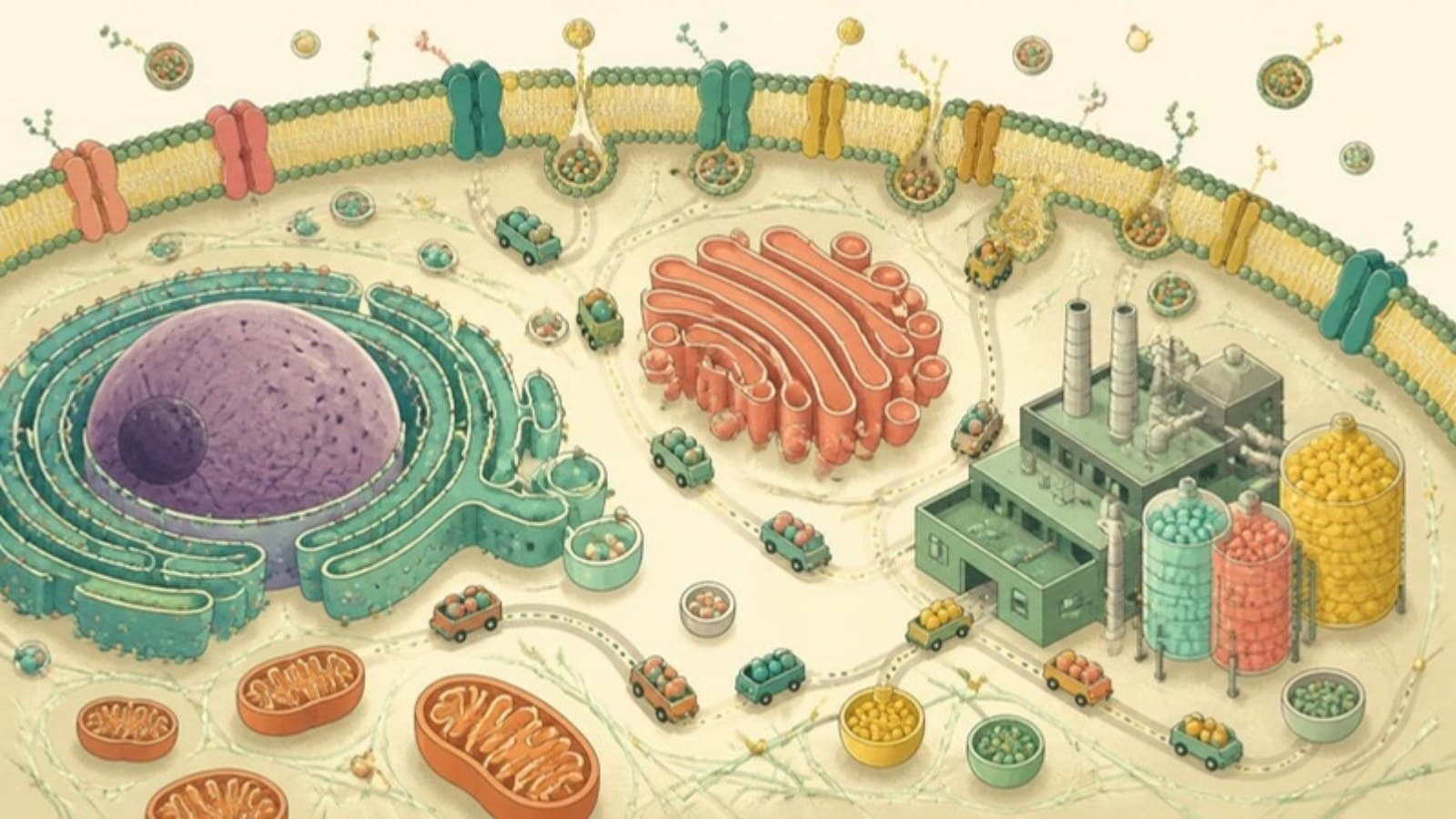

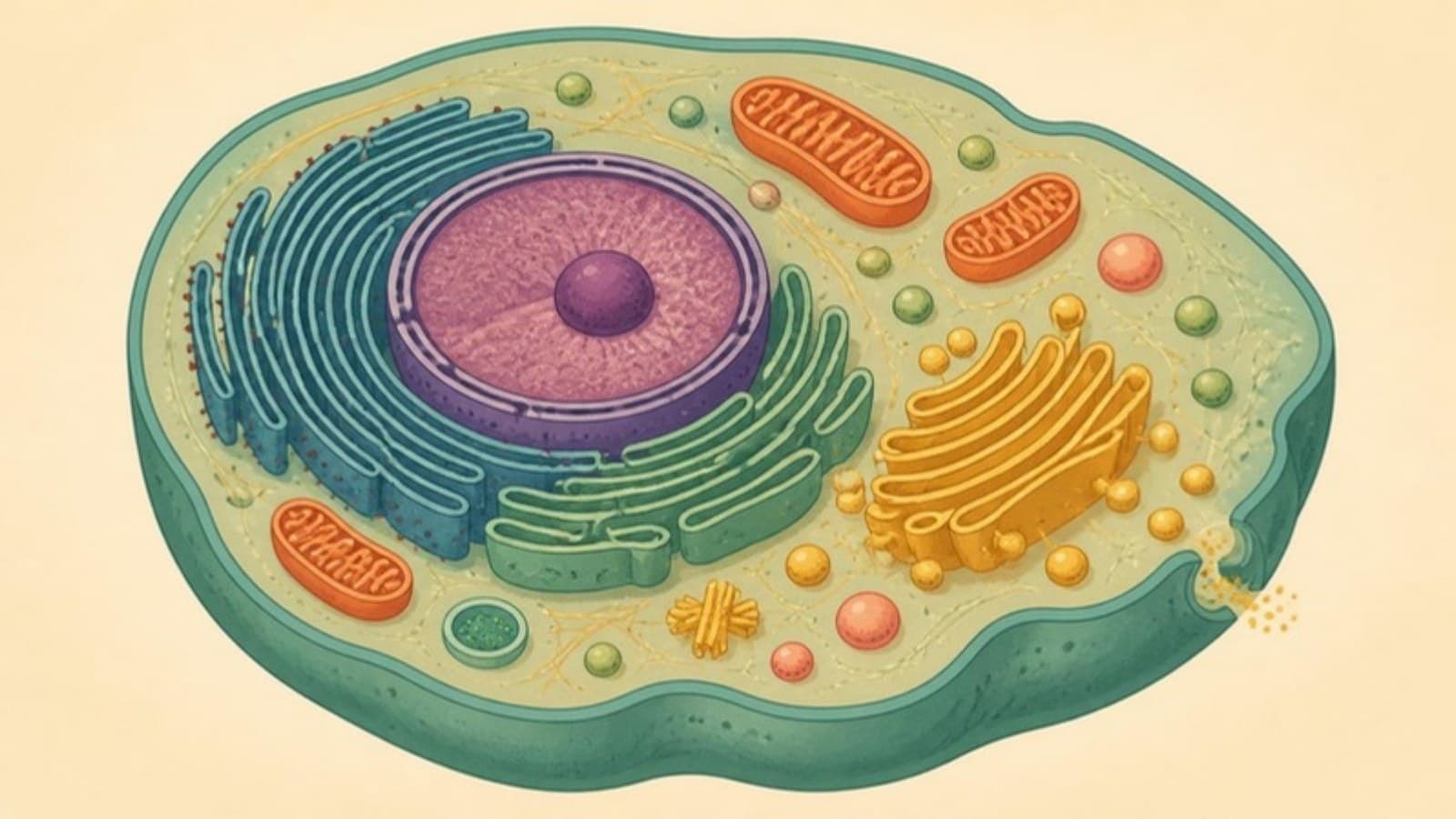
Cell Biology forms the foundational unit of NEET Biology, encompassing the fundamental structures and processes that define all living organisms. This integrated unit accounts for approximately 8-10 marks annually and covers three interconnected chapters: Cell Structure (The Unit of Life), Biomolecules, and Cell Division.
Cell Biology is the gateway to understanding all higher biological concepts—from genetics to physiology to ecology. With consistent high weightage across multiple years and a majority of Intermediate difficulty questions, mastering this unit provides a strong foundation for tackling advanced biology topics.
| Year | Cell Structure | Biomolecules | Cell Division | Total Marks | Total Questions |
|---|---|---|---|---|---|
| 2019 | 2 | 3 | 2 | 7 | 4 |
| 2020 | 2 | 2 | 3 | 7 | 4 |
| 2021 | 3 | 3 | 2 | 8 | 4 |
| 2022 | 2 | 3 | 2 | 7 | 4 |
| 2023 | 3 | 2 | 3 | 8 | 4 |
| 2024 | 2 | 3 | 3 | 8 | 4 |
| 2025 | 3 | 2 | 3 | 8 | 4 |
| Average | 2.4 | 2.6 | 2.6 | 7.6 | 4 |
Topics Covered:
Topic Priority Ranking:
PYQ Hotspots:
Detailed Topic Table:
| Topic | Mark Distribution | Key Concepts | Practice Focus |
|---|---|---|---|
| Cell Membrane | 0.5-1 | Phospholipid bilayer, selective permeability, transport | Fluid mosaic model |
| Nucleus | 0.5-1 | Nuclear envelope, chromatin organization, nucleolus | Nuclear pores, histones |
| Mitochondria | 0.5-1 | Cristae, matrix, ATP production, mtDNA | Energy production site |
| ER & Golgi | 0.5-1 | RER for protein synthesis, SER functions, Golgi processing | Secretory pathway |
| Other Organelles | 0.5-1 | Lysosomes, ribosomes, centrosome, cilia, flagella | Function matching |
Study Tips:
Topics Covered:
Topic Priority Ranking:
PYQ Hotspots:
Detailed Topic Table:
| Topic | Mark Distribution | Key Concepts | Practice Focus |
|---|---|---|---|
| Amino Acids & Proteins | 0.5-1 | 20 amino acids, peptide bonds, protein structure levels | Structure drawing, function |
| Carbohydrates | 0.5 | Glucose, disaccharides, polysaccharides, reducing sugars | Classification, examples |
| Lipids | 0.5 | Phospholipids, cholesterol, saturated/unsaturated fats | Membrane components |
| Nucleic Acids | 0.5-1 | DNA structure, RNA types, base pairing, nucleotides | Structure diagrams |
| Enzyme Kinetics | 0.5-1 | Substrate specificity, Km, Vmax, inhibition types | Graphical interpretations |
Study Tips:
Topics Covered:
Topic Priority Ranking:
PYQ Hotspots:
Detailed Topic Table:
| Topic | Mark Distribution | Key Concepts | Practice Focus |
|---|---|---|---|
| Mitosis | 0.5-1 | Four stages, spindle formation, equational division | Stage identification |
| Meiosis I | 0.5-1 | Synapsis, crossing over, reduction (2n → n), segregation | Genetic variation |
| Meiosis II | 0.5 | Equational division, no reduction, similar to mitosis | Chromosome numbers |
| Cell Cycle | 0.5-1 | G1/S/G2/M phases, S phase DNA replication, gap phases | Phase identification |
| Regulation | 0.5 | Checkpoints, cyclins, CDKs, cancer development | Control mechanisms |
Study Tips:
CELL BIOLOGY UNIT
├── CELL STRUCTURE
│   ├── Prokaryotic Cells
│   │   ├── Nucleoid (DNA region)
│   │   ├── Ribosome (70S)
│   │   ├── Cell wall (peptidoglycan)
│   │   └── Flagella/Pili
│   ├── Eukaryotic Cells
│   │   ├── Nucleus (DNA in chromatin)
│   │   ├── Ribosome (80S)
│   │   ├── Membrane-bound organelles
│   │   └── Cytoskeleton
│   └── Cell Membrane
│       ├── Phospholipid bilayer
│       ├── Embedded proteins
│       └── Cholesterol
├── ORGANELLES
│   ├── Nucleus
│   │   ├── Nuclear envelope
│   │   ├── Chromatin
│   │   └── Nucleolus
│   ├── Mitochondria (powerhouse)
│   │   ├── Outer membrane
│   │   ├── Inner membrane (cristae)
│   │   └── Matrix
│   ├── Endoplasmic Reticulum
│   │   ├── Rough ER (protein synthesis)
│   │   └── Smooth ER (lipid synthesis)
│   ├── Golgi Apparatus (processing)
│   ├── Lysosomes (digestion)
│   └── Chloroplasts (plants only)
├── BIOMOLECULES
│   ├── Carbohydrates (C:H:O = 1:2:1)
│   │   ├── Monosaccharides (glucose)
│   │   ├── Disaccharides (sucrose)
│   │   └── Polysaccharides (starch, glycogen)
│   ├── Lipids (hydrophobic)
│   │   ├── Fats (energy storage)
│   │   ├── Phospholipids (membrane)
│   │   └── Cholesterol (fluidity)
│   ├── Proteins (amino acids)
│   │   ├── Primary: amino acid sequence
│   │   ├── Secondary: α-helix, β-sheet
│   │   ├── Tertiary: 3D shape
│   │   └── Quaternary: multiple subunits
│   └── Nucleic Acids (genetic info)
│       ├── DNA (deoxyribose, thymine, double helix)
│       └── RNA (ribose, uracil, single strand)
└── CELL DIVISION
    ├── Cell Cycle (Interphase + M phase)
    │   ├── G1 Phase (gap)
    │   ├── S Phase (DNA replication, 2n → 4n)
    │   ├── G2 Phase (gap)
    │   └── M Phase (mitosis + cytokinesis)
    ├── MITOSIS (Nuclear division)
    │   ├── Prophase (chromatin condenses)
    │   ├── Metaphase (chromosomes align)
    │   ├── Anaphase (sister chromatids separate)
    │   └── Telophase (nuclear envelope reforms)
    ├── MEIOSIS (Genetic recombination)
    │   ├── Meiosis I (Reductional division)
    │   │   ├── Prophase I (synapsis, crossing over)
    │   │   ├── Metaphase I (bivalents align)
    │   │   ├── Anaphase I (homologues separate)
    │   │   └── Telophase I (2n → 2×n)
    │   └── Meiosis II (Equational division)
    │       ├── Prophase II
    │       ├── Metaphase II
    │       ├── Anaphase II (sister chromatids separate)
    │       └── Telophase II (4 haploid cells)
    └── Cytokinesis
        ├── Animal (cleavage furrow)
        └── Plant (cell plate)
Frequency: 1-2 questions every year
Practice: Practice organelle identification from electron micrographs; learn structure-function relationships
Practice break
Reading is prep. Practising is progress.
Free to try · replies within a few hours on WhatsApp
Frequency: 1 question per year
Practice: Draw mitotic stages with chromosome numbers and spindle fiber arrangements
Frequency: 1 question per year
Practice: Compare meiotic metaphase I (bivalents) with mitotic metaphase (individual chromosomes)
Frequency: 1 question per year
Practice: Draw amino acid structures; understand protein synthesis and denaturation
Frequency: 0-1 question per year
Practice: Interpret Michaelis-Menten graphs and Lineweaver-Burk plots; calculate Km and Vmax
| Chapter | Estimated Marks | Question Count | Difficulty | Importance |
|---|---|---|---|---|
| Cell: The Unit of Life | 2-3 | 1-2 | Intermediate | Very High |
| Biomolecules | 2-3 | 1-2 | Intermediate | Very High |
| Cell Division | 2-3 | 1-2 | Intermediate | Very High |
| Total | 8-10 | 4-5 | Intermediate | Very High |
Confusing rough ER and smooth ER: Rough ER has ribosomes attached (for protein synthesis); smooth ER lacks ribosomes (lipid synthesis, drug metabolism).
Wrong ribosome size: Prokaryotic ribosomes are 70S; eukaryotic ribosomes are 80S. S units indicate Svedberg units (sedimentation coefficient).
Mixing up meiosis I and meiosis II: Meiosis I reduces chromosome number (2n → n) through homologous chromosome separation. Meiosis II is equational (n → n) with sister chromatid separation.
Incorrect amino acid count in proteins: There are 20 standard amino acids commonly found in proteins. Students sometimes confuse this with nucleotide count (4) or codon count (64).
Misunderstanding enzyme inhibition: Competitive inhibitors have high Km (compete for active site), non-competitive inhibitors have low Vmax (bind elsewhere and denature). This is frequently confused in questions.
Wrong metaphase identification: In mitotic metaphase, individual chromosomes align. In meiotic metaphase I, bivalents (homologous pairs) align. This distinction is crucial for exam questions.
Confusing DNA and RNA: DNA has deoxyribose and thymine; RNA has ribose and uracil. This is fundamental and tested repeatedly.
A: Prokaryotic cells (bacteria) lack a membrane-bound nucleus and organelles; DNA is in the nucleoid region. Eukaryotic cells (animals, plants, fungi) have a true nucleus enclosed by nuclear envelope and membrane-bound organelles. Eukaryotic ribosomes (80S) are larger than prokaryotic ribosomes (70S).
A: Mitochondria is the powerhouse of the cell, producing ATP through oxidative phosphorylation. It contains cristae (inner membrane folds) that increase surface area for ATP production. Mitochondria also has its own DNA (mtDNA) and ribosomes, suggesting endosymbiotic origin.
A: Rough ER has ribosomes attached and synthesizes proteins, especially secretory and membrane proteins. Smooth ER lacks ribosomes and synthesizes lipids, stores calcium, and metabolizes drugs and toxins.
A: During prophase I of meiosis, homologous chromosomes pair up (synapsis) and exchange genetic material at points called chiasmata. This creates new combinations of alleles on each chromosome, increasing genetic variation in gametes.
A: Theoretically, one glucose molecule can produce approximately 32-38 ATP molecules through complete oxidation. This includes 2 ATP from substrate-level phosphorylation and 28-34 ATP from oxidative phosphorylation in mitochondria.
A: Mitosis produces two identical diploid daughter cells (2n) from one diploid parent cell (2n); used for growth and repair. Meiosis produces four genetically different haploid daughter cells (n) from one diploid parent cell (2n); used for sexual reproduction.
A: A peptide bond is a covalent bond that forms between the carboxyl group (-COOH) of one amino acid and the amino group (-NH2) of another, with the removal of a water molecule (condensation reaction). Proteins are polymers of amino acids linked by peptide bonds.
A: Km is the substrate concentration at which the enzyme reaction rate is half of its maximum velocity (Vmax). A lower Km indicates higher substrate affinity (enzyme works efficiently at low substrate concentrations); higher Km indicates lower affinity.
A:
A: In G1 phase: 46 chromosomes, 46 chromatids. After S phase (G2): 46 chromosomes, 92 chromatids. In mitotic metaphase: 46 chromosomes, 92 chromatids aligned at the plate. After mitosis: 46 chromosomes, 46 chromatids in each daughter cell.
Cell Biology accounts for 8-10 marks with balanced distribution across cell structure, biomolecules, and cell division. This foundational unit is essential for understanding all advanced biology topics, so systematic mastery is critical.
Cell organelle structure and function are frequently tested through diagram identification and electron micrograph interpretation. Focus on learning internal structures (cristae in mitochondria, thylakoids in chloroplasts) and characteristic features (presence of own DNA/ribosomes in mitochondria and chloroplasts).
Mitosis and meiosis are among the most important concepts in NEET Biology. Master stage-specific chromosome behavior, distinguish between metaphase (mitotic individual chromosomes vs. meiotic I bivalents), and practice chromosome counting through all phases.
Protein structure and biomolecules require integrated understanding of how structure determines function. Learn all levels of protein organization and understand that denaturation disrupts higher-order structures without breaking peptide bonds.
Enzyme kinetics and biomolecule chemistry test application of biochemical principles. Practice interpreting Michaelis-Menten graphs, calculating Km and Vmax, and understanding enzyme inhibition mechanisms for quantitative questions appearing in advanced NEET exams.
Author: Dr. Shekhar, Founder & Senior Faculty Last Updated: 2026-02-07 Category: Chapter Guides
Cell structure, biomolecules and cell division get revised as one block, but they don't contribute equally to your Cell Biology score. Message us on WhatsApp at +91 88264 44334 with which of the three feels weakest, and we'll tell you its actual share of NEET's Cell Biology questions.
Related reading: Cell Structure and Function Notes · Biomolecules Complete Guide · Class 11 Biology Coaching
Related resources

About the author
Dr. Shekhar C. Singh
AIIMS New Delhi alumnus who has taught biology since 2014, from NCERT foundations to the International Biology Olympiad.
Read his full profile →Get personalized guidance from AIIMS experts and achieve your medical college dreams
More from the blog
Master Cell Biology for NEET 2026 with comprehensive notes covering cell theory, prokaryotic vs eukaryotic cells, cell organelles, and their functions. NCERT-based content with previous year questions.
12 Jun 2026
title: NEET Biotechnology Weightage 2026 — Principles & Applications Analysis. Complete weightage analysis, question patterns, and chapter-wise strategy for NEET 2026 Biology preparation.
7 Feb 2026
title: NEET Evolution Weightage 2026 — Origin of Life & Mechanisms Analysis. Complete weightage analysis, question patterns, and chapter-wise strategy for NEET 2026 Biology preparation.
7 Feb 2026
Share your thoughts, ask a question, or help another student
Type it below and send it to us on WhatsApp — no sign-up needed.
For NEET Biology, aim for 3-4 hours of focused study daily. Quality matters more than quantity!
Yes! NCERT covers 95% of NEET Biology questions. Master it completely before any reference book.
Human Physiology (20%), Genetics (18%), and Ecology (12%) are the highest-scoring areas.
Need personalized guidance?