Loading...
Loading...
Master Cell Biology for NEET 2026 with comprehensive notes covering cell theory, prokaryotic vs eukaryotic cells, cell organelles, and their functions. NCERT-based content with previous year questions.
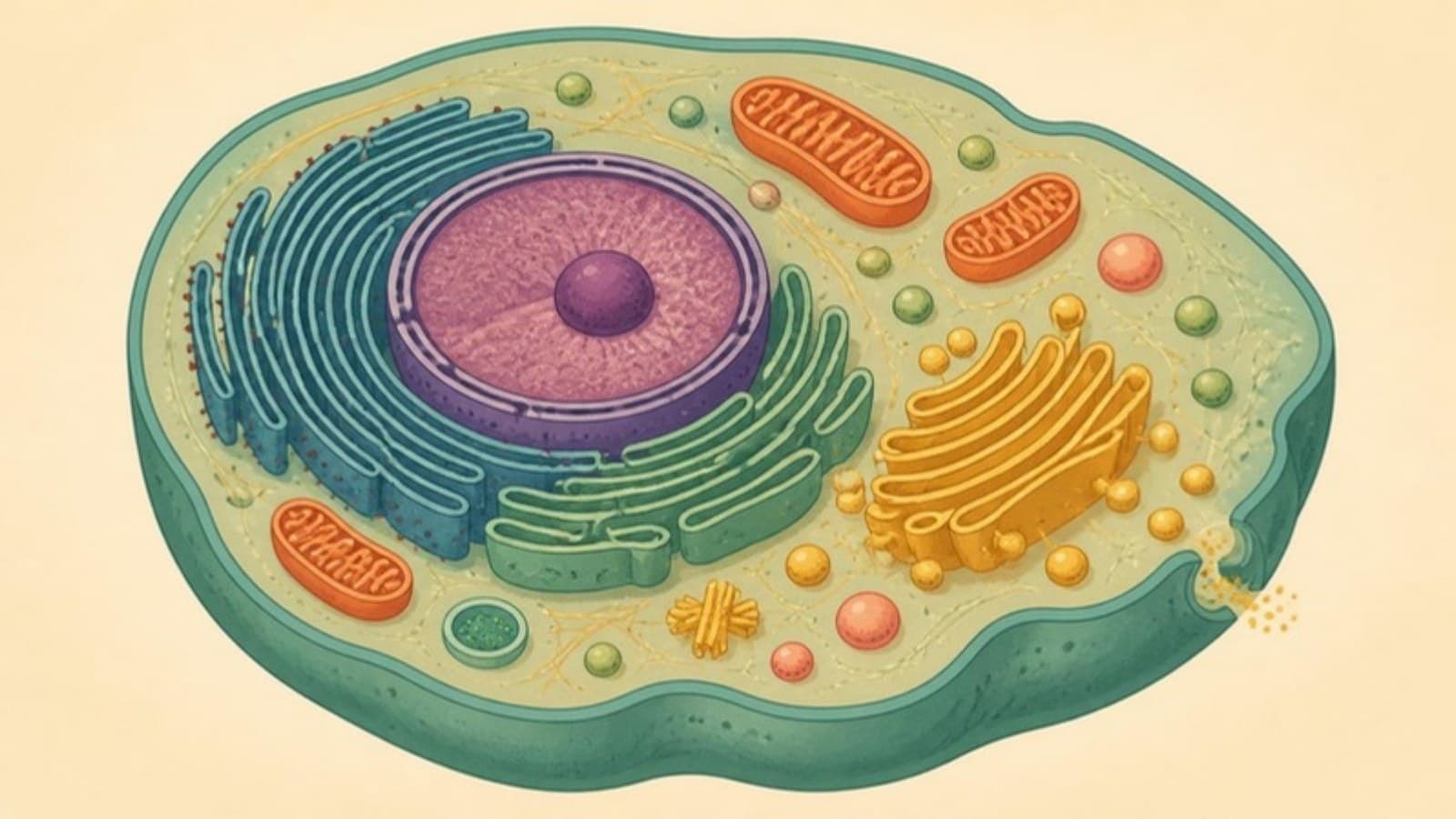

5 points to remember for NEET
Cell Biology contributes approximately 8-10 questions in NEET, making it one of the most important chapters from Class 11. This comprehensive guide covers everything you need to know for NEET 2026.
The cell is the structural and functional unit of all living organisms. This concept was established through centuries of scientific discovery.
| Scientist | Year | Contribution |
|---|---|---|
| Robert Hooke | 1665 | First observed cells in cork; coined term "cell" |
| Anton van Leeuwenhoek | 1674 | First to observe living cells (bacteria, protozoa) |
| Robert Brown | 1831 | Discovered nucleus |
| Schleiden | 1838 | All plants are made of cells |
| Schwann | 1839 | All animals are made of cells |
| Rudolf Virchow | 1855 | "Omnis cellula-e cellula" (all cells arise from pre-existing cells) |
The Cell Theory states:
Exception to Cell Theory: Viruses are acellular (not made of cells) but show characteristics of life when inside a host.
| Feature | Prokaryotic Cell | Eukaryotic Cell |
|---|---|---|
| Size | 1-10 μm | 10-100 μm |
| Nucleus | Nucleoid (no membrane) | True nucleus with membrane |
| Membrane-bound organelles | Absent | Present |
| DNA | Circular, naked | Linear, with histones |
| Ribosomes | 70S (50S + 30S) | 80S (60S + 40S) |
| Cell division | Binary fission | Mitosis/Meiosis |
| Examples | Bacteria, Cyanobacteria | Plants, Animals, Fungi |
NEET Tip: Remember that ribosomes in mitochondria and chloroplasts are 70S type, similar to prokaryotes - supporting endosymbiotic theory.
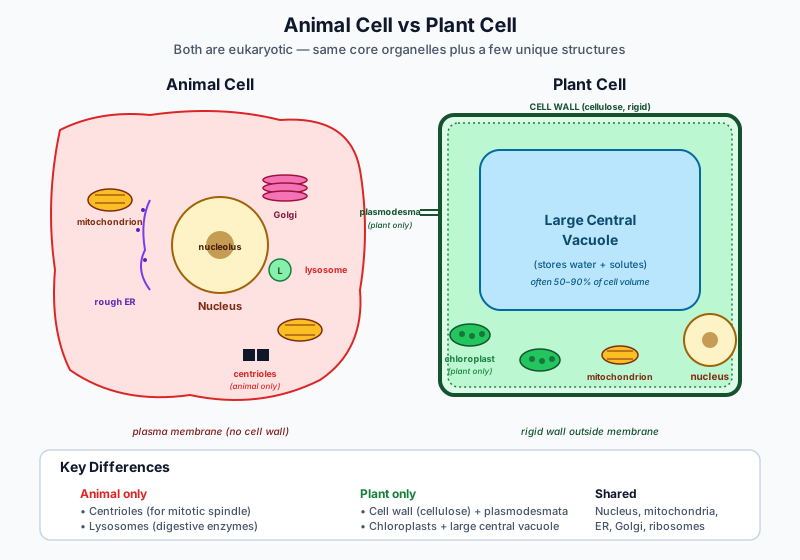
Plant Cell Wall Composition:
Bacterial Cell Wall:
Fluid Mosaic Model (Singer and Nicolson, 1972):
Components:
Membrane Transport:
| Type | Energy Required | Example |
|---|---|---|
| Passive (Diffusion) | No | O₂, CO₂ movement |
| Facilitated | No | Glucose via GLUT |
| Active Transport | Yes (ATP) | Na⁺/K⁺ pump |
| Osmosis | No | Water movement |
Structure:
Functions:
| Type | Structure | Function |
|---|---|---|
| Rough ER | Ribosomes attached | Protein synthesis and modification |
| Smooth ER | No ribosomes | Lipid synthesis, detoxification |
NCERT Point: SER is abundant in cells actively involved in lipid synthesis (adipocytes, cells secreting steroid hormones).
Structure: Stack of flattened cisternae with cis (forming) and trans (maturing) faces.
Functions:
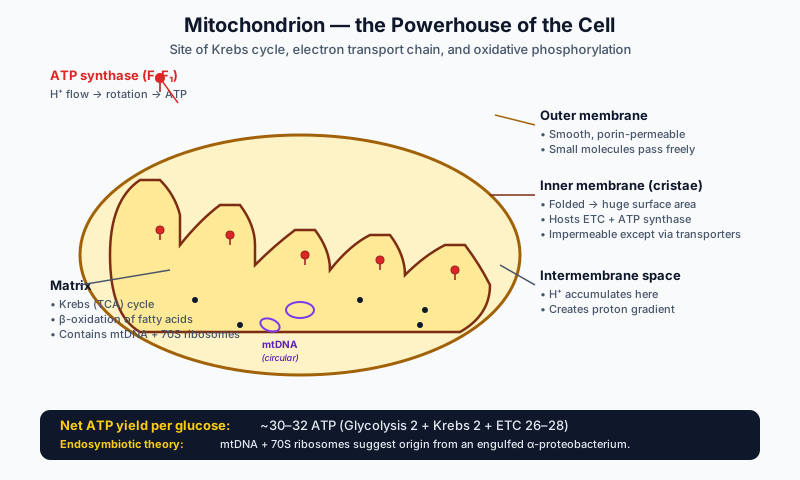
Structure:
Functions:
NEET Important: Mitochondria and chloroplasts have their own DNA and ribosomes - evidence for Endosymbiotic Theory.
| Type | Pigment | Function |
|---|---|---|
| Chloroplast | Chlorophyll a, b, carotenoids | Photosynthesis |
| Chromoplast | Carotenoids, xanthophylls | Color in flowers, fruits |
| Leucoplast | None | Storage (starch, protein, oil) |
Chloroplast Structure:
Practice break
Reading is prep. Practising is progress.
Free to try · replies within a few hours on WhatsApp
Structure: Single membrane vesicles containing hydrolytic enzymes (active at acidic pH ~5).
Functions:
Diseases Related: Tay-Sachs disease, Pompe disease (lysosomal storage disorders)
Structure:
Location:
Components:
| Element | Diameter | Protein | Function |
|---|---|---|---|
| Microtubules | 25 nm | Tubulin | Cell shape, cilia, flagella |
| Microfilaments | 7 nm | Actin | Cell movement, cytokinesis |
| Intermediate filaments | 10 nm | Various | Mechanical strength |
Plant Cell Vacuole:
Animal Cell Vacuoles:
Q1 (NEET 2023): Which of the following is not a function of the Golgi apparatus?
Q2 (NEET 2022): The 70S ribosomes are found in:
Q3 (NEET 2021): Which organelle is called the "suicidal bag" of the cell?
Q4 (NEET 2020): Middle lamella is made up of:
Q: Why are mitochondria called the powerhouse of the cell? A: Mitochondria produce ATP (adenosine triphosphate) through oxidative phosphorylation, which is the energy currency of the cell. Most cellular ATP is generated in mitochondria.
Q: What is the difference between rough and smooth ER? A: Rough ER has ribosomes attached and is involved in protein synthesis. Smooth ER lacks ribosomes and is involved in lipid synthesis and detoxification.
Q: Why is lysosome called the suicidal bag? A: Lysosomes contain powerful hydrolytic enzymes. If their membrane ruptures, these enzymes can digest the entire cell (autolysis), hence called suicidal bags.
Q: What is the endosymbiotic theory? A: This theory suggests that mitochondria and chloroplasts were once free-living prokaryotes that were engulfed by ancestral eukaryotic cells, eventually becoming organelles. Evidence includes their own DNA, 70S ribosomes, and double membrane.
Q: Why do plant cells have cell walls but animal cells don't? A: Plant cells need rigid cell walls for structural support (since they don't have skeletons) and to maintain shape against turgor pressure. Animal cells have other support mechanisms (cytoskeleton, extracellular matrix).
It's easy to know that an organelle exists and still lose the mark because its function got swapped with another one's. Message us on WhatsApp at +91 88264 44334 with the organelles you keep confusing, and we'll send a functions-only comparison, no extra detail to wade through.
Related reading: Biomolecules Complete Guide · Cell Division - Mitosis and Meiosis Notes · Class 11 Biology Coaching
Related resources

About the author
Dr. Shekhar C. Singh
AIIMS New Delhi alumnus who has taught biology since 2014, from NCERT foundations to the International Biology Olympiad.
Read his full profile →Get personalized guidance from AIIMS experts and achieve your medical college dreams
More from the blog
Master Cell Division for NEET 2026 with comprehensive notes on cell cycle, mitosis, meiosis, and their significance. NCERT-aligned content with diagrams and previous year questions.
12 Jun 2026
Master Excretion for NEET 2026 with comprehensive notes on kidney structure, nephron function, urine formation, and regulation. NCERT-aligned content with diagrams and PYQs.
12 Jun 2026
Master Digestion and Absorption for NEET 2026 with comprehensive notes on digestive system, enzymes, absorption mechanisms, and digestive disorders. NCERT-aligned content with diagrams and PYQs.
12 Jun 2026
Share your thoughts, ask a question, or help another student
Type it below and send it to us on WhatsApp — no sign-up needed.
For NEET Biology, aim for 3-4 hours of focused study daily. Quality matters more than quantity!
Yes! NCERT covers 95% of NEET Biology questions. Master it completely before any reference book.
Human Physiology (20%), Genetics (18%), and Ecology (12%) are the highest-scoring areas.
Need personalized guidance?