Loading...
Loading...
Master Microbes in Human Welfare for NEET 2026 with comprehensive notes covering household products, industrial microbiology, sewage treatment, biogas production, biocontrol agents, and biofertilizers. NCERT-aligned with PYQs and MCQs.

6 points to remember for NEET
Microbes in Human Welfare is a high-scoring chapter from Class 12 Biology that consistently contributes 2-3 questions in NEET. The chapter is largely factual, making it easy to score if you memorize the key organisms and their applications. This guide covers all NCERT concepts with tables, PYQs, and practice MCQs.
This chapter is one of the most direct and scoring topics in NEET Biology. Questions are straightforward, testing your knowledge of which microorganism is used for which application. A strong grip on organism-product-process associations can guarantee you 8-12 marks with minimal effort.
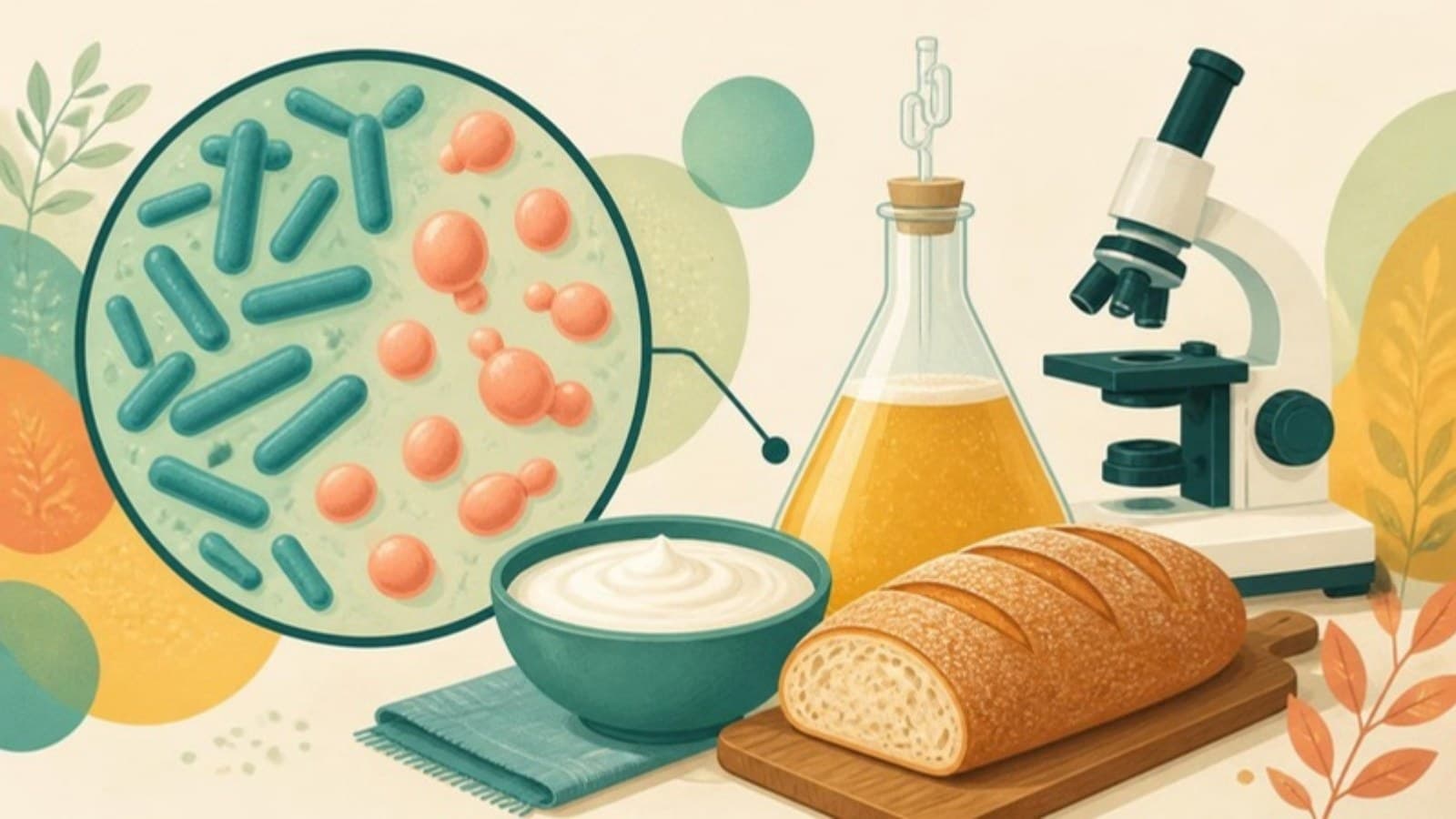
Microorganisms have been used in household food production for thousands of years, long before their discovery. Fermentation is the key process behind most of these products.
| Product | Microorganism | Process/Role |
|---|---|---|
| Curd (Dahi) | Lactobacillus | Converts lactose in milk to lactic acid; coagulates casein |
| Bread | Saccharomyces cerevisiae (Baker's yeast) | Ferments sugars, produces CO2 that causes dough to rise |
| Idli / Dosa batter | Leuconostoc mesenteroides | Fermentation makes batter fluffy and nutritious |
| Cheese (Swiss) | Propionibacterium shermanii | Produces large holes and distinctive flavour by CO2 production |
| Cheese (Roquefort) | Penicillium roqueforti | Ripening gives characteristic texture and flavour |
| Toddy | Natural yeasts | Ferment sap of palms to produce alcoholic beverage |
NEET Tip: Lactobacillus in curd also increases vitamin B12 content of the product. LAB (Lactic Acid Bacteria) also check disease-causing microbes in the stomach.
Microbes are extensively used in industry for large-scale production of alcoholic beverages, antibiotics, organic acids, and enzymes using fermentors (large vessels).
| Beverage | Raw Material | Microorganism |
|---|---|---|
| Beer | Malted barley/cereals | Saccharomyces cerevisiae |
| Wine | Grape juice | Saccharomyces cerevisiae |
| Whisky | Malted cereals | Saccharomyces cerevisiae (distilled) |
| Brandy | Fruit juice/wine | Saccharomyces cerevisiae (distilled) |
| Rum | Sugarcane molasses | Saccharomyces cerevisiae (distilled) |
NEET Tip: Beer and wine are produced without distillation. Whisky, brandy, and rum are distilled beverages with higher alcohol content.
| Antibiotic | Microorganism | Significance |
|---|---|---|
| Penicillin | Penicillium notatum | First antibiotic; discovered by Alexander Fleming (1928) |
| Streptomycin | Streptomyces griseus | Used against tuberculosis |
| Tetracycline | Streptomyces aureofaciens | Broad-spectrum antibiotic |
| Chloramphenicol | Streptomyces venezuelae | Used in typhoid treatment |
NEET Tip: Alexander Fleming, Ernst Chain, and Howard Florey received the Nobel Prize in 1945 for the discovery and development of penicillin.
| Product | Microorganism | Application |
|---|---|---|
| Citric acid | Aspergillus niger | Food preservative, flavouring |
| Acetic acid | Acetobacter aceti | Vinegar production |
| Butyric acid | Clostridium butylicum | Industrial use |
| Lactic acid | Lactobacillus | Food, pharmaceutical industry |
| Ethanol | Saccharomyces cerevisiae | Fuel, beverages, solvent |
| Lipase | Various fungi | Detergent formulations |
| Pectinase | Aspergillus species | Clarification of fruit juices |
| Streptokinase | Streptococcus | Clot-buster; removes blood clots (thrombolytic agent) |
| Cyclosporin A | Trichoderma polysporum | Immunosuppressive agent in organ transplants |
| Statins | Monascus purpureus | Lowers blood cholesterol by inhibiting HMG-CoA reductase |
NEET Tip: Streptokinase is produced by Streptococcus and is used as a "clot buster" to dissolve blood clots in heart attack patients. Statins from Monascus purpureus are competitively inhibiting the enzyme responsible for cholesterol synthesis.
Sewage is municipal wastewater containing human excreta, organic matter, and microbes. Treatment is essential before releasing it into water bodies. The treatment process harnesses the natural decomposing ability of microbes.
Primary treatment removes only large particles and does not significantly reduce the Biological Oxygen Demand (BOD).
BOD (Biological Oxygen Demand) is the amount of dissolved oxygen consumed by microorganisms to decompose organic matter in water. It is a measure of pollution.
This is the key biological step that significantly reduces BOD.
NEET Tip: The activated sludge process is the core of secondary treatment. Flocs are formed by bacteria like Zoogloea along with fungal filaments. The activated sludge serves as inoculum for fresh batches.
Biogas is a mixture of gases (predominantly methane) produced by microbial activity on organic waste under anaerobic conditions.
A typical biogas plant has:
NEET Tip: The technology of biogas production was developed in India largely due to the efforts of IARI (Indian Agricultural Research Institute) and KVIC (Khadi and Village Industries Commission). Cattle dung (gobar) is the main substrate, hence also called gobar gas.
Biological control uses living organisms to control plant diseases and pests instead of chemical pesticides. This is a key component of Integrated Pest Management (IPM).
| Organism | Type | Target/Mechanism |
|---|---|---|
| Bacillus thuringiensis (Bt) | Bacterium | Produces Bt toxin (Cry protein); kills insect larvae when ingested |
| Trichoderma | Fungus | Biocontrol of several plant pathogens; lives in root ecosystem |
| Baculoviruses (NPV) | Virus | Nucleopolyhedrovirus; species-specific, kills insects; no harm to non-target organisms |
| Ladybird beetle | Insect | Predator of aphids |
| Dragonflies | Insect | Predator of mosquitoes |
NEET Tip: Bt cotton is a genetically modified crop that contains the Cry gene from Bacillus thuringiensis, providing built-in insect resistance. NPV (Nucleopolyhedrovirus) is excellent for IPM because it is species-specific and does not harm beneficial insects, plants, or animals.
Biofertilizers are organisms that enrich the nutrient quality of soil. They are eco-friendly alternatives to chemical fertilizers.
| Organism | Type | Association | Function |
|---|---|---|---|
| Rhizobium | Bacterium | Symbiotic (with legume roots) | Fixes atmospheric N2 into ammonia in root nodules |
| Azospirillum | Bacterium | Free-living (rhizosphere) | Fixes atmospheric nitrogen; promotes root growth |
| Azotobacter | Bacterium | Free-living | Fixes atmospheric nitrogen in soil |
| Cyanobacteria (Anabaena, Nostoc) | Blue-green algae | Free-living / Symbiotic | Fix nitrogen; Anabaena in Azolla (aquatic fern) used in paddy fields |
| Mycorrhiza (Glomus) | Fungus | Symbiotic (with plant roots) | Absorbs phosphorus from soil; increases surface area for water absorption |
NEET Tip: Rhizobium forms root nodules ONLY with leguminous plants (pea, soybean, clover). The enzyme nitrogenase catalyses the conversion of atmospheric N2 to NH3. Mycorrhiza is a fungus-root association where the fungus absorbs phosphorus and the plant provides organic nutrients.
| Organism | Application |
|---|---|
| Lactobacillus | Curd production; increases vitamin B12 |
| Saccharomyces cerevisiae | Bread, ethanol, beer, wine |
| Propionibacterium shermanii | Swiss cheese (holes) |
| Penicillium notatum | Penicillin antibiotic |
| Penicillium roqueforti | Roquefort cheese |
| Streptomyces griseus | Streptomycin |
| Aspergillus niger | Citric acid |
| Acetobacter aceti | Acetic acid (vinegar) |
| Clostridium butylicum | Butyric acid |
| Streptococcus | Streptokinase (clot buster) |
| Trichoderma polysporum | Cyclosporin A (immunosuppressant) |
| Monascus purpureus | Statins (cholesterol-lowering) |
| Methanobacterium | Biogas (methane) production |
| Bacillus thuringiensis | Bt toxin (biocontrol of insects) |
| Trichoderma | Biocontrol of plant pathogens |
| Baculovirus (NPV) | Species-specific insect biocontrol |
| Rhizobium | Nitrogen fixation (symbiotic, legumes) |
| Azospirillum | Nitrogen fixation (free-living) |
| Anabaena / Cyanobacteria | Nitrogen fixation in paddy fields |
| Mycorrhiza (Glomus) | Phosphorus absorption |
Practice break
Reading is prep. Practising is progress.
Free to try · replies within a few hours on WhatsApp
For Antibiotics and their Sources: "People Should Take Care" = Penicillin (Penicillium), Streptomycin (Streptomyces griseus), Tetracycline (Streptomyces aureofaciens), Chloramphenicol (Streptomyces venezuelae)
For Biofertilizers: "Roots Always Absorb Constantly More" = Rhizobium, Azospirillum, Azotobacter, Cyanobacteria, Mycorrhiza
For Sewage Treatment Steps: "Primary Settles, Secondary Aerates" - Primary is physical settling, Secondary uses aeration and activated sludge
BOD Memory Aid: "Big Organic Dirt" = high BOD means more organic waste in water = more polluted
| Year | Question Topic | Correct Answer |
|---|---|---|
| 2025 | Organism used for Cyclosporin A production | Trichoderma polysporum |
| 2024 | Role of flocs in sewage treatment | Masses of bacteria + fungal filaments that reduce BOD |
| 2023 | Microbe used for Swiss cheese production | Propionibacterium shermanii |
| 2022 | Function of Bt toxin in insect gut | Creates pores in midgut epithelial cells causing lysis |
| 2021 | Primary treatment of sewage removes | Large particles by physical methods (sedimentation) |
| 2020 | Biogas is mainly composed of | Methane (CH4) |
| 2019 | Symbiotic nitrogen-fixing bacterium in legume root nodules | Rhizobium |
Q1. Which microorganism is used in the production of bread?
Baker's yeast (Saccharomyces cerevisiae) ferments sugars in dough and produces CO2, causing the bread to rise.
Q2. BOD of a water sample refers to:
BOD measures the oxygen demand of microbes to decompose organic waste. Higher BOD indicates more polluted water.
Q3. The activated sludge in sewage treatment contains:
Flocs in activated sludge are masses of aerobic bacteria associated with fungal filaments that decompose organic matter.
Q4. Which of the following is used as a clot buster in patients with myocardial infarction?
Streptokinase, produced by Streptococcus, is a thrombolytic agent that dissolves blood clots formed in blood vessels during heart attacks.
Q5. The bacterium Bacillus thuringiensis is used as a biocontrol agent because:
Bt produces Cry proteins that become active in the alkaline gut of insect larvae, creating pores in the gut lining and killing them.
Q6. Which of the following is a free-living nitrogen-fixing bacterium?
Azospirillum is a free-living bacterium found in the rhizosphere that fixes atmospheric nitrogen. Rhizobium is symbiotic with legumes.
Q7. Biogas is produced by the activity of:
Methanogens like Methanobacterium produce methane (biogas) by decomposing organic waste under anaerobic conditions.
Q8. Cyclosporin A is used as:
Cyclosporin A, produced by Trichoderma polysporum, suppresses the immune system and is used in organ transplant patients to prevent rejection.
Q9. Which microorganism is associated with the production of large holes in Swiss cheese?
Propionibacterium shermanii produces CO2 during ripening, which creates the characteristic large holes in Swiss cheese.
Q10. Mycorrhiza is a symbiotic association between:
Mycorrhiza (e.g., Glomus) is a fungus-root association where the fungus helps absorb phosphorus from soil while receiving organic nutrients from the plant.
Q: What is the difference between primary and secondary sewage treatment? A: Primary treatment is a physical process involving sedimentation to remove large particles and suspended solids. Secondary treatment is a biological process that uses aerobic microbes in aeration tanks to significantly reduce the BOD of the effluent. Secondary treatment is more effective at removing dissolved organic matter.
Q: Why is Bt toxin harmless to humans but lethal to insects? A: Bt toxin exists as an inactive protoxin in the bacterium. It requires the alkaline pH (>9.5) of the insect gut to become activated. Since the human stomach is acidic (pH 1.5-3.5), the toxin is never activated and is simply digested as a harmless protein.
Q: What is the difference between symbiotic and free-living nitrogen fixers? A: Symbiotic nitrogen fixers like Rhizobium form a close association with host plants (legumes), living inside root nodules where they fix N2. Free-living fixers like Azospirillum and Azotobacter fix nitrogen independently in the soil without requiring a host plant.
Q: Why is biogas considered a renewable energy source? A: Biogas is produced from biological waste (cattle dung, crop residues, sewage) that is continuously generated. Methanogens decompose this waste anaerobically to produce methane. Since the substrate is renewable and the process is continuous, biogas is a sustainable and renewable energy source.
Q: How does mycorrhiza benefit plant growth? A: Mycorrhizal fungi form extensive networks of hyphae that greatly increase the absorptive surface area of plant roots. They are especially important for phosphorus absorption from the soil. The plant, in return, provides organic nutrients (sugars) to the fungus. This mutualistic association improves plant growth, disease resistance, and drought tolerance.
Trichoderma, Bacillus thuringiensis, Rhizobium, Nitrosomonas — the names blur together fast when you're revising this chapter in one sitting. Message us on WhatsApp at +91 88264 44334 with the organisms you keep confusing, and we'll send a one-line-per-organism reference built to keep them apart.
Related reading: Human Health and Disease Notes · Class 12 Biology Coaching
Related resources

About the author
Dr. Shekhar C. Singh
AIIMS New Delhi alumnus who has taught biology since 2014, from NCERT foundations to the International Biology Olympiad.
Read his full profile →Get personalized guidance from AIIMS experts and achieve your medical college dreams
More from the blog
Master Ecology for NEET 2026 with this comprehensive guide covering organisms and environment, population ecology, ecosystem structure, biodiversity conservation, and environmental issues. NCERT-aligned with PYQs and 12 practice MCQs.
2 Mar 2026
Complete NEET notes on Reproduction in Organisms covering asexual reproduction types, sexual reproduction phases, parthenogenesis, and vegetative propagation. NCERT-aligned with PYQ analysis and practice MCQs for NEET 2026.
2 Mar 2026
Master Genetics for NEET 2026 with comprehensive notes on Mendel's laws, inheritance patterns, chromosomal basis, linkage, and genetic disorders. NCERT-aligned content with diagrams and PYQs.
12 Jun 2026
Share your thoughts, ask a question, or help another student
Type it below and send it to us on WhatsApp — no sign-up needed.
For NEET Biology, aim for 3-4 hours of focused study daily. Quality matters more than quantity!
Yes! NCERT covers 95% of NEET Biology questions. Master it completely before any reference book.
Human Physiology (20%), Genetics (18%), and Ecology (12%) are the highest-scoring areas.
Need personalized guidance?