Loading...
Loading...
Complete Human Physiology guide for NEET: all chapters (Digestion, Breathing, Body Fluids, Excretion, Locomotion, Neural, Chemical Coordination) with weightage, key concepts, common questions.

5 points to remember for NEET
Most NEET toppers have the same pattern: They score 90%+ in Human Physiology while others score 50-70%.
The difference isn't more study time. It's deeper understanding of how systems work.
Human Physiology accounts for 60-75 marks out of 360 total in NEET Biology (17-20%). It's the second-largest block after Plant Physiology (which is harder and less consistent).
Here's the critical insight: Physiology is teachable. Unlike Ecology (which is highly unpredictable) or Evolution (which is conceptually complex), Physiology has clear patterns, repeatable mechanisms, and predictable question types.
This guide maps every Physiology chapter with:
Use this to go from 50/75 to 70/75 in Physiology. That's +20 marks overall.
Total Physiology Marks: 60-75 (17-20% of Biology)
| Chapter | Marks (Est.) | Question Count | Difficulty | Your Priority |
|---|---|---|---|---|
| Digestion & Absorption | 8-10 | 2-3 | Medium | HIGH |
| Respiration & Gas Exchange | 8-10 | 2-3 | Medium | HIGH |
| Body Fluids & Circulation | 8-10 | 2-3 | Medium-High | HIGH |
| Excretion & Osmoregulation | 8-10 | 2-3 | High | HIGH |
| Locomotion & Movement | 6-8 | 1-2 | Medium | MEDIUM |
| Neural Coordination | 10-12 | 3-4 | High | CRITICAL |
| Chemical Coordination | 8-10 | 2-3 | Medium-High | HIGH |
| TOTAL | 60-75 | 18-21 |
Key Insight: Neural Coordination and Chemical Coordination combined = 18-22 marks = 25% of Physiology. If you struggle here, your Physiology score crashes.
What NEET Asks:
Concept Map:
Saliva (secreted by salivary glands)
├─ Salivary amylase (breaks starch → maltose)
├─ Lingual lipase (minor fat digestion)
├─ Mucus (lubrication)
└─ Buffering agents (maintain pH 6.5-7)
Key Mechanism:
Common Mistake: Students think saliva continues to act in stomach. False. Acid destroys amylase.
What NEET Asks:
Mechanism Question Type: "Why is pepsinogen secreted instead of pepsin?" Answer: Pepsinogen (inactive) prevents self-digestion. HCl converts it to pepsin (active) only when needed. Once in acidic stomach, pepsin can't damage its own producing cells (peptic chief cells are protected by mucus layer).
Key Concept:
Mnemonic: HCL = "Help Cells Liquefy" (stomach churns food into semi-liquid chyme)
What NEET Asks:
Complete Digestion Location:
| Nutrient | Where Digested | Which Enzyme | Final Product |
|---|---|---|---|
| Carbs | Small intestine | Pancreatic amylase, disaccharidases | Monosaccharides |
| Proteins | Small intestine (mainly) | Trypsin, chymotrypsin, carboxypeptidase | Amino acids |
| Fats | Small intestine | Pancreatic lipase | Fatty acids + Glycerol |
Critical Concept: Emulsification vs Digestion
Question Type: "A patient has bile duct blockage. Which nutrient is most affected?" Answer: Fats (lipids). Carbs and proteins still digested relatively normally.
What NEET Asks:
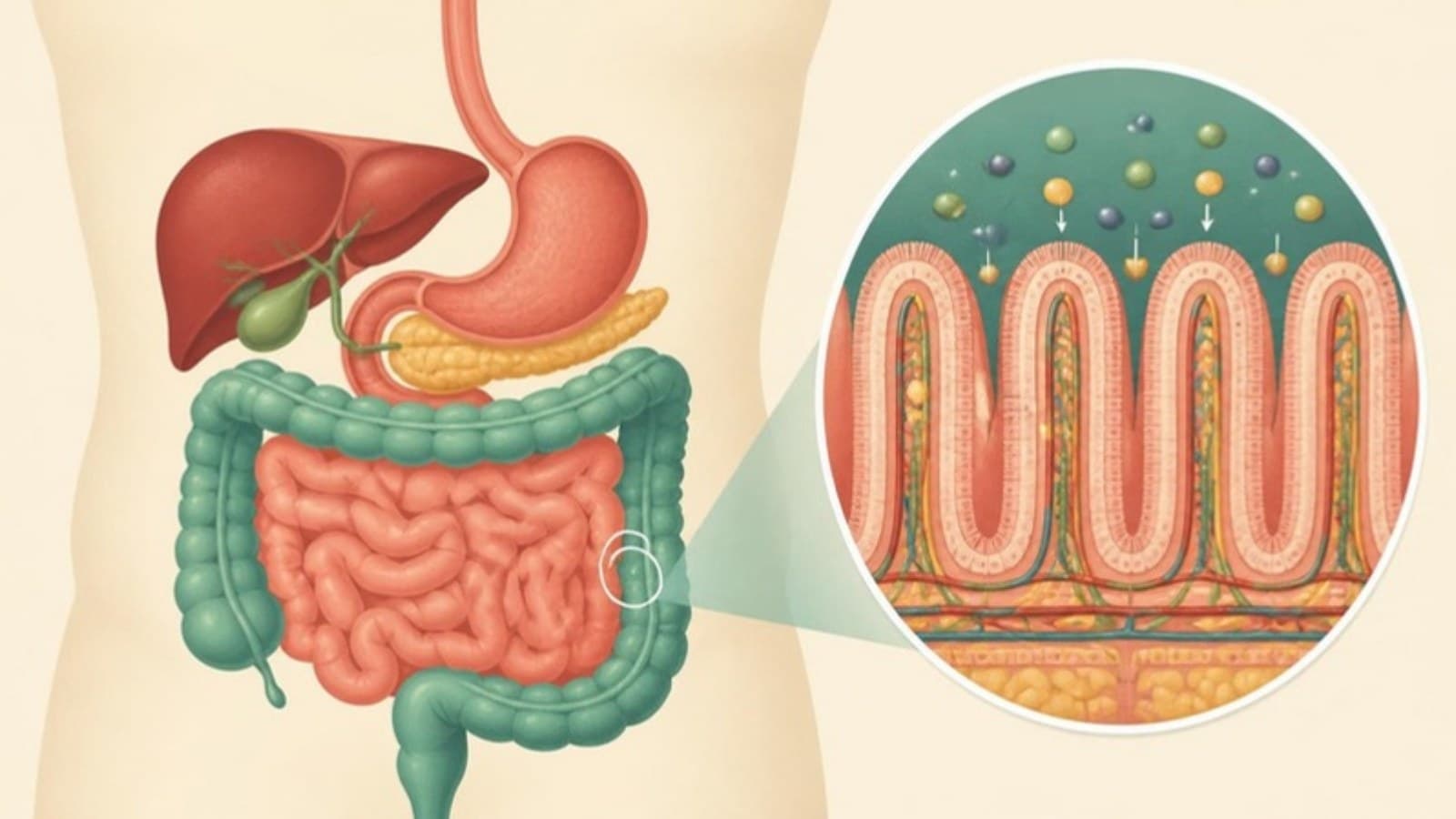
Surface Area Calculation (common NEET question):
This massive surface area = maximum absorption efficiency.
Mechanism Type Question: "Why are amino acids absorbed by active transport while fatty acids by passive transport?" Answer: Amino acids are polar, charged (can't cross lipid membrane); need carrier proteins + ATP. Fatty acids are nonpolar (can cross lipid directly).
What NEET Asks:
Common Confusion: Students think faeces = undigested food only. Actually:
Presence of starch in faeces = pancreatic insufficiency (not producing amylase).
Days 1-3: Memorize organs, juices, enzymes (NCERT table) Days 4-6: Understand mechanisms (why each enzyme, where it works, what it produces) Days 7-8: Clinical applications (bile duct blockage → fat malabsorption; pancreatic insufficiency → starch in faeces) Days 9-10: Solve 20 NEET-style questions (focus on mechanism-based)
Expected Accuracy: 85-90% in exams
What NEET Asks:
Critical Detail: Alveolar Wall
Question Type: "A premature infant has respiratory distress syndrome. Why?" Answer: Insufficient surfactant → alveoli collapse → cannot expand → hypoxia. (Babies produce surfactant only after 34 weeks gestation.)
NEET Loves This Topic — Know Every Number:
| Volume/Capacity | Amount | Notes |
|---|---|---|
| Tidal Volume (TV) | 500 mL | Normal breath |
| Inspiratory Reserve (IRV) | 3000 mL | Maximum inhalation after normal breath |
| Expiratory Reserve (ERV) | 1000 mL | Maximum exhalation after normal breath |
| Residual Volume (RV) | 1200 mL | Air left in lungs (can't exhale) |
| Total Lung Capacity (TLC) | 5700 mL | TV+IRV+ERV+RV |
| Vital Capacity (VC) | 4500 mL | TV+IRV+ERV (exhale-able air) |
| Functional Residual Capacity (FRC) | 2200 mL | ERV+RV (air after normal exhalation) |
Mnemonic: "TIRE + RV = TLC"
Question Type: "A patient has emphysema (alveoli destroyed). Which volume increases most?" Answer: Residual Volume (destroyed alveoli trap air; can't expel).
Concept: Diffusion across concentration gradient
Oxygen Transport:
Carbon Dioxide Transport:
Mechanism: CO₂ + H₂O ⇌ H₂CO₃ ⇌ H⁺ + HCO₃⁻ (Catalyzed by carbonic anhydrase inside RBCs)
Question Type: "Why does CO₂ transport in blood increase with exercise?" Answer: Exercise → more CO₂ production → more H⁺ production → pH drops → Bohr effect (Hb releases O₂ more readily) AND HCO₃⁻ formation increases.
What NEET Asks:
Mechanism: Increased CO₂ (or decreased pH) → stimulates chemoreceptors → increases breathing rate → CO₂ expelled → pH normalizes
Critical Concept: Breathing is primarily controlled by CO₂ level, not O₂ level (paradoxically).
Question Type: "High-altitude climbers experience hyperventilation. Why?" Answer: Low O₂ stimulates peripheral chemoreceptors → increased breathing → CO₂ expelled → respiratory alkalosis.
Days 1-2: Learn all volumes, capacities, normal values Days 3-4: Understand gas exchange mechanisms (O₂ and CO₂ transport) Days 5-6: Respiration regulation (centers, chemoreceptors, effects) Days 7-8: Clinical applications (emphysema, asthma, high altitude) Days 9-10: Solve 20 NEET questions
Expected Accuracy: 85-90%
What NEET Asks:
Critical: Why Biconcave Shape?
This is NEET's favorite Physiology topic.
Chamber Function:
Valves and Flow:
Mnemonic: "Try to BiCep" (Tri=3 cusps, Bi=2 cusps)
Cardiac Cycle (Most Important for NEET):
Systole (0.4 seconds — ventricles contract):
Diastole (0.6 seconds — ventricles relax):
Total cardiac cycle: 0.4 + 0.6 = 1 second (Heart rate 60 bpm = 60 cycles/min)
Heart Sounds:
Question Type: "A patient has a murmur at systole. Which valve is likely faulty?" Answer: Aortic or pulmonary valve (semilunar; if leaky, blood flows backward during systole).
What NEET Asks:
Normal BP: 120/80 mmHg (systolic/diastolic)
Factors Increasing BP:
Question Type: "High blood pressure patient. Which hormone's blocker might help?" Answer: ACE inhibitor (blocks angiotensin II formation) OR Aldosterone antagonist (reduces Na+ retention).
NEET Level:
Blood Type Genetics:
Transfusion Rules:
Question Type: "Child born to Type A mother and Type B father. Child is Type O. Why no transfusion issues?" Answer: Child has no A or B antigens (Type O); mother and father have anti-B and anti-A antibodies respectively, which are IgG (don't cross placenta in first pregnancy).
Days 1-2: Blood composition, RBC, WBC functions Days 3-4: Heart anatomy and chambers (draw diagrams multiple times) Days 5-6: Cardiac cycle (systole-diastole), valves, sounds Days 7-8: Blood groups, transfusion, Rh factor Days 9-10: Blood pressure, hormonal regulation
Clinical Context Tip: Visit hospital cardiology OPD to see actual ECG; understand how electrical activity relates to systole-diastole.
Expected Accuracy: 80-85%
Why This Matters: 30% of Excretion questions test nephron understanding.
Nephron Zones and Their Functions:
| Zone | Structure | Function | Key Mechanism |
|---|---|---|---|
| Bowman's Capsule | Cup-shaped | Filters blood | Glomerular filtration |
| Proximal Convoluted Tubule (PCT) | Coiled tubule | Reabsorb useful substances | Active transport |
| Loop of Henle | U-shaped | Create osmotic gradient | Countercurrent multiplier |
| Distal Convoluted Tubule (DCT) | Coiled tubule | Fine-tune reabsorption | Active transport (selective) |
| Collecting Duct | Straight tube | Final water reabsorption | ADH-regulated |
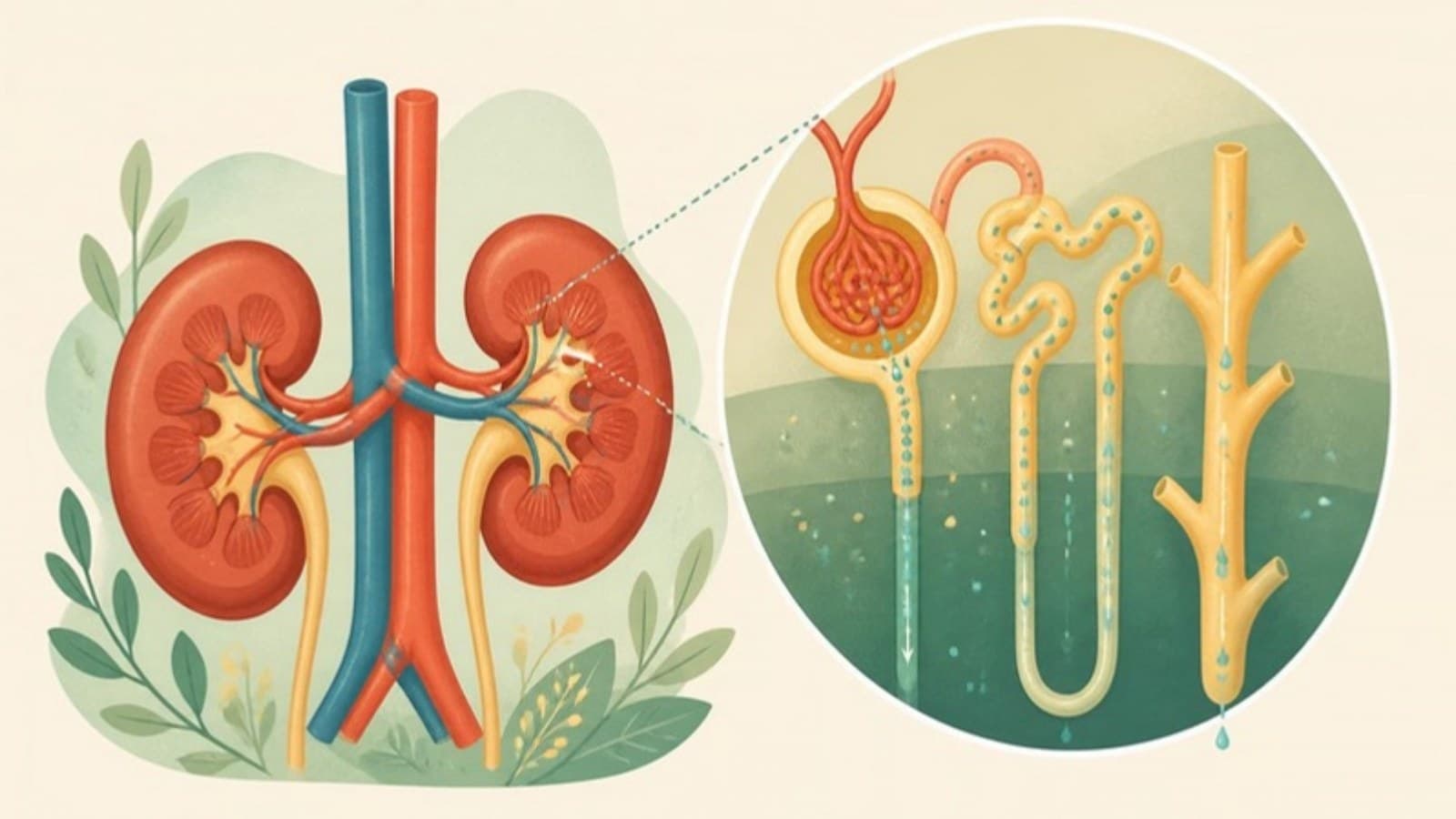
Visual Understanding (Critical for Scoring):
Common Question Type: "Which kidney region would be most affected if the counter-current multiplier fails?" Answer: Medulla (Loop of Henle loses ability to concentrate urine).
What NEET Tests:
Mechanism: Blood pressure in glomerulus forces small molecules through basement membrane:
Clinical Application Question: "Patient urine shows glucose and RBCs. What's wrong?" Answer:
This is where students get confused. Pay close attention.
Proximal Convoluted Tubule (PCT) — Site of Maximum Reabsorption:
| Substance | Reabsorption Mechanism | Notes |
|---|---|---|
| Glucose | Active transport (100% reabsorbed) | Carrier protein in epithelial cell; needs ATP |
| Amino acids | Active transport (100%) | Same carrier system as glucose |
| Na⁺ | Active transport (70%) | Na-K pump |
| Water | Osmosis (70%) | Follows Na⁺ reabsorption |
| Urea | Partial diffusion (50%) | Passive; concentration-dependent |
| Creatinine | Minimal (5%) | Hardly reabsorbed; stays in filtrate |
Why Active Transport in PCT?
Loop of Henle: The Osmotic Gradient Machine (Countercurrent Multiplier)
Descending Limb (Permeable to Water):
Ascending Limb (Impermeable to Water):
Result: Maximum urine concentration = 1200 mOsm/kg possible (due to Loop of Henle gradient)
Question Type: "Patient on loop diuretic (inhibits ascending limb). What happens?" Answer: Can't establish osmotic gradient → can't concentrate urine → polyuria (excessive urination) → dehydration risk.
Distal Convoluted Tubule & Collecting Duct: Fine Regulation
ADH (Vasopressin) Mechanism:
Aldosterone Mechanism:
Practice break
Reading is prep. Practising is progress.
Free to try · replies within a few hours on WhatsApp
What's in Normal Urine?
What Should NOT Be in Normal Urine:
Abnormal Urines and What They Indicate:
| Finding | Indicates |
|---|---|
| Glucose | Diabetes mellitus (blood glucose too high) |
| Proteins | Glomerular disease (proteinuria) |
| RBCs | Glomerulonephritis or kidney stone |
| WBCs | Urinary tract infection |
| Ketones | Starvation, uncontrolled diabetes |
| Dark/Brown | Myoglobin (muscle breakdown) or old blood |
Homeostasis Maintenance:
Water Balance:
ADH Regulation:
Osmolarity: Normal = 300 mOsm/kg; range 275-295 in blood
Electrolyte Balance:
Days 1-2: Nephron structure (draw and label 10 times) Days 3-4: Glomerular filtration (what filters, why, how much) Days 5-7: Tubular reabsorption (each segment's role, mechanisms, clinical significance) Days 8-9: ADH and aldosterone regulation (mechanism and effects) Days 10: Abnormal urine analysis (clinical cases)
Critical Practice: Solve mechanism-based questions. Example: "If Loop of Henle is blocked, what happens to collecting duct water reabsorption?" (Answer: Minimal; can't establish gradient)
Expected Accuracy: 70-80% (hardest chapter; needs deep understanding)
Resting Membrane Potential: -70 mV
Action Potential Phases:
Phase 1: Resting (-70 mV)
Phase 2: Depolarization (threshold -55 mV)
Phase 3: Repolarization
Phase 4: Hyperpolarization
Critical NEET Question: "During refractory period, why can't neuron fire even with strong stimulus?" Answer: Voltage-gated Na⁺ channels are inactivated (different from closed). They can't open until repolarized. This ensures one-way signal propagation.
Synaptic Transmission:
Common Neurotransmitters:
| NT | Function | Examples |
|---|---|---|
| Acetylcholine | Activating | Neuromuscular junction, parasympathetic |
| Dopamine | Activating | Brain motor control |
| Serotonin | Inhibitory | Mood regulation; sleep |
| GABA | Inhibitory | CNS; prevents over-excitation |
| Glutamate | Activating | Learning, memory formation |
Critical Concept: Synapse is unidirectional because neurotransmitters are released from presynaptic terminal, not postsynaptic.
Question Type: "Drug blocks glutamate receptors. What's affected?" Answer: Learning and memory formation (hippocampus uses glutamate).
Simplest Nervous System Response — No Brain Involved!
Components (in order):
Classic Example: Touch hot stove → withdrawal reflex (your hand moves before you even feel pain)
Why This Matters: Reflex arc demonstrates that spinal cord alone can produce response (doesn't need brain). This is tested for understanding nervous system organization.
Question Type: "Spinal cord severed at waist. Can person still withdraw foot from painful stimulus?" Answer: YES (spinal reflex arc still functional below cut).
Cerebrum (Largest Part):
Cerebellum:
Brainstem (Medulla, Pons, Midbrain):
Thalamus:
Hypothalamus:
Question Type: "Damage to occipital lobe. What's affected?" Answer: Vision (visual cortex located here).
Sympathetic (Fight-or-Flight):
Parasympathetic (Rest-and-Digest):
Question Type: "Patient given beta-blocker (blocks norepinephrine). What happens?" Answer: Heart rate decreases, blood pressure decreases (blocks sympathetic effect).
Days 1-2: Neuron structure, resting membrane potential Days 3-4: Action potential generation and conduction Days 5-6: Synapse and neurotransmitters Days 7-8: Reflex arc, spinal nerve organization Days 9-10: Brain structure and function Days 11-12: Autonomic nervous system, sympathetic vs parasympathetic
Hospital Visit Tip: If possible, see actual EEG (Electroencephalogram) recording to understand brain electrical activity.
Expected Accuracy: 70-75% (most students score 60-70 here)
Pituitary Gland Hormones:
| Hormone | Target | Effect | Regulation |
|---|---|---|---|
| Growth Hormone (GH) | All tissues | Growth, protein synthesis | Hypothalamus (GRH, GIH) |
| Prolactin | Breasts | Milk production | Hypothalamus (PIH) |
| TSH | Thyroid | Thyroid hormone production | Hypothalamus (TRH); Neg feedback |
| ACTH | Adrenal | Cortisol production | Hypothalamus (CRH); Neg feedback |
| LH, FSH | Gonads | Sex hormone, gamete production | Hypothalamus (GnRH) |
| ADH | Kidney | Water reabsorption | Osmolarity; volume |
| Oxytocin | Uterus, breasts | Contraction, milk ejection | Suckling stimulus |
Thyroid Hormones:
Pancreatic Hormones:
Adrenal Hormones:
Thyroid, Adrenal, Reproductive Hormones:
Days 1-3: Pituitary hormones and functions Days 4-5: Thyroid and parathyroid Days 6-7: Pancreatic hormones and diabetes Days 8-9: Adrenal hormones and stress Days 10: Reproductive hormones and menstrual cycle
Expected Accuracy: 80-85%
Q1 (Digestion): "A person shows inability to digest fats despite normal liver function. Which enzyme deficiency is most likely?" A) Amylase B) Peptidase C) Lipase D) Nuclease
Answer: C) Lipase (Pancreatic lipase is essential for fat digestion; liver produces bile which emulsifies but doesn't digest fats)
Q2 (Respiration): "Chemoreceptors are stimulated primarily by:" A) Decreased O₂ B) Increased CO₂ C) Increased pH D) Decreased temperature
Answer: B) Increased CO₂ (Even 2% increase in CO₂ significantly stimulates breathing; O₂ must drop to <60 mmHg for effect)
Q3 (Circulation): "First sound of heart (Lubb) occurs when:" A) AV valves open B) AV valves close C) Semilunar valves open D) Semilunar valves close
Answer: B) AV valves close (Marks beginning of systole)
Q4 (Excretion): "Glycosuria (glucose in urine) occurs when blood glucose exceeds:" A) 100 mg/dL B) 125 mg/dL C) 180 mg/dL D) 250 mg/dL
Answer: C) 180 mg/dL (Renal threshold — above this, glucose can't be completely reabsorbed)
Q5 (Nervous System): "During refractory period, a new action potential cannot be generated because:" A) Threshold is very high B) Na⁺ channels are inactivated C) K⁺ channels are closed D) Membrane is hyperpolarized
Answer: B) Na⁺ channels are inactivated (Inactivation is different from closure; they must pass through closed state before opening again)
| Phase | Timeline | Focus |
|---|---|---|
| Understanding | Month 1-2 | Read NCERT, grasp mechanisms |
| Mastery | Month 3-4 | Solve coaching institute tests, identify weak areas |
| Clinical Context | Month 4-5 | Visit hospital OPD, observe real cases |
| Revision | Month 5-6 | Final mock tests, mechanism review |
| Exam Ready | Month 6-7 | Speed and accuracy practice |
Expected Result: 65-75 marks in Physiology (vs average 50 marks)
This guide contains everything needed to score high in Human Physiology. Success depends on understanding mechanisms, not memorizing facts. Use this strategically and watch your Biology score improve by 20+ marks.
Start today.
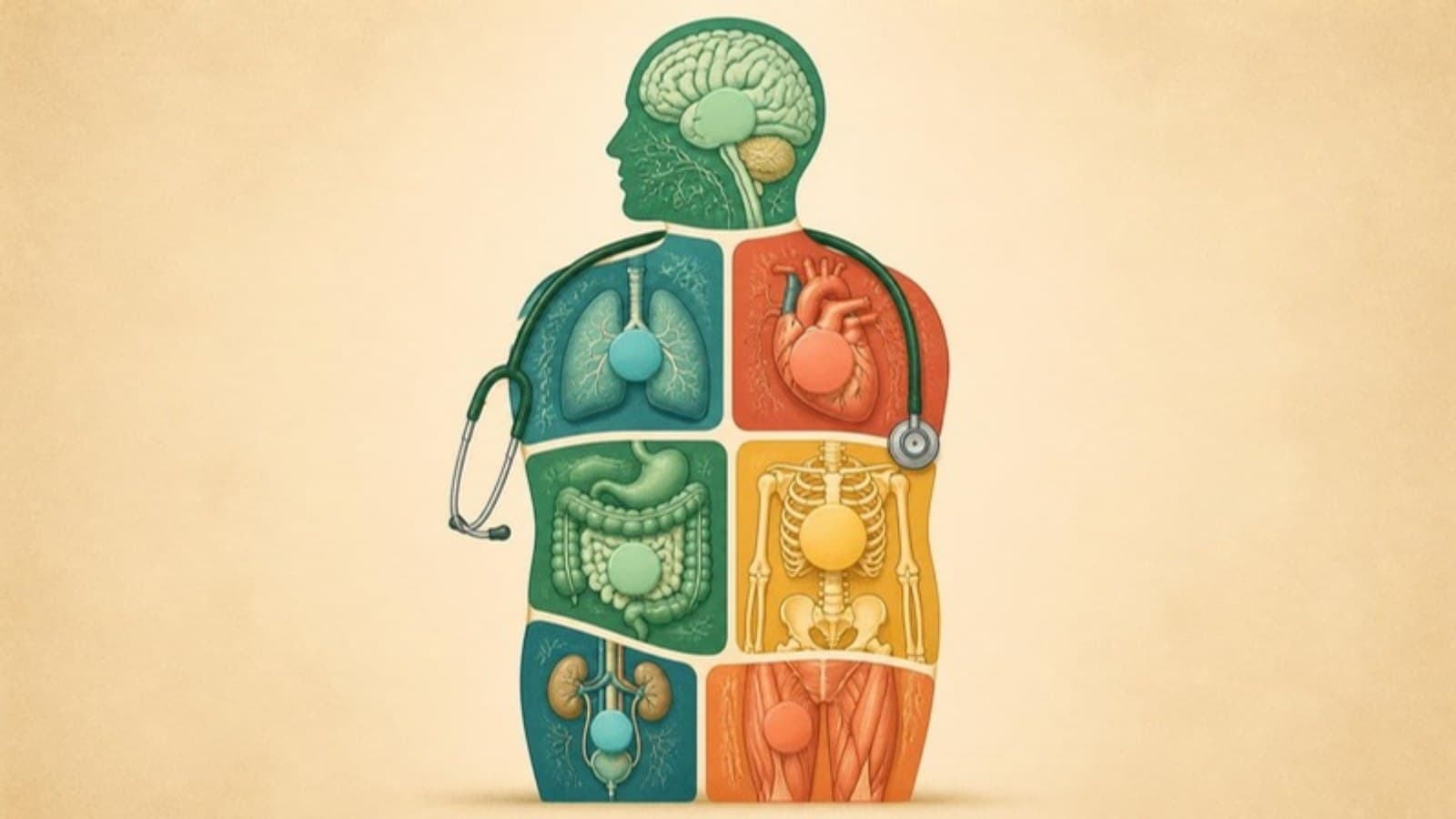
Digestion, breathing, circulation, excretion, locomotion, neural and chemical coordination are taught as separate chapters but tested as one connected system. Message us on WhatsApp at +91 88264 44334 with your physiology mock score, and we'll tell you which one or two of the seven chapters is actually dragging the section down.
Related reading: Human Physiology Complete Notes · NEET Human Physiology Weightage Analysis · Class 11 Biology Coaching
Related resources

About the author
Dr. Shekhar C. Singh
AIIMS New Delhi alumnus who has taught biology since 2014, from NCERT foundations to the International Biology Olympiad.
Read his full profile →Get personalized guidance from AIIMS experts and achieve your medical college dreams
More from the blog
Master Excretion for NEET 2026 with comprehensive notes on kidney structure, nephron function, urine formation, and regulation. NCERT-aligned content with diagrams and PYQs.
12 Jun 2026
Master Digestion and Absorption for NEET 2026 with comprehensive notes on digestive system, enzymes, absorption mechanisms, and digestive disorders. NCERT-aligned content with diagrams and PYQs.
12 Jun 2026
Master Human Physiology for NEET with comprehensive notes covering all 7 chapters. Diagrams, tables, and high-yield points for guaranteed 14-16 questions.
12 Jun 2026
Share your thoughts, ask a question, or help another student
Type it below and send it to us on WhatsApp — no sign-up needed.
For NEET Biology, aim for 3-4 hours of focused study daily. Quality matters more than quantity!
Yes! NCERT covers 95% of NEET Biology questions. Master it completely before any reference book.
Human Physiology (20%), Genetics (18%), and Ecology (12%) are the highest-scoring areas.
Need personalized guidance?