Loading...
Loading...
Master Human Physiology for NEET with comprehensive notes covering all 7 chapters. Diagrams, tables, and high-yield points for guaranteed 14-16 questions.

5 points to remember for NEET
Human Physiology is the highest-weightage unit in NEET Biology. With 7 chapters contributing 14-16 questions every year, mastering this unit alone can secure 56-64 marks. This comprehensive guide covers everything you need to know.
| Factor | Details |
|---|---|
| Total Questions | 14-16 every year |
| Total Marks | 56-64 (out of 360) |
| Difficulty | Easy to Moderate |
| Question Type | Factual + Diagram-based |
| NCERT Dependency | 95% questions from NCERT |
| Aspect | Details |
|---|---|
| Expected Questions | 2-3 |
| Key Topics | GI tract, Enzymes, Absorption |
| Diagram Focus | Digestive system, Tooth structure |
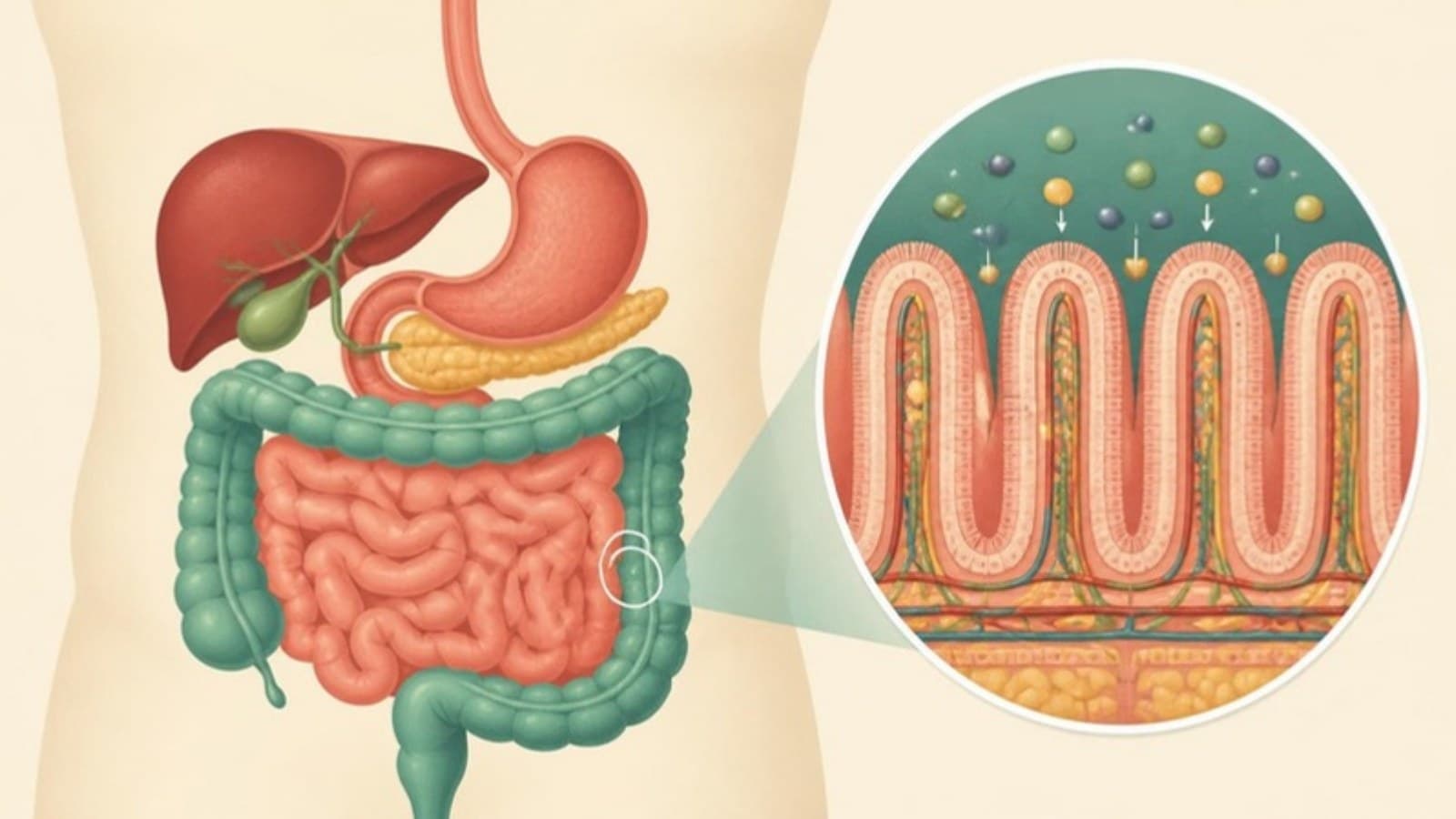
Alimentary Canal Components:
| Organ | Function | Key Enzymes/Secretions |
|---|---|---|
| Mouth | Mastication, Initial digestion | Salivary amylase (ptyalin) |
| Pharynx | Swallowing | - |
| Oesophagus | Peristalsis | - |
| Stomach | Protein digestion | HCl, Pepsin, Rennin |
| Small Intestine | Major digestion & absorption | Many enzymes |
| Large Intestine | Water absorption | - |
Salivary Glands:
Gastric Glands:
| Cell Type | Secretion | Function |
|---|---|---|
| Mucous cells | Mucus | Protection |
| Chief cells | Pepsinogen | Protein digestion |
| Parietal cells | HCl, Intrinsic factor | Activation, B12 absorption |
| G cells | Gastrin | Stimulates secretion |
Pancreatic Enzymes:
Intestinal Enzymes (Brush Border):
| Enzyme | Substrate | Product |
|---|---|---|
| Maltase | Maltose | Glucose |
| Sucrase | Sucrose | Glucose + Fructose |
| Lactase | Lactose | Glucose + Galactose |
| Aminopeptidases | Peptides | Amino acids |
| Nucleotidases | Nucleotides | Nucleosides |
| Nutrient | Site | Mechanism |
|---|---|---|
| Glucose | Small intestine | Na+ cotransport |
| Amino acids | Small intestine | Active transport |
| Fatty acids | Small intestine | Micelle formation |
| Water | Large intestine | Osmosis |
| Vitamin B12 | Ileum | Intrinsic factor |
| Aspect | Details |
|---|---|
| Expected Questions | 2-3 |
| Key Topics | Respiratory volumes, Gas transport |
| Diagram Focus | Respiratory system, Oxygen dissociation curve |
Conducting Zone (No gas exchange):
Respiratory Zone (Gas exchange):
| Parameter | Definition | Normal Value |
|---|---|---|
| Tidal Volume (TV) | Normal breath | 500 mL |
| Inspiratory Reserve (IRV) | Extra inspiration | 2500-3000 mL |
| Expiratory Reserve (ERV) | Extra expiration | 1000-1100 mL |
| Residual Volume (RV) | Always in lungs | 1100-1200 mL |
| Vital Capacity (VC) | TV + IRV + ERV | 3500-4500 mL |
| Total Lung Capacity | VC + RV | 5000-6000 mL |
Oxygen Transport:
Factors Shifting O2 Dissociation Curve:
| Right Shift (↓ affinity) | Left Shift (↑ affinity) |
|---|---|
| ↑ PCO2 | ↓ PCO2 |
| ↑ H+ (↓ pH) | ↓ H+ (↑ pH) |
| ↑ Temperature | ↓ Temperature |
| ↑ 2,3-DPG | ↓ 2,3-DPG |
CO2 Transport:
| Aspect | Details |
|---|---|
| Expected Questions | 3-4 |
| Key Topics | Blood, Heart, ECG, Blood groups |
| Diagram Focus | Heart structure, Cardiac cycle |
Plasma (55%):
Formed Elements (45%):
| Cell Type | Count | Function | Lifespan |
|---|---|---|---|
| RBC | 5-5.5 million/mm³ | O2 transport | 120 days |
| WBC | 6000-8000/mm³ | Immunity | Variable |
| Platelets | 1.5-3.5 lakh/mm³ | Clotting | 5-9 days |
WBC Types (Never Let Monkeys Eat Bananas):
Chambers:
Valves:
| Valve | Location | Type |
|---|---|---|
| Tricuspid | Right AV | 3 cusps |
| Bicuspid/Mitral | Left AV | 2 cusps |
| Pulmonary | Right ventricle outlet | Semilunar |
| Aortic | Left ventricle outlet | Semilunar |
| Phase | Duration | Events |
|---|---|---|
| Atrial systole | 0.1 s | Atria contract, blood to ventricles |
| Ventricular systole | 0.3 s | Ventricles contract, blood to arteries |
| Joint diastole | 0.4 s | All chambers relax |
Key Values:
| Wave | Represents |
|---|---|
| P wave | Atrial depolarization |
| QRS complex | Ventricular depolarization |
| T wave | Ventricular repolarization |
ABO System:
| Blood Group | Antigen | Antibody | Can Donate To | Can Receive From |
|---|---|---|---|---|
| A | A | Anti-B | A, AB | A, O |
| B | B | Anti-A | B, AB | B, O |
| AB | A, B | None | AB | All (Universal recipient) |
| O | None | Anti-A, Anti-B | All (Universal donor) | O |
Rh Factor:
| Aspect | Details |
|---|---|
| Expected Questions | 2-3 |
| Key Topics | Nephron, Urine formation, Regulation |
| Diagram Focus | Nephron structure, Kidney section |
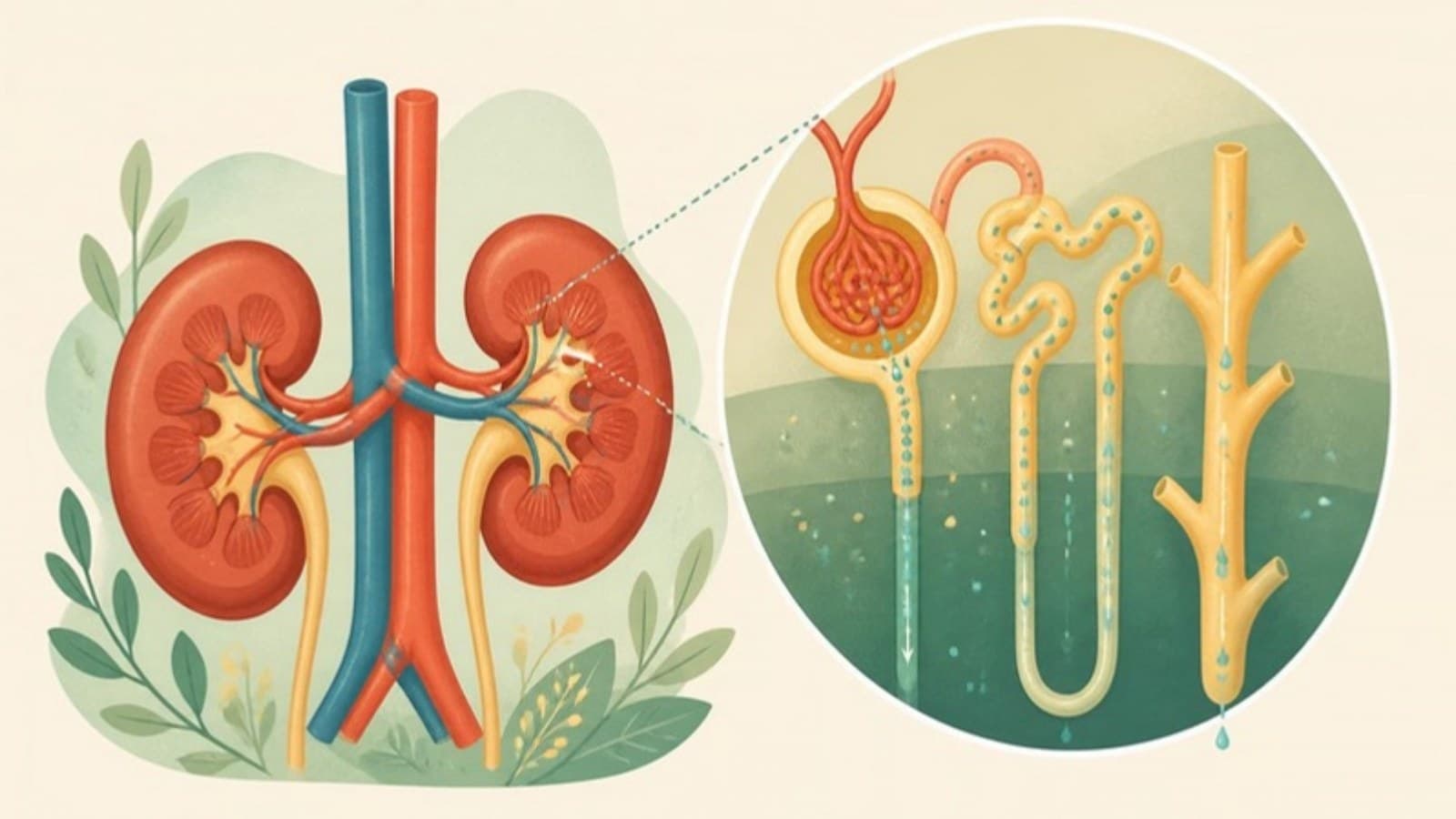
Parts of Nephron:
| Part | Location | Function |
|---|---|---|
| Bowman's capsule | Cortex | Filtration |
| PCT | Cortex | Reabsorption (most) |
| Loop of Henle | Medulla | Concentration |
| DCT | Cortex | Selective reabsorption |
| Collecting duct | Medulla | Final concentration |
1. Glomerular Filtration:
2. Tubular Reabsorption:
| Substance | Site | % Reabsorbed |
|---|---|---|
| Glucose | PCT | 100% |
| Na+ | PCT, DCT | 99% |
| Water | PCT, DCT, CD | 99% |
| Urea | PCT | 50% |
3. Tubular Secretion:
Hormonal Regulation:
| Hormone | Source | Effect |
|---|---|---|
| ADH | Posterior pituitary | ↑ Water reabsorption |
| Aldosterone | Adrenal cortex | ↑ Na+ reabsorption |
| ANF | Heart | ↑ Na+ excretion |
JG Apparatus:
| Aspect | Details |
|---|---|
| Expected Questions | 2-3 |
| Key Topics | Muscle types, Skeleton, Joints |
| Diagram Focus | Sarcomere, Joint types |
| Type | Location | Features | Control |
|---|---|---|---|
| Skeletal | Attached to bones | Striated, multinucleate | Voluntary |
| Cardiac | Heart | Striated, branched | Involuntary |
| Smooth | Viscera, blood vessels | Non-striated | Involuntary |
Practice break
Reading is prep. Practising is progress.
Free to try · replies within a few hours on WhatsApp
Sarcomere - Functional Unit:
| Band/Line | Composition |
|---|---|
| A band (dark) | Myosin + overlapping actin |
| I band (light) | Actin only |
| H zone | Myosin only |
| Z line | Actin attachment |
| M line | Myosin center |
Total Bones: 206
| Region | Number of Bones |
|---|---|
| Skull | 22 (8 cranial + 14 facial) |
| Vertebral column | 26 (7C + 12T + 5L + 1S + 1C) |
| Thoracic cage | 25 (24 ribs + 1 sternum) |
| Upper limbs | 60 (30 × 2) |
| Lower limbs | 60 (30 × 2) |
| Pelvic girdle | 2 |
| Pectoral girdle | 4 |
| Type | Movement | Example |
|---|---|---|
| Fibrous | None | Skull sutures |
| Cartilaginous | Limited | Vertebrae |
| Synovial | Free | Knee, elbow |
Synovial Joint Types:
| Aspect | Details |
|---|---|
| Expected Questions | 3-4 |
| Key Topics | Brain, Reflex arc, Sensory organs |
| Diagram Focus | Brain parts, Eye, Ear |
Parts and Functions:
| Part | Functions |
|---|---|
| Cerebrum | Intelligence, memory, reasoning, speech |
| Cerebellum | Balance, coordination, posture |
| Medulla | Vital reflexes (breathing, heart rate) |
| Pons | Relay, sleep regulation |
| Hypothalamus | Temperature, hunger, thirst, hormones |
| Thalamus | Sensory relay station |
Cerebral Lobes:
| Lobe | Function |
|---|---|
| Frontal | Motor, personality, speech |
| Parietal | Sensory, spatial awareness |
| Temporal | Hearing, memory |
| Occipital | Vision |
Types:
Parts:
Receptor → Sensory neuron → CNS → Motor neuron → Effector
Types:
| Part | Function |
|---|---|
| Cornea | Light refraction |
| Iris | Controls light entry |
| Lens | Focusing (accommodation) |
| Retina | Contains photoreceptors |
| Rods | Dim light, black/white |
| Cones | Bright light, color |
| Fovea | Maximum visual acuity |
| Optic nerve | Transmits signals |
Parts:
| Aspect | Details |
|---|---|
| Expected Questions | 2-3 |
| Key Topics | Endocrine glands, Hormones |
| Diagram Focus | Location of glands |
| Gland | Hormone | Function |
|---|---|---|
| Hypothalamus | Releasing/Inhibiting hormones | Controls pituitary |
| Anterior Pituitary | GH, TSH, ACTH, FSH, LH, Prolactin | Master gland |
| Posterior Pituitary | ADH, Oxytocin | Water balance, labor |
| Thyroid | T3, T4, Calcitonin | Metabolism, Ca2+ |
| Parathyroid | PTH | ↑ Blood Ca2+ |
| Adrenal Cortex | Cortisol, Aldosterone | Stress, electrolytes |
| Adrenal Medulla | Adrenaline, Noradrenaline | Fight or flight |
| Pancreas | Insulin, Glucagon | Blood glucose |
| Ovaries | Estrogen, Progesterone | Female development |
| Testes | Testosterone | Male development |
Negative Feedback:
Positive Feedback:
| Disorder | Cause | Symptoms |
|---|---|---|
| Diabetes mellitus | Insulin deficiency | High blood sugar |
| Hypothyroidism | Low T3/T4 | Cretinism, Myxedema |
| Hyperthyroidism | High T3/T4 | Graves' disease |
| Acromegaly | GH excess (adult) | Enlarged extremities |
| Gigantism | GH excess (child) | Excessive height |
| Dwarfism | GH deficiency | Short stature |
| Addison's disease | Adrenal insufficiency | Weakness, low BP |
| Cushing's syndrome | Cortisol excess | Moon face, obesity |
| Enzyme | Source | Substrate | Product |
|---|---|---|---|
| Salivary amylase | Saliva | Starch | Maltose |
| Pepsin | Stomach | Proteins | Peptides |
| Trypsin | Pancreas | Proteins | Peptides |
| Lipase | Pancreas | Fats | Fatty acids + Glycerol |
| Maltase | Intestine | Maltose | Glucose |
| Lactase | Intestine | Lactose | Glucose + Galactose |
| Hormone | Source | Effect |
|---|---|---|
| Insulin | β-cells | ↓ Blood glucose |
| Glucagon | α-cells | ↑ Blood glucose |
| ADH | Posterior pituitary | ↑ Water reabsorption |
| Aldosterone | Adrenal cortex | ↑ Na+ retention |
| PTH | Parathyroid | ↑ Blood Ca2+ |
| Calcitonin | Thyroid | ↓ Blood Ca2+ |
Get the full Human Physiology notes with:
Enter your WhatsApp number to receive the complete PDF.
Human Physiology alone can give you 56-64 marks. Don't leave it to chance.
Book a FREE Demo Class to:
Physiology alone can decide 14-16 questions, but not every one of its seven chapters pulls equal weight. Message us on WhatsApp at +91 88264 44334 with your last mock's physiology-section breakdown, and we'll tell you which chapter is actually costing you marks.
Related reading: Body Fluids and Circulation Notes · Neural Control and Coordination Notes · Class 11 Biology Coaching
Related resources

About the author
Dr. Shekhar C. Singh
AIIMS New Delhi alumnus who has taught biology since 2014, from NCERT foundations to the International Biology Olympiad.
Read his full profile →Get personalized guidance from AIIMS experts and achieve your medical college dreams
More from the blog
title: NEET Human Physiology Weightage 2026 — Chapter-Wise Analysis & Strategy. Complete weightage analysis, question patterns, and chapter-wise strategy for NEET 2026 Biology preparation.
7 Feb 2026
Master Excretion for NEET 2026 with comprehensive notes on kidney structure, nephron function, urine formation, and regulation. NCERT-aligned content with diagrams and PYQs.
12 Jun 2026
Master Digestion and Absorption for NEET 2026 with comprehensive notes on digestive system, enzymes, absorption mechanisms, and digestive disorders. NCERT-aligned content with diagrams and PYQs.
12 Jun 2026
Share your thoughts, ask a question, or help another student
Type it below and send it to us on WhatsApp — no sign-up needed.
For NEET Biology, aim for 3-4 hours of focused study daily. Quality matters more than quantity!
Yes! NCERT covers 95% of NEET Biology questions. Master it completely before any reference book.
Human Physiology (20%), Genetics (18%), and Ecology (12%) are the highest-scoring areas.
Need personalized guidance?