
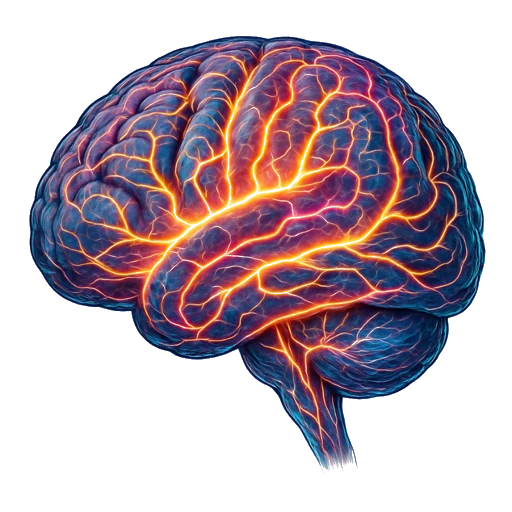
The brain is the body’s command and control system, and the cerebrum is its largest part. This chapter asks you to know the human brain region by region, in NCERT’s own words, and to tell the parts apart under exam pressure: which structure joins the two hemispheres, which one controls body temperature, which one carries the cerebral aqueduct. The notes below follow the rationalised NCERT chapter (Class 11, Neural Control and Coordination), with the brain treated in the depth NEET expects.
What NEET actually asks from this chapter
The rationalised NCERT textbook (2023 onwards) kept four parts of this chapter: the neural system and its organisation, the neuron as the structural and functional unit, generation and conduction of the nerve impulse with synaptic transmission, and the central neural system, which means the brain. The sections on reflex action, the eye and the ear were removed from the book and from the NEET syllabus, so a question on the retina or the cochlea is now off-syllabus.
That leaves the brain carrying most of the chapter’s weight. NEET questions here are almost always "match the region to its function" or "which pair is incorrect", and they are built from NCERT sentences. Learn the sentences, not just the labels.
How the human neural system is organised
The human neural system has two divisions. The central neural system (CNS) is the brain and the spinal cord, the site of information processing and control. The peripheral neural system (PNS) is all the nerves of the body associated with the CNS. Its afferent fibres carry impulses from tissues and organs to the CNS; efferent fibres carry regulatory impulses from the CNS back to the peripheral tissues and organs.
The PNS is further divided into the somatic neural system, which relays impulses from the CNS to skeletal muscles, and the autonomic neural system, which transmits impulses from the CNS to the involuntary organs and smooth muscles. The autonomic system has sympathetic and parasympathetic divisions.
- CNS = brain + spinal cord. PNS = everything else.
- Afferent = towards the CNS (sensory). Efferent = away from the CNS (motor).
- Somatic → skeletal muscle (voluntary). Autonomic → smooth muscle and involuntary organs.
Protection of the brain: skull and the three meninges
The brain sits inside the skull. Within the skull it is wrapped in three cranial meninges: an outer dura mater, a very thin middle arachnoid, and an inner pia mater that is in direct contact with the brain tissue. NEET likes the order, so fix it: dura, arachnoid, pia, from outside in.
The brain itself is divided into three major parts: forebrain, midbrain and hindbrain.
The cerebrum: the largest part of the brain
The forebrain consists of the cerebrum, the thalamus and the hypothalamus. The cerebrum forms the major part of the human brain. A deep cleft divides it longitudinally into two halves, the left and right cerebral hemispheres, and the hemispheres are connected by a tract of nerve fibres called the corpus callosum.
The layer of cells covering each hemisphere is the cerebral cortex. It is thrown into prominent folds, which increase its surface area, and it is called the grey matter because the neuron cell bodies are concentrated here and give it a greyish colour. The cortex contains motor areas, sensory areas, and large regions that are neither clearly sensory nor motor. These association areas are responsible for complex functions such as intersensory associations, memory and communication.
Beneath the cortex, the inner part of each hemisphere is made of tracts whose fibres are covered with myelin sheath. Myelin gives this layer an opaque white appearance, so it is called the white matter. Remember the arrangement: in the cerebrum grey matter is outside and white matter inside; in the spinal cord the arrangement is reversed.
NCERT describes the cortex by function. Coaching papers routinely add the four lobes of each hemisphere, and NEET has used them in matching questions: the frontal lobe houses the motor areas, the parietal lobe the somatic sensory areas, the temporal lobe the auditory area, and the occipital lobe the visual area.
Human brain: sagittal section
Hover or tap a region. Labels follow NCERT Class 11.
Hover or tap any region of the brain to read its NCERT function.
Sagittal section of the human brain. Drawn for Cerebrum Biology Academy; labels as in NCERT Class 11.
Thalamus, hypothalamus and the limbic system
The cerebrum wraps around the thalamus, a major coordinating centre for sensory and motor signalling. At the base of the thalamus lies the hypothalamus. It contains centres that control body temperature and the urge for eating and drinking, and several groups of neurosecretory cells that secrete the hypothalamic hormones you meet again in Chemical Coordination and Integration.
The inner parts of the cerebral hemispheres together with a group of associated deep structures, such as the amygdala and the hippocampus, form the limbic lobe or limbic system. Along with the hypothalamus it regulates sexual behaviour, the expression of emotional reactions such as excitement, pleasure, rage and fear, and motivation.
- Thalamus: relay and coordinating centre for sensory and motor signals.
- Hypothalamus: temperature, hunger, thirst, hypothalamic hormones.
- Limbic system (with hypothalamus): emotion, motivation, sexual behaviour.
Midbrain and the brain stem
The midbrain lies between the thalamus and hypothalamus of the forebrain and the pons of the hindbrain. A canal called the cerebral aqueduct passes through it. The dorsal portion of the midbrain consists mainly of four round swellings, or lobes, called the corpora quadrigemina.
The midbrain and the hindbrain together form the brain stem. Two traps: corpora quadrigemina belong to the midbrain, not the hindbrain, and the cerebral aqueduct runs through the midbrain, not the cerebrum.
Hindbrain: pons, cerebellum and medulla
The hindbrain has three parts. The pons consists of fibre tracts that interconnect different regions of the brain. The cerebellum has a very convoluted surface, which provides the additional space for many more neurons; it coordinates balance and movement. The medulla, also called the medulla oblongata, is connected to the spinal cord and contains the centres that control respiration, cardiovascular reflexes and gastric secretions.
Most wrong answers in this chapter come from swapping these three. If an option says a region "consists of fibre tracts that interconnect different regions of the brain", that is the pons and only the pons. If it names respiration or cardiovascular reflexes, it is the medulla. If it names balance, it is the cerebellum.
How the brain connects to the rest of the chapter
Every signal the brain processes arrives as a nerve impulse along a neuron and crosses a synapse. The neuron (cell body with Nissl granules, dendrites towards the cell body, a single axon away from it), the resting membrane potential, depolarisation and repolarisation, and chemical transmission across the synaptic cleft are the other half of the examinable chapter. Our full chapter notes and the human physiology question set below cover them; this page is the brain in depth.
Brain regions and their NCERT functions, the way NEET matches them
| Division | Structure | What NCERT says it does |
|---|---|---|
| Forebrain | Cerebrum | Major part of the brain; two hemispheres joined by the corpus callosum; cortex (grey matter) with motor, sensory and association areas |
| Forebrain | Thalamus | Major coordinating centre for sensory and motor signalling |
| Forebrain | Hypothalamus | Body temperature, urge for eating and drinking; neurosecretory cells secrete hypothalamic hormones |
| Forebrain | Limbic system | With the hypothalamus: sexual behaviour, emotional reactions, motivation |
| Midbrain | Corpora quadrigemina | Four round swellings on the dorsal midbrain; cerebral aqueduct passes through the midbrain |
| Hindbrain | Pons | Fibre tracts interconnecting different regions of the brain |
| Hindbrain | Cerebellum | Very convoluted surface for many more neurons; balance and coordination |
| Hindbrain | Medulla oblongata | Connected to the spinal cord; respiration, cardiovascular reflexes, gastric secretions |
Previous year question, worked
NEET 2019
Which of the following structures or regions is incorrectly paired with its function?
- (1)Hypothalamus: production of releasing hormones and regulation of temperature, hunger and thirst
- (2)Limbic system: consists of fibre tracts that interconnect different regions of brain; regulates sexual behaviour, expression of excitement, pleasure, rage, fear, etc.
- (3)Medulla oblongata: controls respiration and cardiovascular reflexes
- (4)Corpus callosum: band of fibres connecting left and right cerebral hemispheres
Show answer and reasoning
Answer: Limbic system. Three of the four pairs are lifted straight from NCERT. The limbic system option smuggles in the pons’s job ("fibre tracts that interconnect different regions of the brain") before the limbic functions. One borrowed clause makes the whole pair incorrect. This is the standard NEET pattern for this chapter: a correct function attached to the wrong structure.
NEET pattern
Which region of the brain is incorrectly paired with its function?
- (1)Cerebrum: calculation and reasoning
- (2)Corpus callosum: communication between the two cerebral hemispheres
- (3)Medulla oblongata: homeostatic control of respiration and cardiovascular reflexes
- (4)Cerebellum: language comprehension
Show answer and reasoning
Answer: Cerebellum: language comprehension. Language and reasoning belong to the association areas of the cerebral cortex. The cerebellum coordinates balance and movement. Whenever an option gives the cerebellum a cortical job, it is the odd one out.
Practice MCQs on the brain
13 questions from our NEET question bank. Tap an option to check it.
Q1.The forebrain includes:
Q2.The largest part of human brain is:
Q3.The two cerebral hemispheres are connected by:
Q4.The outer layer of cerebrum is called:
Q5.The motor area of cerebrum is located in:
Q6.The sensory area of cerebrum is located in:
Q7.The visual area is located in:
Q8.The auditory area is located in:
Q9.Thalamus functions as:
Q10.Hypothalamus controls:
Q11.The hindbrain includes:
Q12.Cerebellum is primarily involved in:
Q13.Medulla oblongata controls:
Frequently asked questions
What is the cerebrum?
The cerebrum is the largest part of the human brain and the main part of the forebrain. A deep longitudinal cleft divides it into left and right cerebral hemispheres, which are joined by the corpus callosum. Its outer layer, the cerebral cortex, is grey matter with motor, sensory and association areas; its inner part is white matter made of myelinated fibre tracts.
What connects the two cerebral hemispheres?
The corpus callosum, a tract of nerve fibres, connects the left and right cerebral hemispheres.
Why is the cerebral cortex called grey matter?
Neuron cell bodies are concentrated in the cortex and give it a greyish appearance. The inner tracts are covered in myelin sheath, which looks opaque white, so that layer is white matter.
Which part of the brain controls body temperature, hunger and thirst?
The hypothalamus, which lies at the base of the thalamus. It also contains neurosecretory cells that secrete hypothalamic hormones.
What is the limbic system?
The inner parts of the cerebral hemispheres together with deep structures such as the amygdala and hippocampus. With the hypothalamus it regulates sexual behaviour, emotional reactions such as excitement, pleasure, rage and fear, and motivation.
Where are the corpora quadrigemina and the cerebral aqueduct?
Both belong to the midbrain. The corpora quadrigemina are four round swellings on its dorsal side; the cerebral aqueduct is the canal that passes through it.
Are the eye and ear still in the NEET syllabus?
No. The rationalised NCERT removed the sections on reflex action and on the eye and the ear from this chapter, and the NEET syllabus follows the rationalised book. The brain, the neuron, the nerve impulse and the synapse remain.
What is the difference between the pons, the cerebellum and the medulla?
All three are hindbrain. The pons is fibre tracts that interconnect different regions of the brain. The cerebellum has a very convoluted surface and coordinates balance and movement. The medulla oblongata connects to the spinal cord and controls respiration, cardiovascular reflexes and gastric secretions.
Originally Published
Last Updated
Continue with
- Human physiology MCQ practiceTimed questions across all seven human physiology chapters.
- Human physiology chapter notesThe neuron, nerve impulse and synapse, plus the other physiology chapters.
- Chapter-wise previous year questionsHow often each chapter has appeared in NEET.
- Class 11 NEET Biology coachingLive classes with Dr. Shekhar, online across India and at our Delhi NCR centres.