Loading...
Loading...
Plant and animal physiology is where most AP-5 students lose USABO Open points. Here is exactly what AP underweights — plant transport and hormones, animal endocrine, immune and cardiovascular depth, and histology — and how to close the gap.
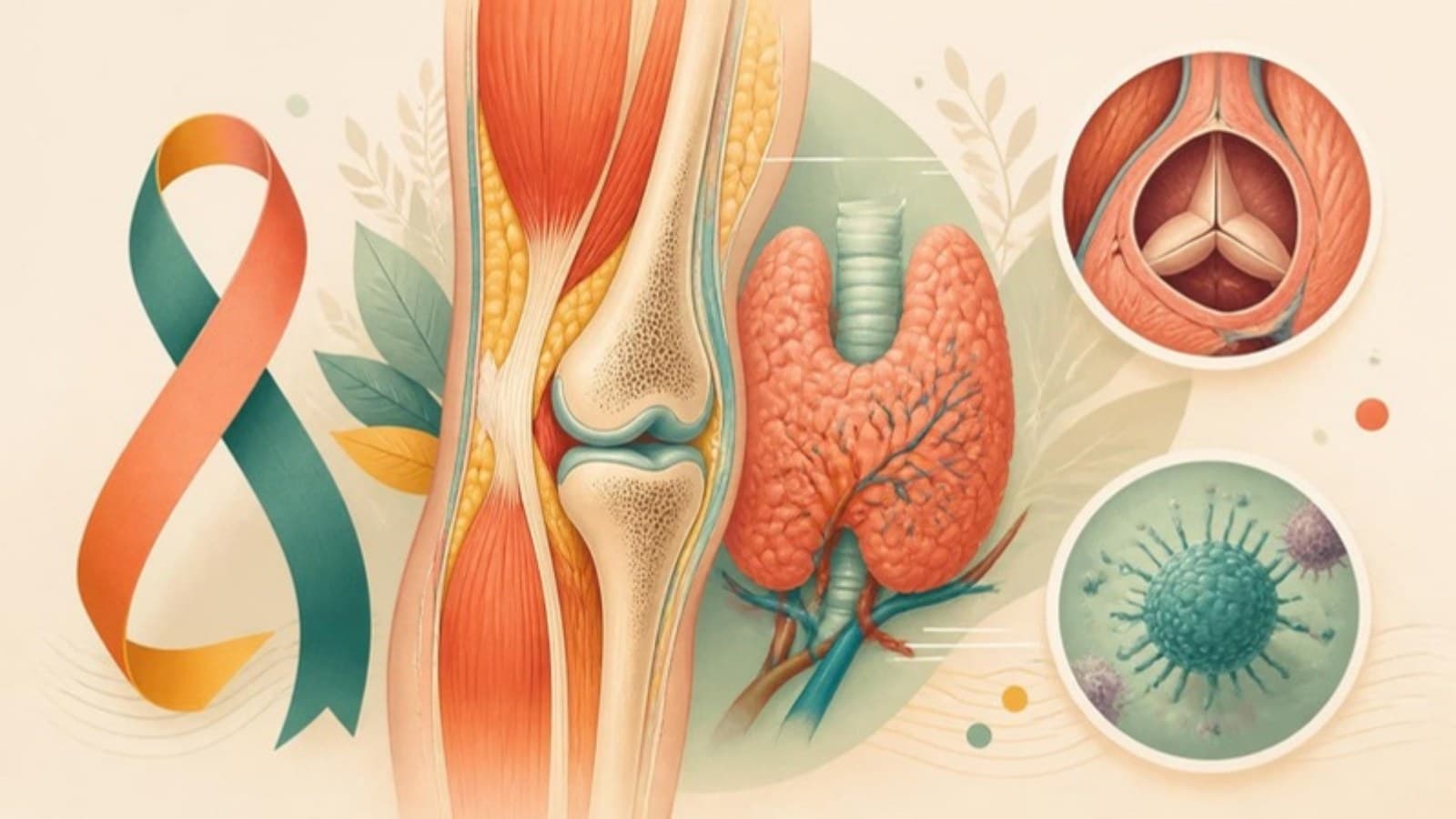

5 points to remember for olympiad
If you have taken a past USABO Open Exam and reviewed your errors honestly, there is a good chance they clustered in one place: physiology. It is the highest-weighted area on the exam, and it is exactly where AP Biology's coverage runs shallowest. AP gives you the concepts; USABO asks for the depth, the regulation, and — often — the histology.
This is a teaching guide to what AP underweights and what to study instead. It assumes you know the AP-level basics and want to reach Open-clearing depth.
On the USABO blueprint, animal anatomy and physiology carries roughly a quarter of the weight — the single largest slice — and plant biology adds more on top. AP Biology, by contrast, treats physiology at a conceptual level: it wants you to understand feedback and homeostasis, not to know the fine structure of a nephron or the full clotting cascade. That difference is the gap.
AP covers the nervous, endocrine, circulatory, immune, and digestive systems — but at breadth, not depth. USABO probes the depth. The high-yield areas:
The theme: AP asks what a system does; USABO asks how it does it and how it is regulated.
Plant biology is where AP is genuinely light and USABO is reliably demanding. Prioritise:
Practice break
Preparing for USABO, IBO or NSEB?
Free to try · replies within a few hours on WhatsApp
USABO frequently asks you to identify a tissue — from a description or an image — and to reason about its function. AP almost never does this. Build a working knowledge of:
Practise with labelled diagrams until you can name a structure from its appearance and state what it does. This is cheap points on the exam and pure upside, because most self-studiers skip it.
Campbell is your base, but for physiology depth you need to go beyond it:
Do not learn physiology as a list of facts — learn each system as an integrated whole: structure → function → regulation → what breaks it. For every system, be able to answer: what are the parts, what does each do, how is the whole regulated, and what happens when a specific piece fails? USABO questions almost always live in that last layer — the "what if this is disrupted" reasoning — which is exactly what integrated study builds and rote memorisation does not.
If you want a physiology problem set built around the exact USABO depth — with the histology image work most students skip — message us on WhatsApp at +91 88264 44334 and we will send one over.
Related reading: AP Biology vs USABO: unit-by-unit overlap map · Is AP Biology Enough for USABO? · USABO Genetics: Problem-Solving Patterns · Our USABO coaching program
Related resources

About the author
Dr. Shekhar C. Singh
AIIMS New Delhi alumnus who has taught biology since 2014, from NCERT foundations to the International Biology Olympiad.
Read his full profile →Get expert coaching from Olympiad medalists and compete at the international level
More from the blog
Advancing from the USABO Open to the Semifinal means finishing in roughly the top 10% nationally. Here is how the cutoff really works, why you cannot predict it in advance, and the specific things that separate students who qualify from those who just miss.
22 Jul 2026
Genetics is one of the highest-yield areas on the USABO — and one of the most pattern-driven. Here are the problem types that recur every year (linkage, pedigrees, Hardy-Weinberg, chi-square) and the traps that cost students points.
22 Jul 2026
How much of USABO does AP Biology cover? The eight College Board units mapped against the seven USABO areas and their weightings — the topics AP names but USABO tests deeper, the topics AP never reaches, and a 12-week plan for the gap.
24 Sept 2026
Share your thoughts, ask a question, or help another student
Type it below and send it to us on WhatsApp — no sign-up needed.
USABO is open to students in grades 9-12. Middle schoolers should look at Science Olympiad Division B, which is built for grades 6-9.
Most students work through Campbell over 6-9 months. The Semifinal leans on data interpretation and experimental design, so drill those alongside content.
Registration goes through a school or an approved centre. If your school does not participate, a teacher can register as a new centre with CEE.
Need personalized guidance?