Loading...
Loading...
The honest, grade-by-grade roadmap for US families: what actually helps in grades 6–8, why USABO and IBO don't start until grade 9, and how to build a foundation that pays off.
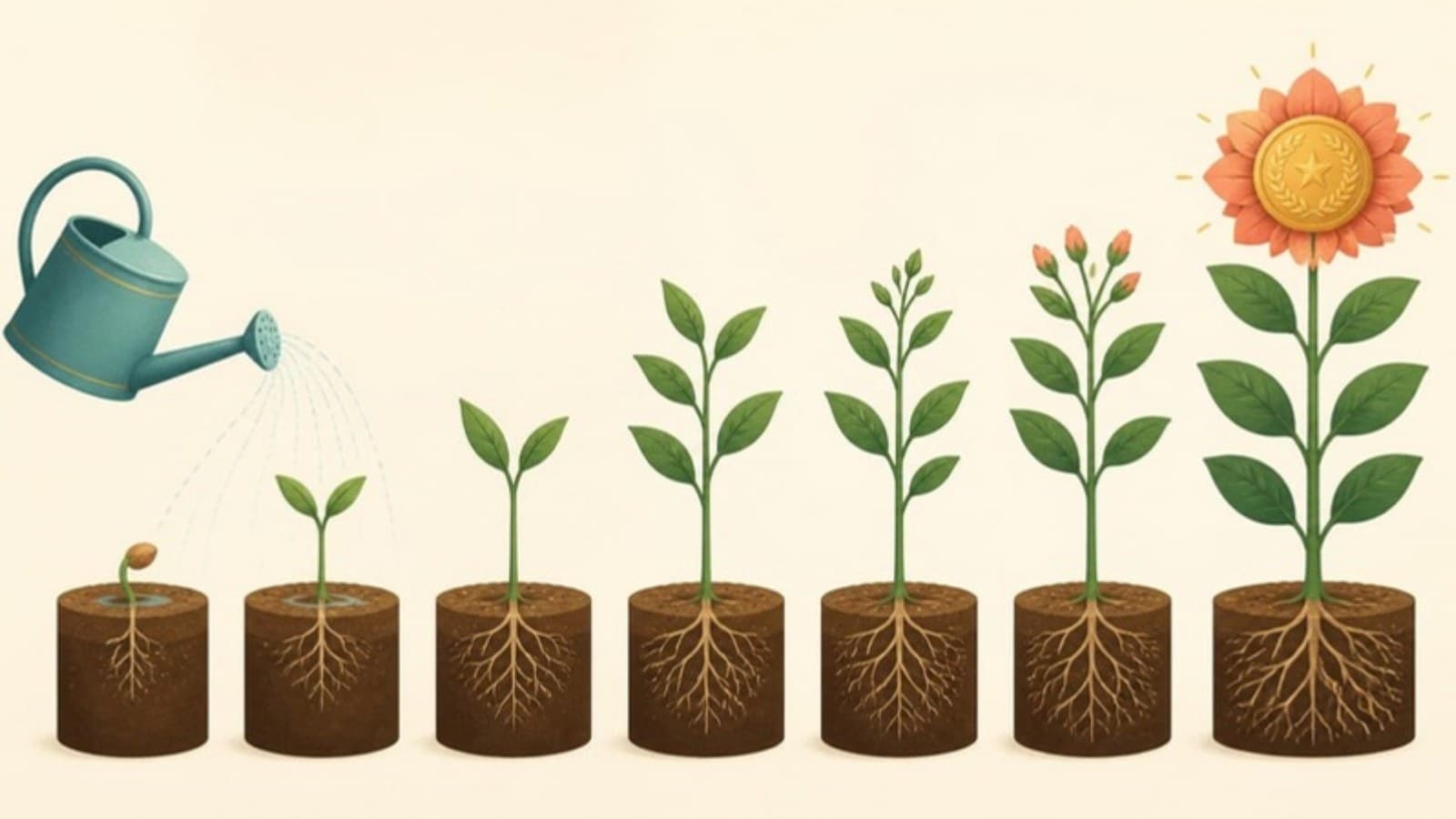

5 points to remember for olympiad
If you are a US parent searching "when should my child start biology olympiad," you have probably already run into two frustrating problems. First, half the pages online tell you your sixth grader can "start USABO now" — which is not true. Second, the other half tell you to buy a 1,400-page college textbook and drill it — which is neither age-appropriate nor effective. Both are trying to sell you something, and neither answers the real question.
This guide gives you the honest answer, grade by grade, from grade 6 through grade 12. I have taught biology to competition-track students since founding this academy in 2014, and I will tell you plainly where the real opportunities are, where the myths are, and what a twelve-year-old should actually be doing versus what a sixteen-year-old should be doing.
Here is the short version, and then we will walk through each stage:
Almost every planning mistake I see comes from a parent being told their middle schooler can compete in an exam that is, by rule, closed to them. So before we talk about timing, let us get the eligibility facts straight. These are not opinions — they are the actual rules of each competition.
| Competition | Can a middle schooler (grades 6–8) compete? | What it actually is |
|---|---|---|
| USABO (USA Biology Olympiad) | No. Grades 9–12 only. There is no junior or middle-school division. | The main US high-school biology olympiad; the on-ramp to the international team. |
| IBO (International Biology Olympiad) | No. It sits downstream of USABO — a high-school endpoint. | The world championship; you reach it only through USABO as a high schooler. |
| USA Brain Bee (neuroscience) | Effectively no for middle schoolers — there is an age-13 floor and you must be enrolled in an accredited US high school. | A neuroscience competition; realistically a grade-9-and-up event. |
| Science Olympiad, Division B | Yes. Grades 6–9. | A team science competition with real biology events. The #1 legitimate middle-school option. |
| National Biology Bowl | Yes. Has a middle-school-specific biology quiz-bowl. | An online biology quiz competition, typically held in late spring. |
| IJSO (International Junior Science Olympiad) | Yes, but ages 15 and under, and it is integrated science (physics + chemistry + biology), highly selective. | Aspirational; note it is not biology-only. |
| MCR Biology Contest | Yes. Has a middle-school division, online. | An accessible online biology contest you can enter directly. |
The single most important line in that table: USABO, IBO, and Brain Bee are not open to middle schoolers. If any website, tutor, or program tells you they will "get your sixth grader competing in USABO," they are either mistaken or misleading you. What a middle schooler can do is prepare to be a strong competitor by grade 9 — and that preparation looks very different from cramming.
For a deeper walkthrough of exactly why USABO is closed before grade 9, see Can a Middle Schooler Do USABO?. For the full list of contests your middle schooler can enter today, see Middle School Biology Competitions That Actually Exist.
This is the stage most parents get wrong — usually by doing too much of the wrong thing. The instinct is to "get ahead" by front-loading advanced content. But a middle schooler who memorizes college vocabulary without understanding it does not have an advantage in grade 9; they have a fragile scaffold that collapses the moment questions require reasoning.
What actually creates an advantage at this age is threefold: conceptual depth, scientific curiosity, and reasoning habits. Here is what that looks like concretely.
For a full, age-appropriate study method for this stage, see How to Study Biology in Middle School.
This is where the excitement belongs. Your middle schooler does not have to wait until grade 9 to compete — they just have to compete in the right events:
Competing in these does three things at once: it channels a competitive kid's energy productively, it teaches the emotional skill of preparing for and sitting an exam, and it builds a track record — all without pretending your child is eligible for something they are not.
Starting early is genuinely good advice — but "early" means early on foundations and habits, not early on the USABO syllabus. This distinction is the whole reason we built our Cerebrum Middle School Biology Foundation program for US students in grades 6–8 ($2,500 per academic year): it is deliberately designed to build depth and reasoning at an age-appropriate level, coach the Division B and Biology Bowl competitions your child can actually enter, and set up a smooth transition into grade-9 olympiad work — rather than dumping a college textbook on a twelve-year-old. Being the biology specialist that routes families accurately is the point.
The transition from grade 8 to grade 9 is the most important single moment in this entire roadmap, because it is when "foundation" turns into "competition." Three things change at once:
The practical move in the summer before grade 9 is to shift from broad curiosity to structured study: start working through a proper biology sequence, begin timed practice, and treat the first USABO Open Exam as a learning experience, not a make-or-break event. Most strong competitors do not peak on their first attempt — they use grade 9 to learn the format and grade 11–12 to perform.
Practice break
Preparing for USABO, IBO or NSEB?
Free to try · replies within a few hours on WhatsApp
Now the olympiad work is real. Here is the priority order for these two years.
The USABO Open Exam is the entry point. In grades 9–10, the goal is not necessarily to reach the semifinal round; it is to understand where you stand, learn the breadth of the syllabus, and identify the gaps. Biology at this level is enormous — molecular and cell biology, genetics, anatomy and physiology, ecology, evolution, ethology, and biosystematics — and no student masters it in one pass.
If your child is serious about USABO specifically, our USABO coaching is built around exactly this progression: syllabus mastery, exam-format fluency, and the reasoning skills the exam actually tests. Before committing, it is also worth reading an honest cost-benefit view — Is USABO Worth It? — so the family goes in with clear expectations.
AP Biology is the natural academic companion to USABO. It gives structure and pace, it is recognized by US colleges, and it covers a large share of the foundational USABO content. If your child is taking or preparing for AP Biology, our AP Biology tutoring can run alongside olympiad prep so the two reinforce each other instead of competing for time. If you are weighing which to emphasize, AP Biology vs USABO breaks down how they differ and how they fit together.
A grade-9 or grade-10 student who is drawn to the brain can add the USA Brain Bee to their competition slate. It is a focused, contained syllabus (neuroscience) and a good way to earn competition experience while the broader USABO work is still maturing.
The overarching principle for grades 9–10: build breadth and get reps. Sit the exams, learn the formats, and let performance follow understanding.
Grades 11 and 12 are when a well-prepared student competes to win, and when the narrow, high-stakes path toward the international level opens up.
USABO runs in rounds: the Open Exam narrows the field to a semifinal, and the top scorers from the semifinal advance to the National Finals. From the National Finals, a very small national team is selected and trained for the International Biology Olympiad (IBO) — the world championship. This is an extraordinarily selective path, and it is honest to say that reaching the IBO is a rare achievement for even the strongest students. What is realistic and worthwhile for many committed students is a strong USABO showing — which is itself a meaningful signal of scientific ability.
This is the payoff of starting early correctly. The grade-11 student who spent grades 6–8 building real curiosity and reasoning — rather than memorizing vocabulary — is the one who can now absorb college-level depth without burning out.
| Grades | Primary goal | What to actually do | Which competitions |
|---|---|---|---|
| 6–8 | Foundation & curiosity | Conceptual depth, observation habits, reading real biology; avoid cramming college content | Science Olympiad Division B, National Biology Bowl, MCR Biology Contest |
| 8 → 9 | The pivot | Shift from broad curiosity to structured study over the summer; register for grade-9 competitions | Prepare for USABO Open Exam; Brain Bee now reachable |
| 9–10 | Enter & learn | First USABO attempts, start AP Biology when allowed, build breadth and reps | USABO Open Exam, AP Biology, Brain Bee (optional) |
| 11–12 | Peak & compete | College-level depth, timed practice, experimental reasoning | Full USABO push (Open → Semifinal → Finals), narrow IBO path |
If you want to see how this connects to the longer horizon — for families thinking about medicine — the middle school to pre-med biology roadmap traces the path all the way through.
If you take away a single thing from this guide, make it this: do not rush your middle schooler into a competition or a syllabus they are not eligible for or ready for. The families who succeed are not the ones who started USABO in sixth grade — that is not even possible. They are the ones who spent grades 6–8 building genuine understanding and competing in the age-appropriate events, then arrived at grade 9 ready to do the real thing.
Early preparation is powerful. It just has to be the right early preparation. Depth, curiosity, and the competitions your child can actually enter — that is the foundation that pays off when the real olympiad window opens.
Questions about where your child fits on this roadmap? We are biology specialists, and we are happy to help you place your child accurately — no pressure. Message us on WhatsApp at +91 88264 44334 and tell us your child's grade and interests. If a structured, age-appropriate foundation makes sense, ask about our Middle School Biology Foundation program ($2,500 per academic year, live online, US-friendly timezones).
Related reading: Can a Middle Schooler Do USABO? · Middle School Biology Competitions That Actually Exist · How to Study Biology in Middle School
Related resources

About the author
Dr. Shekhar C. Singh
AIIMS New Delhi alumnus who has taught biology since 2014, from NCERT foundations to the International Biology Olympiad.
Read his full profile →Get expert coaching from Olympiad medalists and compete at the international level
More from the blog
The honest answer for US families: USABO, IBO, and Brain Bee are high-school competitions, not middle-school ones. Here are the real biology contests a 6th–8th grader can actually enter now — and how to prepare for the big ones later.
22 Jul 2026
Science Bee tests nine sciences by buzzer from Class 5 up; USABO tests biology alone at first-year-university depth in high school. What actually overlaps, what does not, and the Class 6-to-11 path from one to the other.
24 Sept 2026
Brain Bee, NSEB/INBO/IBO, and USABO test different things on different calendars for different reasons. A clear, honest comparison to help a student pick — or combine — the right track.
18 Aug 2026
Share your thoughts, ask a question, or help another student
Type it below and send it to us on WhatsApp — no sign-up needed.
USABO is open to students in grades 9-12. Middle schoolers should look at Science Olympiad Division B, which is built for grades 6-9.
Most students work through Campbell over 6-9 months. The Semifinal leans on data interpretation and experimental design, so drill those alongside content.
Registration goes through a school or an approved centre. If your school does not participate, a teacher can register as a new centre with CEE.
Need personalized guidance?