Cerebrum Biology Academy
CerebrumBiology Academy
Results98%CoursesFaculty
Cerebrum Biology Academy

Cerebrum Biology Academy

Excellence in Biology Education

  • NEET 2027 Preparation
  • Class 11 Biology
  • Class 12 Biology
  • NEET Dropper Program
  • Pre-Foundation (Class 6-8)
  • Foundation Course (9th-10th)
  • IB Biology Coaching
  • Biology Olympiads
  • Board Exam Preparation
  • International Curriculum
  • Global Programs — 75+ Countries
  • 1:1 Biology Mentorship Programme
  • Self-Study Packs (Notes & Tests)
  • Pricing & Fee Structure
  • USA — All Biology Exams
  • Middle School Biology (Grades 6-8)
  • Science Olympiad Div B (Grades 6-9)
  • AP Biology Tutor
  • USABO / Olympiad Coaching
  • Brain Bee (Neuroscience)
  • MCAT Biology Tutor
  • IB Biology Tutor
  • A-Level Biology Tutor
  • Honors / High-School Biology
  • College / Intro Biology
  • All Locations
  • NEET Coaching Delhi
  • NEET Coaching Gurugram
  • NEET Coaching Noida
  • NEET Coaching Faridabad
  • NEET Coaching Ghaziabad
  • Best NEET Coaching Near Me
  • NEET Coaching South Delhi
  • NEET Coaching Greater Noida
  • NEET Coaching Dwarka
  • South Extension (Flagship)
  • Green Park (now at South Extension)
  • Rohini (Online Batches)
  • Online Classes — 14+ Countries
  • NEET 2027 Preparation
  • Class 12 — NEET 2027
  • Dropper Batch — NEET 2027
  • Biology Specialist — 2027 Droppers
  • Class 11 — NEET 2028
  • Foundation — Class 9 & 10
  • Best Biology Teacher in India
  • Biology Tutor for NEET
  • Best Biology Classes for NEET
  • 1-on-1 NEET Biology Tutor
  • NRI Quota MBBS Guide
  • Biology MCQ Practice
  • Biology Notes for NEET
  • NEET Previous Year Questions
  • Online NEET Test Series
  • Free Biology Lectures
  • NEET Biology Study Material
  • About Us
  • Dr. Shekhar C. Singh — Faculty Profile
  • Our Faculty
  • Results & Success Stories
  • Blog
  • Contact Us
  • Book a Demo Class
  • Help Center
  • Scholarship
  • Leave a Review
  • Google Reviews
+91 88264 44334
info@cerebrumbiologyacademy.com

Offline centres: South Extension • Gurugram • Faridabad

Live online classes across India and abroad, and in these three cities too

Stay Updated

Get free NEET tips, chapter notes, and important updates via email or WhatsApp

© 2026 Cerebrum Biology Academy. All rights reserved.
Privacy Policy|Terms of Service|Refund & Cancellation|Shipping & Delivery|Disclaimer
Choose your language:
Call Now — +91 88264 44334
HomeCoursesCallProfile
Blog/Chapter Guides

Human Reproduction Chapter: Complete NEET 2026 Guide with Notes & PYQs

Master Human Reproduction for NEET 2026 with comprehensive notes on gametogenesis, fertilization, pregnancy, and embryonic development. Includes NCERT diagrams, PYQ analysis, and expert tips.

Dr. Shekhar C. Singh
Founder & Senior Faculty
7 January 2026
18 min read
NEET chapter: Human Reproduction · High weightage

Key Takeaways

6 points to remember for NEET

  1. 1Human Reproduction contributes 4-6 questions in NEET annually - one of the highest from Unit 9
  2. 2Spermatogenesis produces 4 sperms from one spermatogonium; Oogenesis produces only 1 ovum
  3. 3Fertilization occurs in the ampullary-isthmic junction of the fallopian tube
  4. 4Implantation happens 7 days after fertilization in the endometrium
  5. 5hCG hormone in urine forms the basis of pregnancy tests
  6. 6Parturition is triggered by oxytocin from the posterior pituitary

Human Reproduction is one of the most important chapters in NEET Biology, contributing 4-6 questions annually worth 16-24 marks. This chapter from Class 12 NCERT requires thorough understanding of processes, hormonal regulation, and anatomical details.

Why Human Reproduction is Crucial for NEET

  • High weightage: 4-6 questions every year
  • Conceptual + factual: Tests both understanding and memorization
  • Interconnected: Links with Reproductive Health chapter
  • Diagram-based: Many questions from labeled diagrams

1. Male Reproductive System

Anatomy Overview

The male reproductive system consists of:

StructureFunction
TestesProduction of sperm and testosterone
EpididymisStorage and maturation of sperm
Vas deferensTransport of sperm
Seminal vesiclesSecrete fructose-rich fluid (60% of semen)
Prostate glandAlkaline secretion to neutralize vaginal acidity
Bulbourethral glandsLubrication

Spermatogenesis

Definition: The process of formation of spermatozoa from spermatogonia in the seminiferous tubules.

Key Points:

  • Starts at puberty under FSH and testosterone influence
  • Location: Seminiferous tubules of testes
  • Duration: ~74 days for complete cycle
  • Temperature: Requires 2-2.5°C below body temperature (hence scrotal position)

Stages:

  1. Multiplicative phase: Spermatogonia → Primary spermatocytes (Mitosis)
  2. Growth phase: Primary spermatocytes enlarge
  3. Maturation phase:
    • Meiosis I: Primary spermatocyte → 2 Secondary spermatocytes
    • Meiosis II: 2 Secondary spermatocytes → 4 Spermatids
  4. Spermiogenesis: Spermatids → Spermatozoa

Important: One spermatogonium produces 4 functional sperms.

Structure of Sperm

  • Head: Contains nucleus with haploid DNA + Acrosome (enzymes for penetration)
  • Middle piece: Contains mitochondria (energy for movement)
  • Tail: Flagellum for motility

NEET Fact: Acrosome is a modified Golgi apparatus containing hyaluronidase and acrosin enzymes.

2. Female Reproductive System

Anatomy Overview

StructureFunction
OvariesProduction of ova and hormones (estrogen, progesterone)
Fallopian tubesSite of fertilization
UterusImplantation and fetal development
CervixConnects uterus to vagina
VaginaBirth canal and copulation

Oogenesis

Definition: Formation of ova from oogonia in the ovary.

Key Differences from Spermatogenesis:

FeatureSpermatogenesisOogenesis
StartPubertyFetal life
EndLifelongMenopause
Products4 sperms1 ovum + 3 polar bodies
Continuous?YesArrested (at Prophase I until puberty)

Stages:

  1. Oogonia multiply in fetal ovary
  2. Primary oocytes form and arrest at Prophase I
  3. At puberty, meiosis I completes → Secondary oocyte + First polar body
  4. Meiosis II completes only after fertilization

Important: Ovum released is actually a secondary oocyte arrested at Metaphase II.

Menstrual Cycle

Duration: 28 days (average)

Phases:

PhaseDaysHormonesEvents
Menstrual1-5Low allShedding of endometrium
Follicular6-13FSH ↑, Estrogen ↑Follicle development
Ovulatory14LH surgeOvulation
Luteal15-28Progesterone ↑Corpus luteum formation

NEET Fact: LH surge triggers ovulation. Progesterone from corpus luteum maintains endometrium.

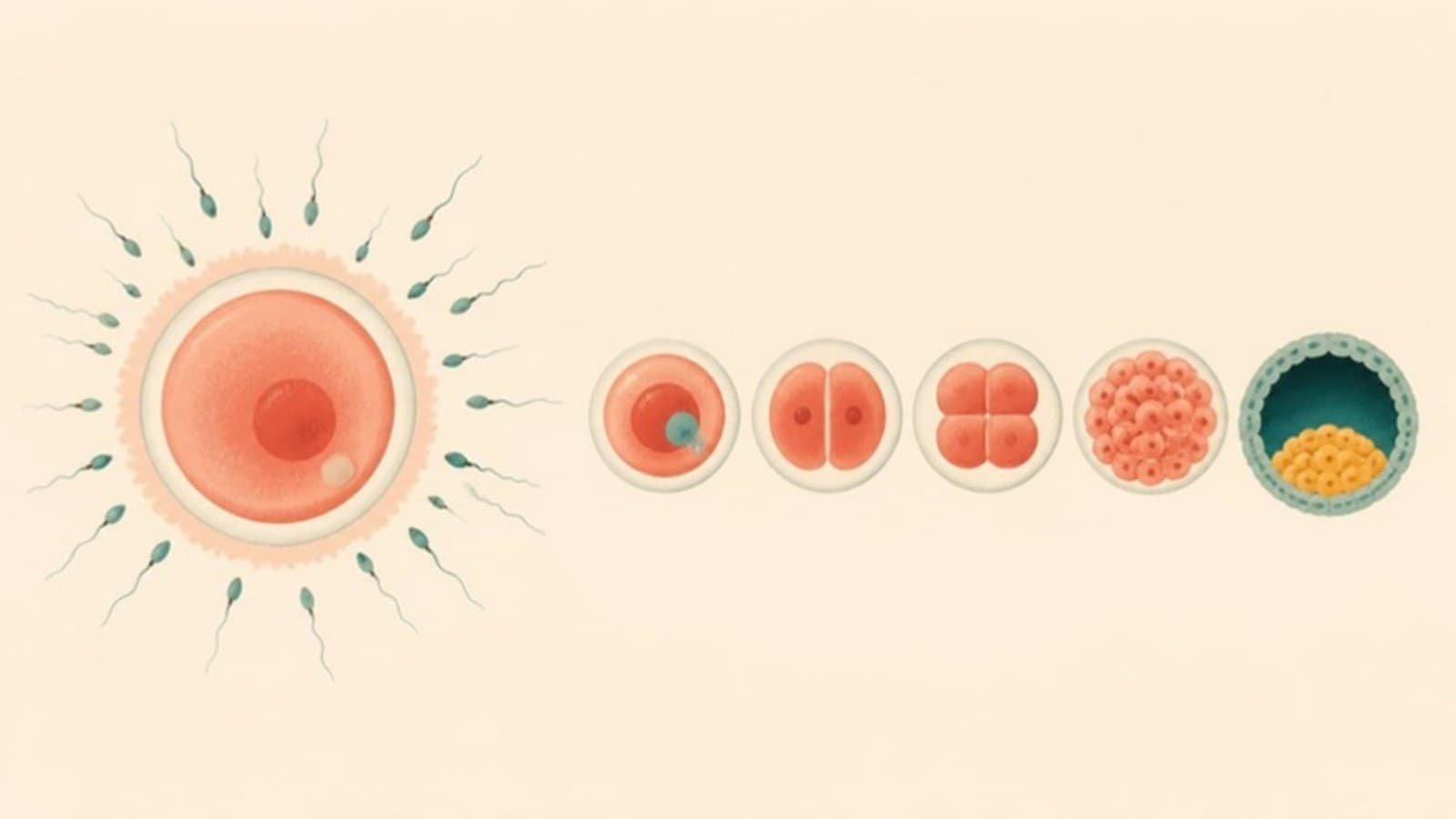
3. Fertilization

Site and Process

Site: Ampullary-isthmic junction of the fallopian tube

Steps:

  1. Capacitation: Sperm activation in female tract
  2. Acrosomal reaction: Release of enzymes
  3. Penetration: Through zona pellucida
  4. Cortical reaction: Prevents polyspermy
  5. Fusion: Male and female pronuclei fuse → Zygote

Important Events:

  • Only one sperm fertilizes the ovum
  • Meiosis II of secondary oocyte completes after sperm entry
  • Zygote has 46 chromosomes (23 from each parent)

4. Pregnancy and Embryonic Development

Implantation

  • When: 7 days after fertilization
  • Where: Endometrium of uterus
  • Stage: Blastocyst

Placenta Formation

Functions of Placenta:

  1. Nutrition and gas exchange
  2. Excretion of wastes
  3. Hormone production (hCG, hPL, estrogen, progesterone)
  4. Acts as a barrier (not complete - some pathogens can cross)

NEET Fact: Placenta is connected to embryo via umbilical cord containing 2 arteries and 1 vein.

Practice break

Reading is prep. Practising is progress.

Free to try · replies within a few hours on WhatsApp

Try 10 free NEET Biology questionsWhatsApp Dr. Shekhar

Hormones During Pregnancy

HormoneSourceFunction
hCGTrophoblastMaintains corpus luteum; basis of pregnancy test
hPLPlacentaStimulates mammary glands
RelaxinOvarySoftens pubic symphysis
EstrogenPlacentaUterine growth
ProgesteroneCorpus luteum → PlacentaMaintains pregnancy

Embryonic Development Timeline

TimeDevelopment
Week 1Cleavage, blastocyst formation
Week 2Implantation
Week 4Heart begins beating
Week 8All organs formed (embryo → fetus)
Week 12External genitalia differentiate
Week 24Viability (can survive outside)
Week 40Full term delivery

5. Parturition (Childbirth)

Process

  1. Signals from fetus: Cortisol release
  2. Oxytocin release: From posterior pituitary
  3. Uterine contractions: Increasing intensity
  4. Positive feedback: More contractions → more oxytocin
  5. Delivery: Baby, followed by placenta (afterbirth)

NEET Fact: Parturition is an example of positive feedback mechanism.

6. Lactation

  • Colostrum: First milk, rich in antibodies (IgA)
  • Prolactin: Stimulates milk production
  • Oxytocin: Causes milk ejection (let-down reflex)
  • Lactational amenorrhea: Natural contraception method

Common Mistakes to Avoid

  1. Confusing sites: Fertilization in fallopian tube, NOT uterus
  2. Oogenesis timing: Starts in fetal life, not puberty
  3. Sperm vs Ovum: Secondary oocyte is released, not mature ovum
  4. Hormone sources: hCG from trophoblast, not corpus luteum
  5. Polar bodies: 3 polar bodies in oogenesis (not functional)

PYQ Analysis (2019-2024)

Most Asked Topics:

  1. Spermatogenesis stages and cell types
  2. Menstrual cycle phases and hormones
  3. Fertilization process and site
  4. Placenta functions
  5. Pregnancy hormones (especially hCG)

Question Types:

  • Match the following (hormones-functions)
  • Assertion-Reason (process explanations)
  • Diagram-based (reproductive organs)
  • Numerical (days in cycle, number of cells)

Quick Revision Points

  1. Spermatogenesis: 1 spermatogonium → 4 sperms
  2. Oogenesis: 1 oogonium → 1 ovum + 3 polar bodies
  3. Fertilization site: Ampullary-isthmic junction
  4. Implantation: Day 7, blastocyst stage
  5. hCG: Pregnancy test basis
  6. Parturition trigger: Oxytocin
  7. First milk: Colostrum (antibodies)
  8. Menstrual cycle: 28 days average
  9. Ovulation trigger: LH surge
  10. Sperm maturation: Epididymis

Practice MCQs

Q1. The site of fertilization in humans is:

  • (a) Uterus
  • (b) Cervix
  • (c) Ampullary-isthmic junction
  • (d) Infundibulum

Answer: (c)

Q2. Which hormone is responsible for the LH surge during menstrual cycle?

  • (a) Progesterone
  • (b) Estrogen
  • (c) FSH
  • (d) Inhibin

Answer: (b) - High estrogen levels trigger positive feedback causing LH surge

Q3. Colostrum contains:

  • (a) IgG
  • (b) IgA
  • (c) IgM
  • (d) IgE

Answer: (b)

Diagrams to Master

  1. Male reproductive system (labeled)
  2. Female reproductive system (labeled)
  3. Structure of sperm
  4. Stages of spermatogenesis
  5. Menstrual cycle graph (hormones vs days)
  6. Ovarian cycle
  7. Fertilization and implantation
  8. Placenta structure

Ready to master Human Reproduction for NEET 2026? Join Cerebrum Biology Academy's expert-led coaching and get personalized guidance from AIIMS faculty. Contact us on WhatsApp for a free demo class!

Related resources

Book FREE Demo Class

Experience our teaching methodology with AIIMS faculty

Explore Our Courses

NEET Foundation, Dropper, and Crash Courses

Meet Our Expert Faculty

Learn from AIIMS-trained biology faculty

Tags:

#Human Reproduction#NEET 2026#Class 12 Biology#NCERT#Gametogenesis#Fertilization#Pregnancy#Embryology
Dr. Shekhar C. Singh

About the author

Dr. Shekhar C. Singh

AIIMS New Delhi alumnus who has taught biology since 2014, from NCERT foundations to the International Biology Olympiad.

Read his full profile →

Ready to Master NEET Biology?

Get a personal biology plan, led by Dr. Shekhar C. Singh and his team.

🇮🇳+91

On this page

0/11

More from the blog

Continue reading

Chapter Guides
25 min read

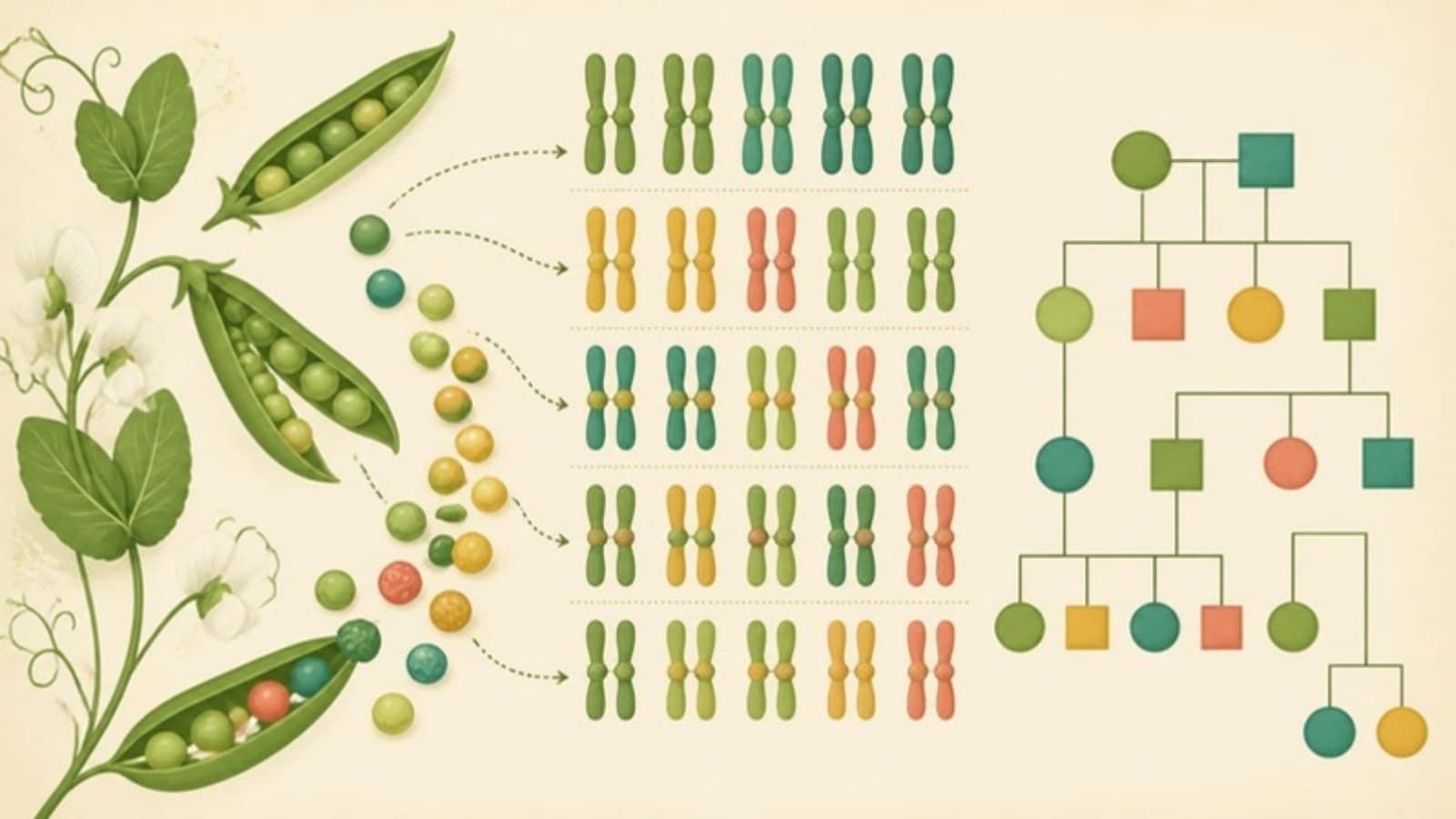
Principles of Inheritance and Variation - Complete NEET Biology Notes 2026

Master Genetics for NEET 2026 with comprehensive notes on Mendel's laws, inheritance patterns, chromosomal basis, linkage, and genetic disorders. NCERT-aligned content with diagrams and PYQs.

12 Jun 2026

Chapter Guides
22 min read

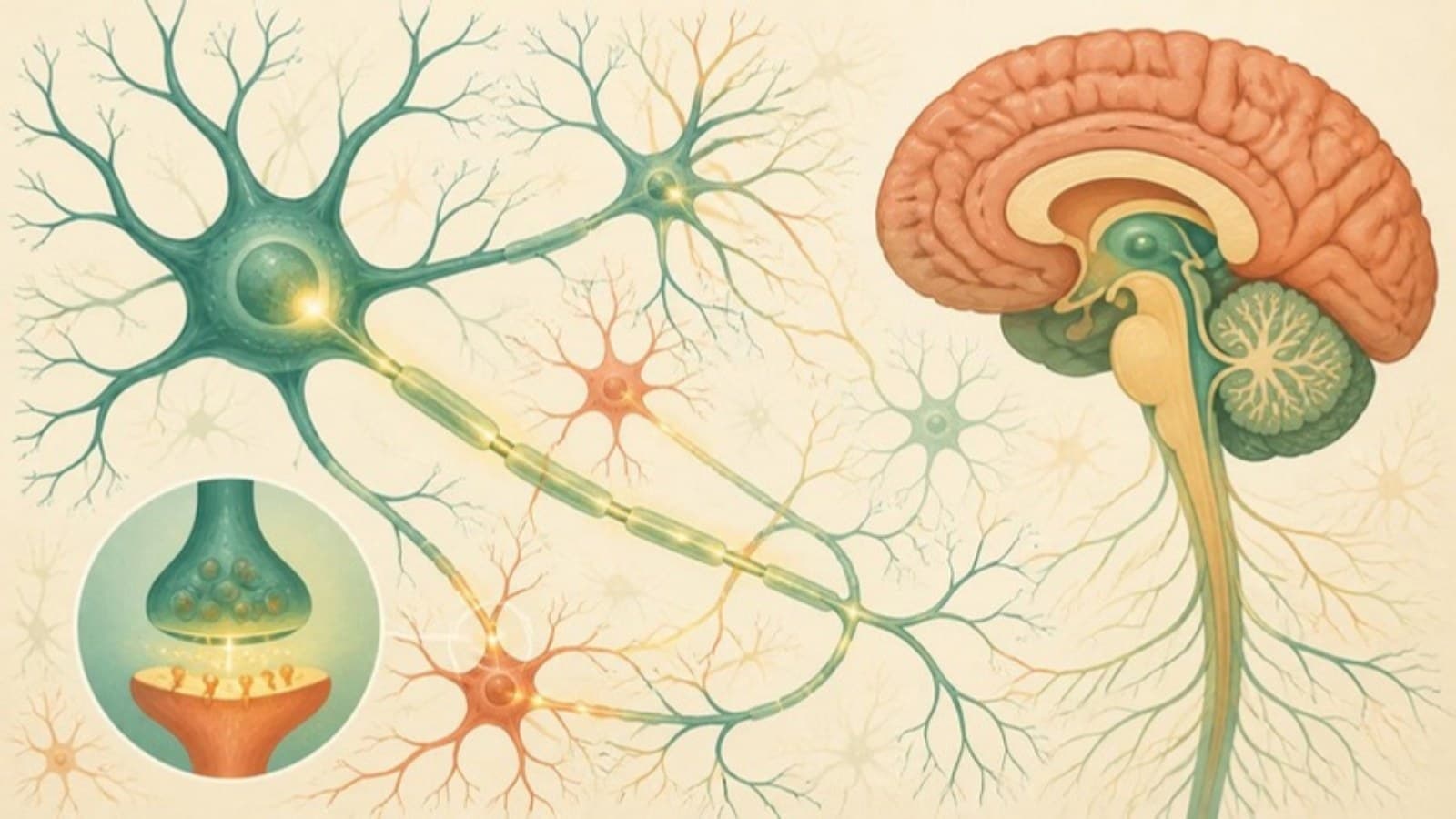
Neural Control and Coordination - Complete NEET Biology Notes 2026

Master Nervous System for NEET 2026 with comprehensive notes on neuron structure, nerve impulse, brain anatomy, and reflex action. NCERT-aligned content with diagrams and PYQs.

12 Jun 2026

Chapter Guides
22 min read

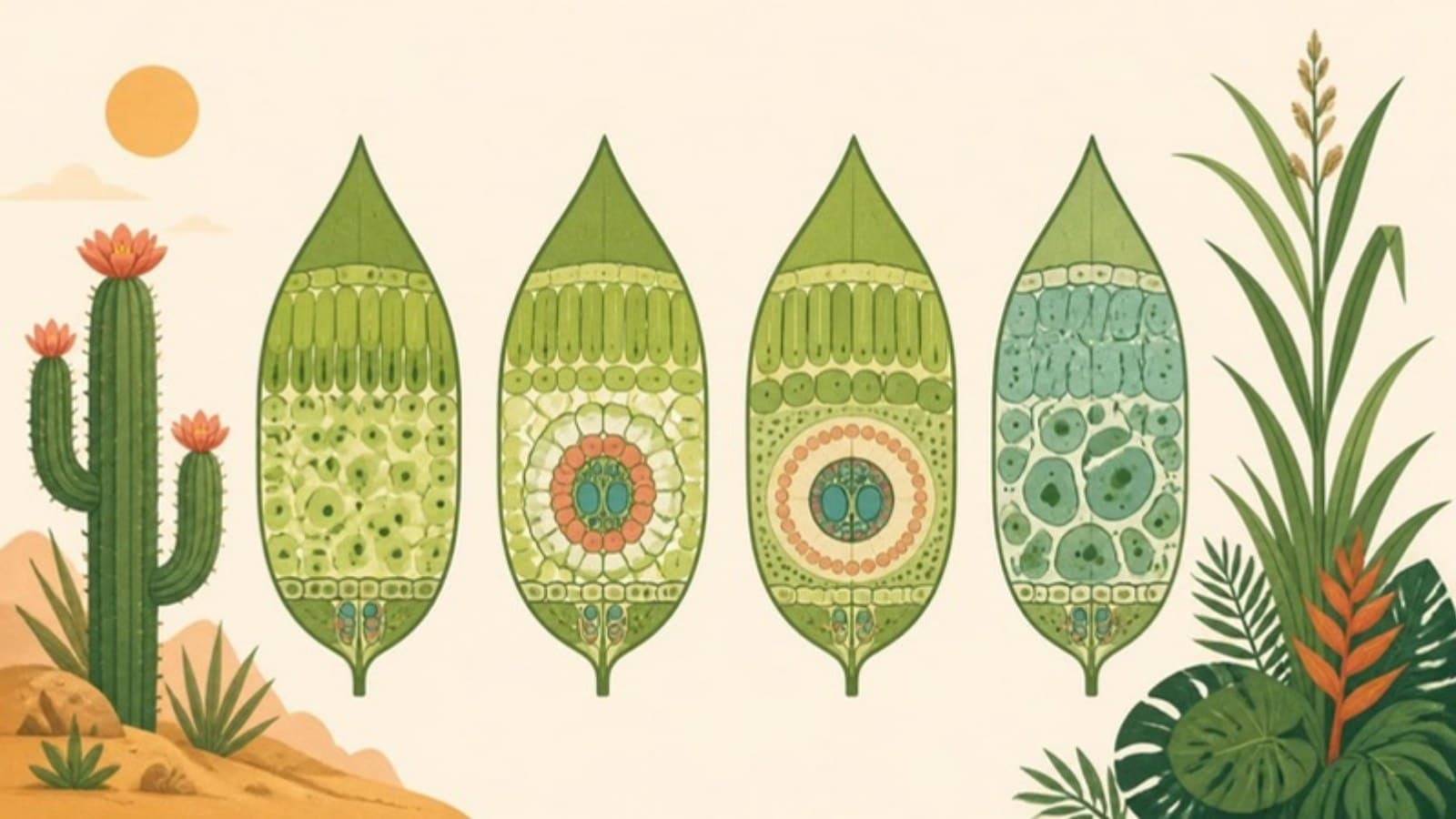
Photosynthesis - Complete NEET Biology Notes 2026

Master Photosynthesis for NEET 2026 with comprehensive notes on light reactions, Calvin cycle, C3, C4, and CAM pathways. NCERT-aligned content with diagrams and previous year questions.

12 Jun 2026

Discussion & Questions

Share your thoughts, ask a question, or help another student

Have a doubt about this topic?

Type it below and send it to us on WhatsApp — no sign-up needed.

Get expert answers from our AIIMS faculty

Popular questions from students

How many hours should I study Biology daily for NEET?

For NEET Biology, aim for 3-4 hours of focused study daily. Quality matters more than quantity!

Is NCERT enough for Biology in NEET?

Yes! NCERT covers 95% of NEET Biology questions. Master it completely before any reference book.

Which chapters have maximum weightage?

Human Physiology (20%), Genetics (18%), and Ecology (12%) are the highest-scoring areas.

Need personalized guidance?